





What Every F1 Team Must Fix After Summer Break

Formula 1’s summer shutdown is often described as an opportunity for teams to repair their weaknesses. In reality, the mandatory two-week closure means factories must fall silent: no wind-tunnel running, simulator work, design meetings or car development.
The real work begins when the doors reopen.
After 11 Grands Prix, every team has accumulated enough evidence to identify its most damaging weakness. For championship leaders Mercedes, that means making the fastest car dependable. For Aston Martin and Cadillac, the priorities are rather more fundamental.
These are the problems all 11 teams must address when Formula 1 resumes at Zandvoort.
Mercedes Must Make Reliability Match Performance
Mercedes lead the 2026 Teams’ Championship by 72 points and have won eight of the opening 11 Grands Prix. Their problem is not speed. It is ensuring the W17 survives long enough to use it.
George Russell’s battery failure in Canada removed him from a race he had been leading, while Kimi Antonelli lost an almost certain second place when his car suffered an electrical shutdown in Barcelona. Other technical concerns have compromised further weekends and prevented Mercedes from turning a commanding advantage into outright domination.
That vulnerability matters because Ferrari, McLaren and Red Bull are now close enough to punish every failure. Mercedes won the opening six races, but their rivals claimed three of the final five before the shutdown.
Antonelli holds a 50-point championship lead and Russell remains third, yet reliability could still turn an internal title fight into an uncomfortable contest with outsiders.
The W17 does not need reinventing. Mercedes simply need every battery, electrical system and power-unit component to meet the same standard as the car’s performance.
Ferrari Must Find Pace at Every Circuit
Ferrari’s major Barcelona upgrade transformed the SF-26 from regular podium contender into genuine race winner. Lewis Hamilton immediately delivered his first Grand Prix victory for Ferrari, before Charles Leclerc added another at Silverstone.
The weakness is that Ferrari’s competitiveness still changes too much between circuits and occasionally between sessions.
At their strongest, Hamilton and Leclerc can fight Mercedes on equal terms. At less suitable venues, they remain dependent on strategy, tyre behaviour or trouble elsewhere to stay involved at the front.
Ferrari have also pursued an aggressive development programme, repeatedly introducing new components in their attempt to close the gap. That approach has worked, but every upgrade consumes resources under the cost cap and creates another set of data that must be understood.
The next step is therefore not another spectacular package. Ferrari need to widen the SF-26’s operating window so its best performance appears across different corner types, temperatures and tyre compounds.
A car that wins only on its preferred circuits can collect trophies. A car that performs everywhere can challenge for a championship.
McLaren Must Convert Potential Into Complete Weekends
McLaren have shown enough speed to prove the MCL40 is not fundamentally flawed. Their Miami Sprint one-two and Lando Norris’s pole and victory in Hungary demonstrated that the reigning champions can still beat anyone.
Too often, however, the complete weekend has escaped them.
Reliability wrecked the opening phase, including Oscar Piastri’s failure to start in Australia and both cars missing the Chinese grand prix. Strategy and execution have subsequently cost positions when the pace was available.
McLaren must also understand why Piastri has fallen behind Norris. The qualifying score stands at 7-4, while Norris leads 128-92 on points. Hungary brought those tensions into public view when Piastri’s strategy left him behind his team-mate and prompted an angry radio reaction.
Andrea Stella has attempted to calm suggestions of an internal problem, but McLaren cannot afford one side of the garage to remain uncertain about the car or the team’s decisions.
The ingredients for victories already exist. McLaren’s task is to combine pace, reliability, strategy and two confident drivers on the same weekend.
Red Bull Must Make the RB22 Predictable
Red Bull began 2026 with an overweight car, a new Ford-backed power unit and a balance problem that left Max Verstappen describing himself as part of the midfield battle.
The team have made substantial progress. The RB22 reached the minimum weight, upgrades improved its balance and Verstappen finished on the podium four times. Isack Hadjar’s seven consecutive top-six finishes also show that the car is no longer quick only in Verstappen’s hands.
But Red Bull still do not know exactly what performance they will have from one circuit, or sometimes one session to the next.
The RB22 can challenge Mercedes and Ferrari when its balance, energy deployment and tyre preparation align. When they do not, Verstappen is forced to manufacture results through racecraft rather than outright pace.
Red Bull’s second-half priority must be predictability. A slightly slower car with a stable platform is often more useful than one possessing greater theoretical performance but an operating window measured in millimetres.
Their recent improvement has brought McLaren within reach. Turning progress into Red Bull’s first victory of 2026 requires a car the drivers can trust from Friday onwards.
Racing Bulls Must Avoid Standing Still
Racing Bulls have been the surprise of the midfield. Liam Lawson and rookie have delivered five double-points finishes, placing the team fifth with 66 points.
Their challenge is maintaining that position while larger operations accelerate their development.
Audi scored ten points across the final three races before the shutdown, while Aston Martin introduced an extensively revised car in Hungary. Haas are planning further upgrades and Alpine remain only five points behind.
Racing Bulls cannot match every rival component for component, so their development must remain selective and efficient. Preserving the car’s balanced handling will be more important than chasing headline downforce numbers that make it harder to operate.
They must also convert more of their strong qualifying performances into major results. Lawson and Lindblad have been regular points scorers, but neither has yet delivered the podium or top-five finish that could transform the midfield battle.
The car already works. Racing Bulls’ task is to prevent everyone else from catching up.
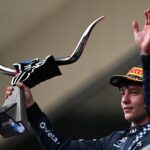
Alpine Must Reduce Its Dependence on Gasly
Pierre Gasly has scored 42 of Alpine’s 61 points, leads Franco Colapinto 9-2 in qualifying and delivered the team’s defining result in Monaco.
Gasly initially lost third place through two incorrect pit-lane speeding penalties before the FIA acknowledged its timing-system error and restored his podium.
Colapinto has contributed 19 points and completed every Grand Prix, so his season is hardly a failure. The problem is the size of his qualifying deficit. Starting behind Gasly too frequently leaves him fighting through traffic and limits Alpine’s strategic options.
For Alpine to overhaul Racing Bulls, both cars must regularly begin races in positions from which points are realistic. Gasly cannot be expected to create another Monaco every few weekends.
The A526 has enough performance to fight at the front of the midfield. Alpine must now unlock more of it on Colapinto’s side of the garage and turn occasional double scores into a routine.
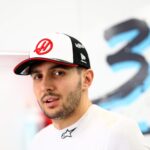
Haas Must Repair Its Development Process
Haas scored 21 points during the opening half, but 17 of Oliver Bearman’s 18 came across the first two weekends. The team failed to score in any of the five Grands Prix immediately before the shutdown.
The decline has not been caused by one bad upgrade. It reflects a development programme that has been too slow and too unpredictable.
Bearman and Esteban Ocon have complained about insufficient rear downforce, inconsistent components and upgrades that behave differently from simulations. The drivers have occasionally run different specifications, making it even harder to separate car performance from hardware variation.
Bearman admitted Haas had fallen behind in Formula 1’s development race after introducing only one substantial package while rivals brought several.
Adding more parts is not enough. Haas must first understand why simulated gains are not appearing consistently on track. Otherwise, every new floor or wing risks becoming an expensive variation of the same problem.
The VF-26 was capable of finishing fifth in China. The essential task is discovering where that performance went.
Audi Must Stop Wasting Hülkenberg’s Weekends
Audi reached the shutdown with positive momentum after scoring at Silverstone, Spa and Hungary. Gabriel Bortoleto contributed ten of the team’s 12 points, including consecutive eighth places in Britain and Belgium.
Nico Hülkenberg has not suddenly forgotten how to score. Reliability and some almost absurd misfortune have repeatedly prevented him from doing so.
His car failed to start in Australia, suffered three retirements and was shut down in Barcelona when gravel struck its external safety switch. Ninth place in Hungary finally delivered the points his earlier performances had threatened.
Audi need both cars collecting data, completing races and exploiting opportunities. That is especially important for a new works team simultaneously developing its chassis, operations and power unit.
Bortoleto’s progress demonstrates that the underlying project is moving forward. Improving reliability would allow Hülkenberg’s experience to accelerate that development rather than leaving him watching from the garage.
Audi do not need a miracle to climb the standings. They need two functioning cars.
Williams Must Solve Its Correlation Crisis
Williams began 2026 overweight and behind schedule after production delays forced the team to miss the Barcelona shakedown. The FW48 has since lost weight, but its deeper problem remains unsolved.
New components are not delivering the gains predicted by the wind tunnel and simulator.
Carlos Sainz has publicly admitted he is worried by Williams’ stalled development, arguing that upgrades showing significant improvements in simulation produce only minimal progress at the circuit.
That is one of Formula 1’s most dangerous technical problems. A slow car can be developed; an inaccurate development system sends engineers confidently in the wrong direction.
Williams finished fifth in 2025 but now sit ninth with 11 points. Sainz leads Alex Albon 9-2 in qualifying, yet neither driver has been able to build any momentum because pace and reliability remain inconsistent.
Finding more downforce is not the immediate priority. Williams must first ensure the numbers produced at Grove correspond with what happens on track. Until that correlation is restored, further development risks becoming educated guesswork.
Aston Martin Must Unite Chassis and Honda Progress
Aston Martin’s original AMR26 was slow, unreliable and afflicted by severe vibrations. The car completed limited pre-season mileage, neither driver finished the opening two races and Fernando Alonso scored the team’s only point in Monaco.
The extensive Hungary upgrade finally provided encouragement. Lance Stroll and Alonso finished 13th and 14th while competing with midfield cars on merit, suggesting the revised chassis offers a usable foundation.
Now Honda must complete the second half of the recovery.
A revised power unit is scheduled for Zandvoort, with Aston Martin hoping for improved performance and reliability. The challenge is integrating those gains with a chassis package the team have barely begun to understand.
Adrian Newey has refused to rule out further 2026 upgrades, but Aston Martin must resist reacting to every disappointing session with another redesign.
The first objective is clear: establish whether Hungary genuinely moved the AMR26 into the midfield and whether Honda’s update strengthens that progress. Only then can the team decide which direction deserves further investment.
After ten rounds spent trying to escape Q1, Aston Martin need proof that their new baseline is real.
Cadillac Must Fix Reliability Before Chasing Speed
Cadillac have yet to score, neither driver has reached Q2 and Valtteri Bottas’s 13th place in China remains their best official finish.
Those numbers are disappointing, but the car’s most urgent weakness is not outright pace. It is the inability to complete weekends without overheating, brake fires or suspension failures.
Sergio Pérez appeared to earn Cadillac’s first point by finishing tenth in Monaco, only for a restart-position penalty to drop him to 15th. Since then, repeated mechanical problems have made another opportunity increasingly unlikely.
Both cars retired in Austria and Hungary. Bottas’s brake failure in Budapest became particularly alarming when he had to use a barrier to bring the car to a stop.
New team principal Marcin Budkowski inherits a team that cannot develop efficiently while basic systems remain unreliable. Cadillac first need stable cooling, dependable brakes and enough uninterrupted mileage to understand the car properly.
Only then does chasing more downforce make sense. There is little value in finding three tenths if the car cannot reach the chequered flag.
The Weaknesses Will Still Be Waiting
The mandatory shutdown offers Formula 1’s exhausted workforce a rare chance to stop. It does not make the cars lighter, faster or more reliable.
Mercedes will return with the best package but an electrical vulnerability. Ferrari and McLaren have enough speed to win, yet still lack consistent execution. Red Bull need predictability, while Racing Bulls and Alpine face a development race separated by only five points.
Further back, Haas and Williams must repair the processes creating their upgrades. Audi need reliability, Aston Martin require confirmation that their recovery has genuinely begun and Cadillac must make finishing routine.
No team can solve those problems while the factory doors are locked. Once they reopen, there will be nowhere left to hide.


One F1 fan comment on “What Every F1 Team Must Fix After Summer Break”
💬 Join the conversation — see the latest comments from F1 fans →








More or less spot-on about all teams regarding their respective single most noteworthy aspects, although Alpine hasn’t been anywhere near as dependent on Gasly this season as they were last season, particularly since the Miami GP & over quite a few rounds, even Gasly has barely qualified & finished any higher, not to mention equally outside Q3 & points; hence, drivers aren’t an issue at all.