





Slicks
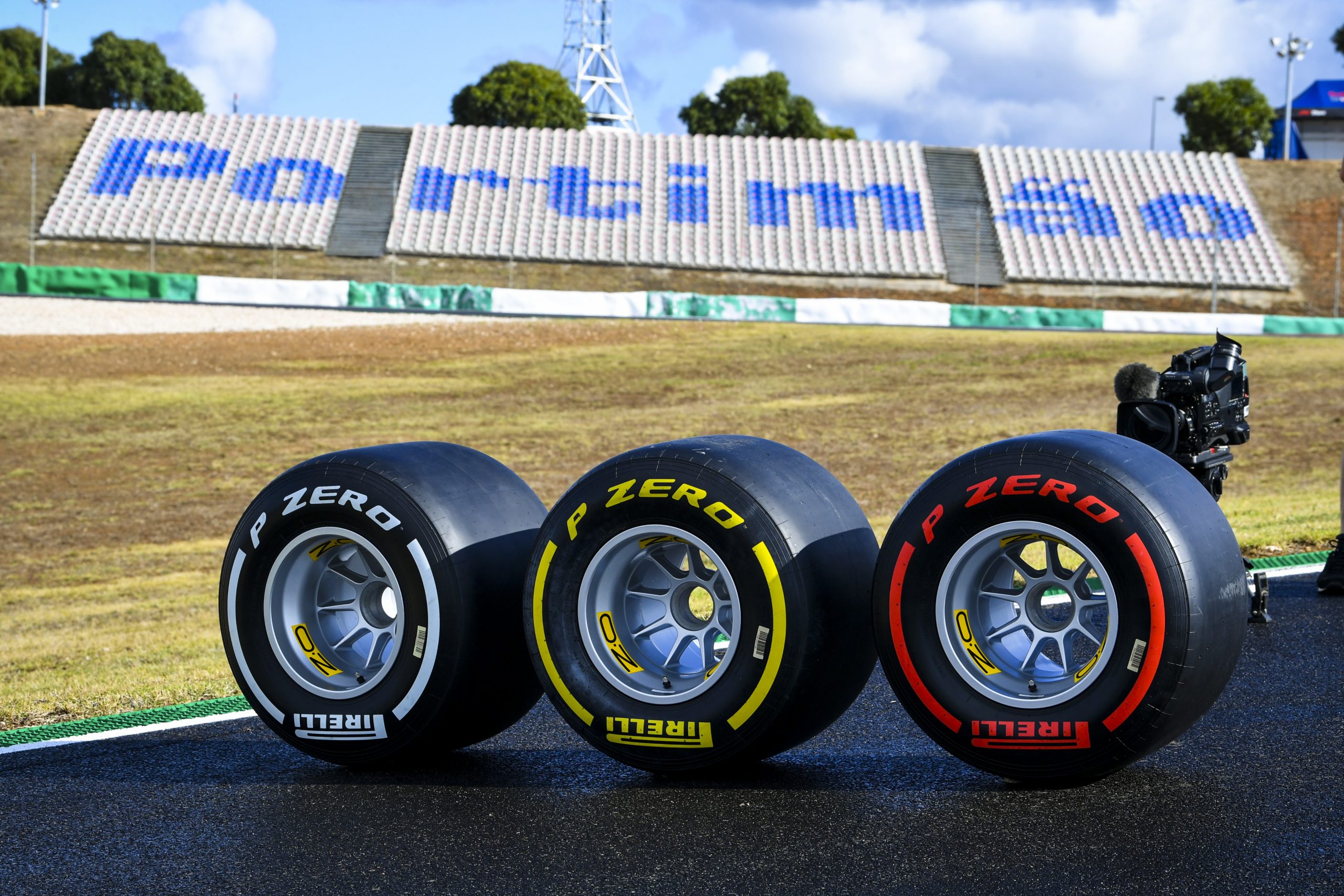
Portimao grandstand with Pirelli tyres during the Portuguese GP at Algarve International Circuit
Slicks are the treadless Formula 1 tyres used on a dry racing surface, offering the maximum contact patch and therefore the highest possible grip. Pirelli supplies six dry compounds ranging from the softest C0 to the hardest C5, and each Grand Prix uses three of them in a nominated white, yellow and red colour code. Every dry-weather lap of the modern F1 calendar is set on a slick.
What are slick tyres in F1?
Slicks are dry-weather Formula 1 tyres with no tread grooves cut into the surface. The full width of the rubber is in contact with the road, which maximises the grip available. Slicks work only on a dry surface: on standing water they aquaplane, and on a damp track they overheat and shed rubber.
Pirelli's dry compound range
- C0: the hardest compound, reserved for the most demanding circuits;
- C1 to C5: progressively softer compounds, offering more grip and less durability;
- C6: the softest, introduced for select events to encourage more pit-stop variety.
How compounds are chosen per event
Pirelli nominates three of the compound range for each Grand Prix, marked with a white band for hard, yellow for medium and red for soft. Circuits with high tyre stress (Silverstone, Spa, Suzuka) use harder compounds. Street circuits (Monaco, Baku, Singapore) use softer ones. The nominated three define the pit-stop strategy possibilities available to the teams.
Slicks and race weekend rules
Under the current regulations, each driver receives a fixed number of slick sets across the weekend, split between the three nominated compounds. Sprint weekends use a slightly different allocation. During dry races the FIA requires each driver to use at least two different compounds in the race, unless the race is red-flagged and points classifications change the requirement.
Frequently asked questions about slick tyres
What are slick tyres in F1?
Slicks are treadless dry-weather Formula 1 tyres. The full width of the rubber contacts the road, maximising grip on a dry surface.
How many dry compounds does Pirelli have?
Currently six, from C0 (hardest) to C5 (softest), with a C6 available for selected events. Each Grand Prix uses three of the range.
What do the tyre wall colours mean?
White band for hard, yellow for medium, red for soft. The colours identify the three compounds nominated for that specific event.
Why do slick tyres have no tread?
Because on a dry surface any groove reduces the contact patch and therefore the grip. Slicks maximise contact patch and are the fastest tyre on any dry track.
When are drivers required to change compounds during a race?
Under dry conditions the FIA requires each driver to use at least two different compounds during the race. Red-flagged races can change the requirement.









LAST 3 F1 Fan COMMENTS

Shroppyfly on Honda stops short of backing F1's V8 return9 hours ago 
Nobodysperfect on Honda stops short of backing F1's V8 return9 hours ago 
Shroppyfly on Red Bull stays quiet on Verstappen's new 80 million deal10 hours ago
All F1 Fan Comments