





Stop-and-go penalty
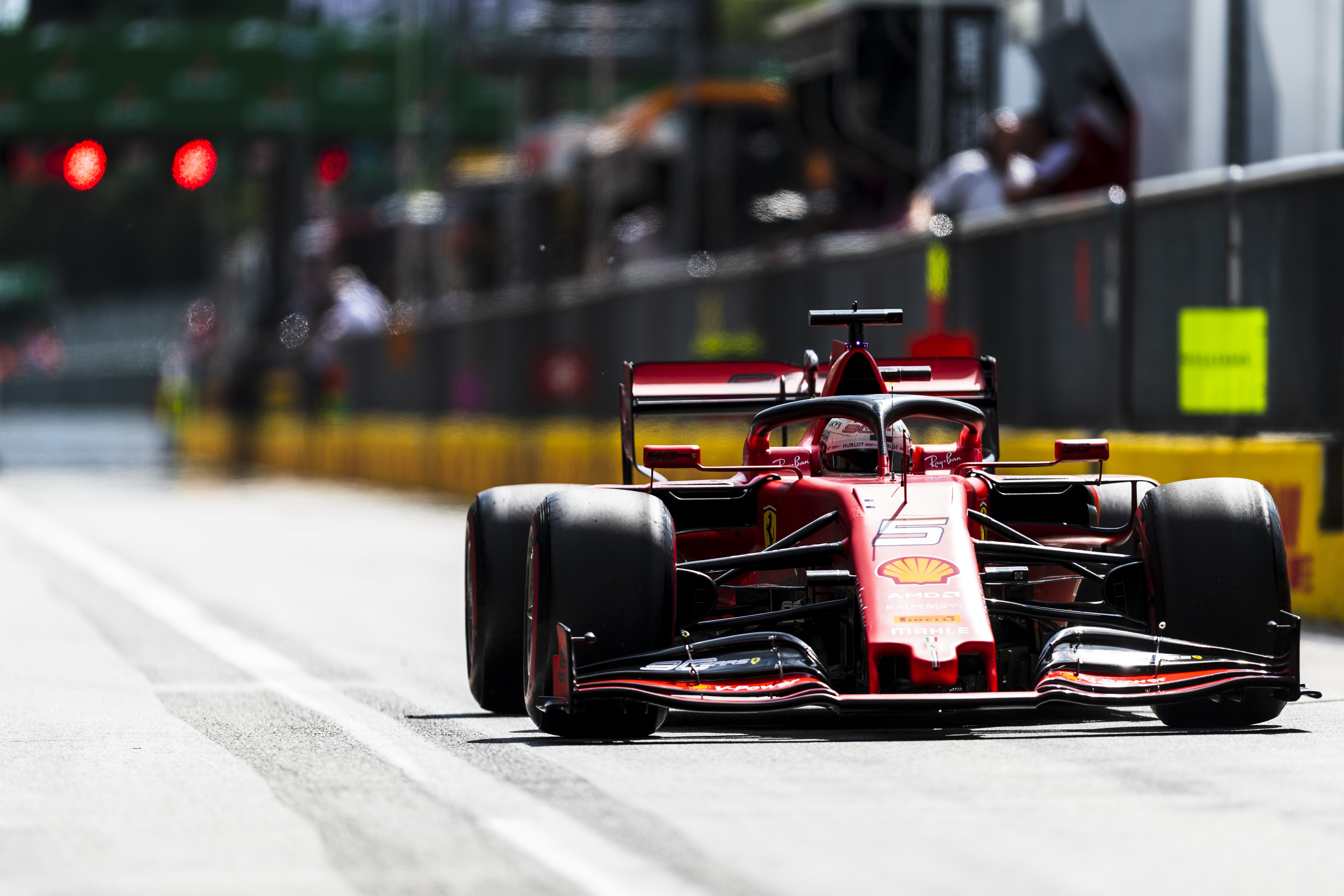
Sebastian Vettel drives out of the pits after his stop-and-go penalty during the 2019 Italian GP
The stop-and-go penalty is one of the heaviest race-day sanctions in Formula 1, requiring the driver to enter the pit lane, stop stationary in their pit box for a set time, and then rejoin the race. The mandated stationary period is ten seconds, and no work at all can be done on the car during the stop. Combined with the pit-lane transit, a full stop-and-go typically costs around 30 seconds of race time.
What is a stop-and-go penalty in F1?
A stop-and-go penalty forces a driver to enter the pit lane, drive to their team box at the pit-lane speed limit, come to a full stop, remain stationary for a mandated period (typically ten seconds), then leave the pit lane and rejoin the race. Crucially, no tyre changes, refuelling or repairs of any kind are permitted during the stationary time.
Where the stop-and-go sits on the penalty ladder
- five-second time penalty (lightest, can be served at a scheduled stop);
- ten-second time penalty (can be served at a scheduled stop);
- drive-through penalty (no stationary time, roughly 20 seconds lost);
- ten-second stop-and-go (roughly 30 seconds lost);
- disqualification.
Rules for serving a stop-and-go
Teams have three laps from the moment they are notified to serve the penalty. It must be served under green conditions, cannot be combined with a scheduled pit stop, and any work carried out during the stationary time triggers a further penalty. The FIA times the stationary period with an official clock in the pit lane.
Why stop-and-gos are used
Stewards use the stop-and-go for offences that are too serious for a drive-through but not serious enough to warrant a disqualification. Typical triggers include serious pit-lane speeding, deliberate rule breaches, or accumulated minor infractions in a single race. The penalty is used sparingly because it almost guarantees a loss of position.
Frequently asked questions about the stop-and-go penalty
What is a stop-and-go penalty in F1?
A stop-and-go requires the driver to stop stationary in their pit box for a mandated ten seconds without any work being done on the car, then rejoin the race.
How much time does a stop-and-go cost?
Typically around 30 seconds of race time, including the pit-lane transit and the stationary period.
Can teams change tyres during a stop-and-go?
No. Any work on the car during the stationary period turns the stop-and-go into a rules breach, and further penalties follow.
What is the difference between a stop-and-go and a drive-through?
A drive-through requires the driver to pass through the pit lane without stopping. A stop-and-go requires ten seconds stationary in the pit box. The stop-and-go is roughly ten seconds more expensive.
What comes after a stop-and-go on the penalty ladder?
Only disqualification is heavier. A race ban is possible in extreme cases but is essentially never used in modern F1.








LAST 3 F1 Fan COMMENTS

Shroppyfly on Honda stops short of backing F1's V8 return7 hours ago 
Nobodysperfect on Honda stops short of backing F1's V8 return8 hours ago 
Shroppyfly on Red Bull stays quiet on Verstappen's new 80 million deal9 hours ago
All F1 Fan Comments