





Sidepod
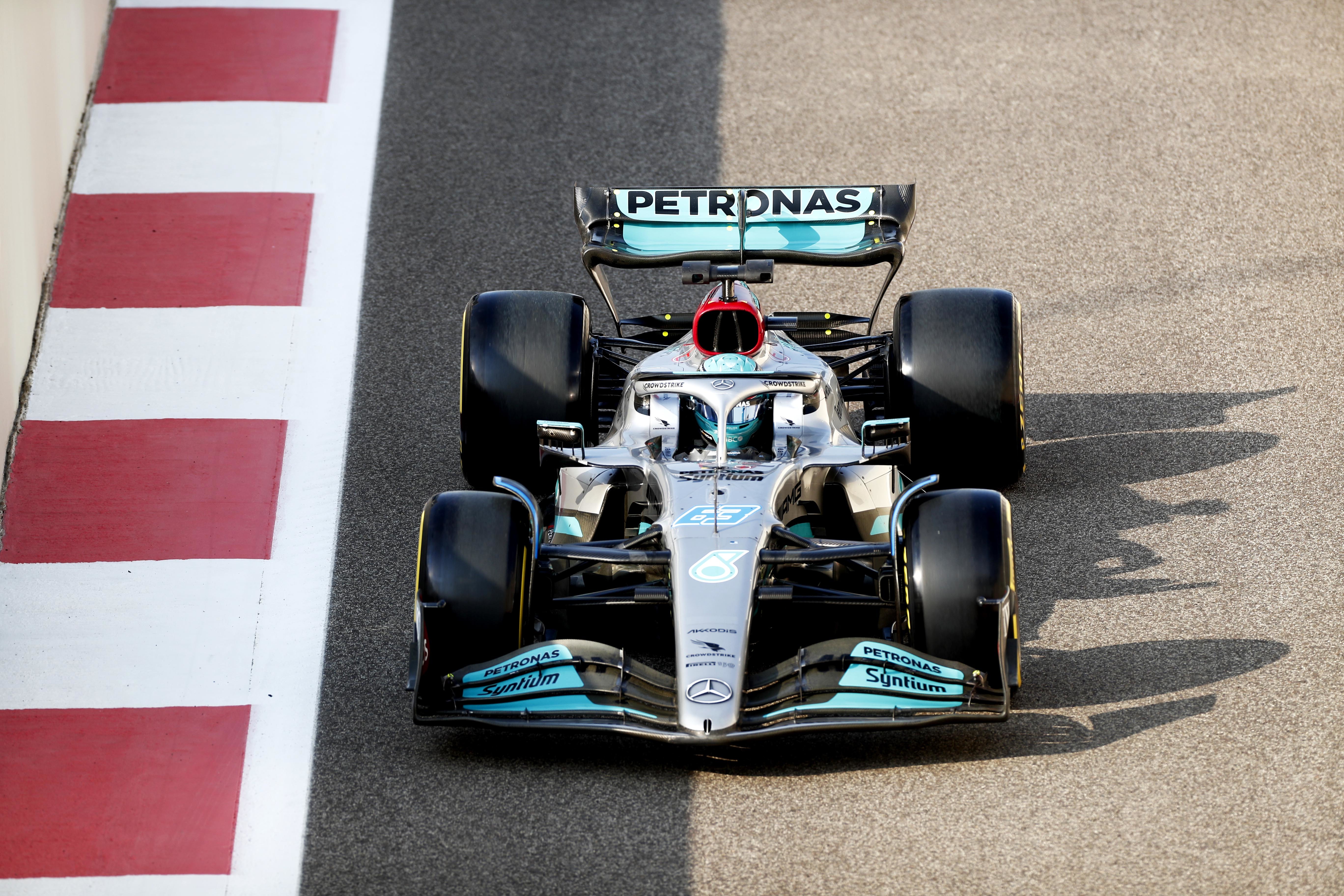
George Russell, Mercedes W13 with no sidepods
The sidepods are the two aerodynamic pods on either side of a Formula 1 chassis, housing the radiators and providing the largest single family of aero surfaces on the car. The shape of the sidepod determines cooling flow, airflow to the diffuser, and now, since the 2022 regulations, much of the car's downforce potential. Every team rewrites its sidepod concept every winter.
What are sidepods in F1?
Sidepods are the shaped panels on the flanks of an F1 car, running from the trailing edge of the front tyres to the rear of the sidepod-integrated engine cover. Inside them sit the water and oil radiators, MGU-K electronics, ancillary cooling and part of the exhaust routing. Their outer skin is one of the most heavily worked aerodynamic surfaces on the car.
What sidepods do
- Cool the car: water and oil radiators live inside them, fed by the sidepod inlets;
- Guide airflow: outer surfaces direct flow toward the floor and diffuser;
- Protect from side impact: integrated side impact structures live along the sidepod cavity;
- Manage exhaust routing: the exhaust exits over the top of the engine cover between the sidepods;
- Host driver cooling: some sidepod cavities route air toward the driver.
Sidepod concepts since 2022
The 2022 aerodynamic regulations changed the sidepod arms race dramatically. Mercedes launched the W13 with the famous "zero-sidepod" concept, running almost no upper bodywork on the flanks of the car. Ferrari, Red Bull and McLaren all developed more conventional inlet shapes. By 2024 most teams had converged on a downwash-heavy sidepod concept resembling the Red Bull RB18, and the zero-sidepod idea has largely been abandoned.
Sidepod inlets and cooling
The size and shape of the sidepod inlet determines how much cooling flow the radiators receive, and any team that runs too small an inlet risks overheating in hot conditions. Teams typically fit different cooling packages for hot events like Singapore and Bahrain than for cool European rounds, though every extra bit of cooling flow costs aerodynamic performance.
Frequently asked questions about sidepods
What are sidepods in F1?
Sidepods are the shaped panels on the flanks of an F1 car that house the radiators and guide airflow toward the floor and diffuser.
What do sidepods contain inside them?
Water and oil radiators, MGU-K electronics, ancillary cooling systems, and integrated side impact structures.
What was the Mercedes zero-sidepod concept?
The 2022 Mercedes W13 launched with almost no upper bodywork on the sidepod flanks, an extreme interpretation of the regulations. The concept was abandoned by 2023 as it failed to produce enough downforce.
Do sidepods play a role in safety?
Yes. Side impact structures are built into the sidepod cavity, and they absorb energy in the event of a lateral impact.
Why do teams change sidepod shape between circuits?
To adjust cooling flow for the ambient temperature and to fine-tune the aerodynamic interaction with the floor and diffuser at each track.









LAST 3 F1 Fan COMMENTS

Shroppyfly on Honda stops short of backing F1's V8 return6 hours ago 
Nobodysperfect on Honda stops short of backing F1's V8 return6 hours ago 
Shroppyfly on Red Bull stays quiet on Verstappen's new 80 million deal7 hours ago
All F1 Fan Comments