



Telemetry

Red Bull Racing Team Principal Christian Horner looks on from the pitwall during qualifying for the F1 Grand Prix of Belgium at Circuit de Spa-Francorchamps on August 31, 2019 in Spa, Belgium.
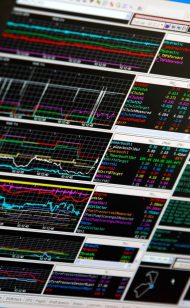
Telemetry is the live stream of data that leaves a Formula 1 car during every session and reaches the engineers on the pit wall and back at the factory. Every rotation of the wheels, every throttle input, every gearshift, every temperature, every g-load, every switch position on the steering wheel is measured and transmitted. Modern F1 runs on it more than on rubber.
What is telemetry in F1?
Telemetry is the real-time transmission of car data from the vehicle to the pit wall and the team factory. Sensors around the car measure hundreds of channels: engine speed, torque, temperatures across the power unit, tyre pressures, brake temperatures, chassis loads, steering angle, throttle position, brake pressure, and every hybrid deployment metric. The data is transmitted wirelessly to the pit wall in the tens of milliseconds and archived for post-session analysis.
What telemetry contains
- power-unit temperatures, pressures and torque delivery;
- gearbox shift quality, clutch behaviour, differential state;
- brake temperatures, pressures and lock-up detection;
- tyre pressures and temperatures at each corner;
- steering angle, throttle position, brake position, DRS state;
- chassis and body accelerometers at multiple points;
- every rotary switch, button and mode change on the steering wheel.
Two-way telemetry rules
Modern F1 telemetry is one-way from car to pit wall. Two-way telemetry, in which the pit wall could send changes back to the car, was banned in 2003. Teams can request changes over the radio but the driver has to physically make them on the steering wheel. This preserves the driver's central role in setup on Sunday, and prevents remote tuning of the car during a race.
Telemetry and the factory
Every modern F1 team runs a Race Operations Centre at their home factory, mirroring the pit-wall telemetry feeds. Engineers there run parallel simulations, alert the trackside team to issues invisible in a snapshot view, and add engineering horsepower that could not fit on the pit wall itself. It is now normal for a race weekend decision to draw on more engineers in a factory in Milton Keynes or Woking than in the paddock.
Latest telemetry news

The New Era of Formula 1: Speed, Data, and Fan
The Shift Toward Data-Driven F1 Fandom in the 2026 Season

How telemetry has evolved in F1

Marko wants telemetry & radios banned in F1
6
Todt wants F1 to reduce driver aids
5
Alonso: Cars too complex for F1 telemetry ban

How does telemetry help improve laptimes of F1 drivers?
Frequently asked questions about F1 telemetry
What is telemetry in F1?
Telemetry is the live wireless data stream from an F1 car to the pit wall and the team factory, covering hundreds of engine, chassis, tyre and driver-input channels.
How much data does an F1 car send?
Hundreds of channels sampled thousands of times per second, adding up to gigabytes per session and terabytes across a season.
Is two-way telemetry allowed in F1?
No. Two-way telemetry, allowing the pit wall to send changes to the car, was banned in 2003.
Where does telemetry data go?
To the pit wall and to the Race Operations Centre at the team's factory, where additional engineers run parallel simulations and monitor for issues.
Can teams see rival telemetry?
No. Each team's telemetry is encrypted and private. Only the FIA has access to designated channels for regulatory compliance checks.
Last updated: