





Out-brake
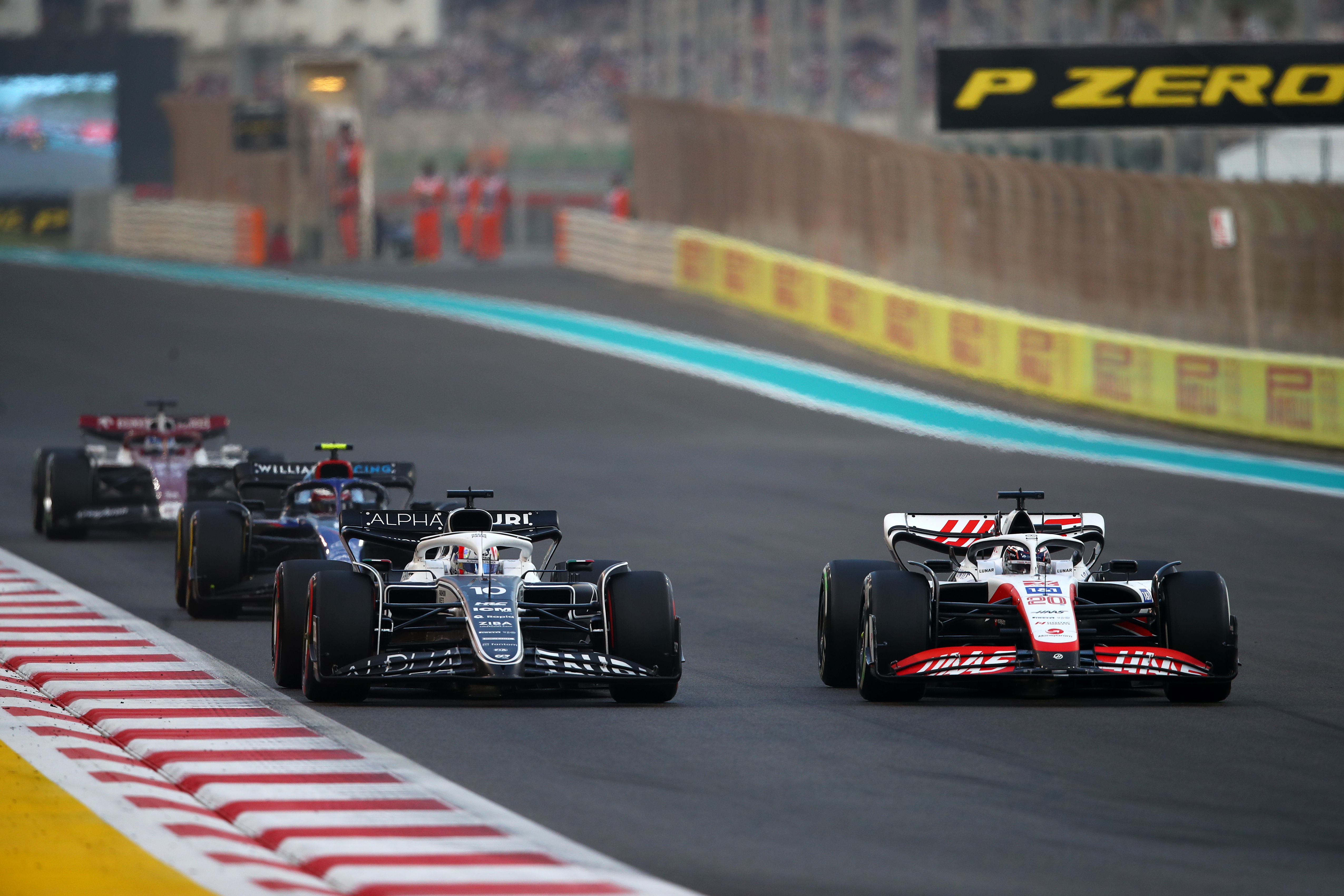
Kevin Magnussen driving the (20) Haas F1 VF-22 Ferrari and Pierre Gasly driving the (10) Scuderia AlphaTauri AT03 battle for position during the 2022 F1 Grand Prix of Abu Dhabi
To out-brake someone in Formula 1 is to brake later than they do into a corner and use that later braking point to pass them on the inside. It is one of the oldest overtaking techniques in the sport, and the modern F1 calendar is designed around braking zones where it can happen. From Silverstone Stowe to Bahrain Turn 1, the out-brake is where lap-time advantage becomes track-position advantage.
What does "out-brake" mean in F1?
To out-brake another driver is to hit your brake pedal later than they do into a corner while remaining able to make the turn. Because you are decelerating from a higher speed but still hitting the apex, you either draw alongside the other car by the braking zone, or arrive at the corner turn-in point in a position to force them to yield. Successful out-braking usually results in an overtake at the apex.
How out-braking works
- Draft close on the straight: position matters, so being within one car length onto the braking zone is essential;
- Pick your line: commit to the inside before the braking zone begins;
- Delay the brake application: use every metre of straight you can before touching the pedal;
- Control the front tyres: too late a brake locks the fronts and blocks the turn-in;
- Roll off the pedal into the apex: a smooth trail-brake preserves the ability to turn.
The classic out-brake move
Silverstone Stowe corner is textbook territory. So is Bahrain Turn 1, Baku Turn 3, Monza Rettifilo and Interlagos Turn 1. The pattern is always the same: a long, high-speed straight leading to a hard, low-speed corner. That combination gives the following car maximum distance to build speed in the tow, and the deepest possible braking zone to deploy an out-brake.
Why out-braking is harder in modern F1
Modern F1 braking distances are extraordinarily short. From 320 km/h to 80 km/h in a Grand Prix car takes less than 100 metres and produces up to 6 g of deceleration. That leaves very little braking zone for a following driver to exploit. DRS and the slipstream matter more than driver aggression alone.
Frequently asked questions about out-braking
What does out-brake mean in F1?
Out-braking means braking later than another driver into a corner while still making the turn. The manoeuvre is used to draw alongside or pass on the inside at the apex.
Where do out-brakes usually happen?
At the end of long, high-speed straights leading into hard, low-speed corners. Silverstone Stowe, Bahrain Turn 1, Baku Turn 3, Monza Rettifilo and Interlagos Turn 1 are classic examples.
What is the risk of an out-brake attempt?
Overcooking the braking zone can lock the front tyres, flat-spot them and cause the driver to run wide. In heavy contact scenarios, both cars can be knocked out of the race.
Is out-braking easier with DRS?
Yes. DRS gives the following driver an extra 10 to 12 km/h in the closing metres of the straight, which translates directly into deeper committed braking zones.
Why are out-braking overtakes hard in modern F1?
Because modern braking distances are extraordinarily short. Cars can decelerate from 320 km/h to 80 km/h in less than 100 metres, leaving little zone in which one driver can gain enough advantage over another.








LAST 3 F1 Fan COMMENTS

Shroppyfly on Honda stops short of backing F1's V8 return6 hours ago 
Nobodysperfect on Honda stops short of backing F1's V8 return7 hours ago 
Shroppyfly on Red Bull stays quiet on Verstappen's new 80 million deal7 hours ago
All F1 Fan Comments