





G-force
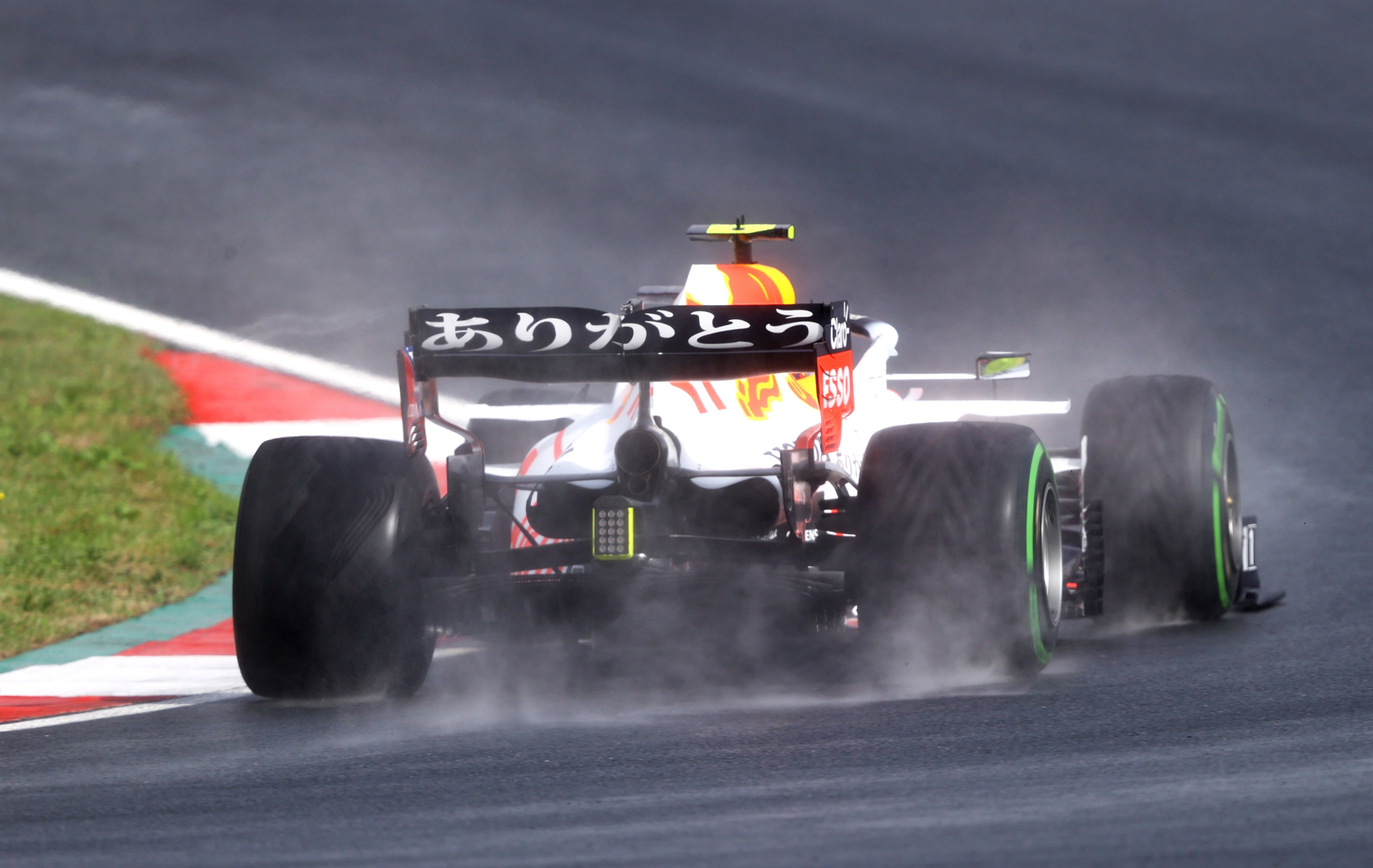
Sergio Perez of Mexico driving the (11) Red Bull Racing RB16B Honda during final practice ahead of the F1 Grand Prix of Turkey at Intercity Istanbul Park
G-force is the acceleration a body experiences relative to Earth's gravity, and it is one of the numbers that best captures what an F1 driver actually feels behind the wheel. In modern high-downforce Formula 1 the peak lateral loads reach around 6 g in fast corners, and heavy braking can hit 6 g as well. That is roughly six times the driver's body weight pulling sideways or forward, sustained for seconds at a time.
What is g-force in Formula 1?
G-force is a measure of acceleration expressed as a multiple of Earth's gravitational acceleration (approximately 9.81 m/s²). At 1 g the driver experiences their normal body weight. At 5 g a driver's head and helmet, weighing roughly 6.5 kg together, feels like 32.5 kg pushing sideways on their neck. Managing that repeated load is a large part of the physical training required of an F1 driver.
Where g-forces come from on an F1 car
- Braking g: up to about 6 g under maximum retardation from 300 km/h;
- Lateral g: up to 6 g through the fastest corners such as Spa Eau Rouge, Copse at Silverstone or Turn 8 at Istanbul;
- Acceleration g: less than braking or cornering, typically 1.5 to 2 g due to traction limits;
- Kerb strike g: vertical spikes can reach 25 g or more instantaneously across a shoulder-jarring instant.
How drivers train for it
Modern F1 drivers spend serious time on neck training, wearing weighted helmets or pulling static loads on specialised rigs, and follow endurance and strength programmes that keep upper-body and core muscles capable of long sustained loads. Cockpit head support and the halo help, but the body still has to absorb the loads. Dehydration under heavy g at high cockpit temperatures is one of the sport's central endurance problems.
Peak recorded g-forces in F1
Race crashes have produced some of the highest g-loads any human being has survived. Robert Kubica's Canada 2007 accident registered a peak deceleration in excess of 75 g. David Purley's 1977 Silverstone crash into a stationary tyre wall recorded an estimated 179 g and remains the highest reliably measured deceleration survived by a human. Modern survival cells and the halo have made these numbers survivable on a routine basis.
Frequently asked questions about g-force in F1
What is g-force in F1?
G-force is acceleration expressed as a multiple of Earth's gravity. F1 drivers experience up to around 6 g under heavy braking and in the fastest corners.
What is the maximum g-force in an F1 car?
Sustained g-forces during normal driving peak around 6 g. Impact g in crashes has reached over 75 g on modern telemetry, and higher on legendary historical accidents.
How do F1 drivers train for g-forces?
Drivers do dedicated neck training, wear weighted helmets or use pull-rigs, and follow programmes that build endurance and core strength for sustained cornering and braking loads.
What does 5 g feel like?
At 5 g everything the driver is wearing weighs five times its normal weight. A helmet-plus-head assembly that normally weighs about 6.5 kg feels like more than 30 kg pushing sideways on the neck.
Do F1 drivers ever black out from g-forces?
Sustained racing g-forces alone rarely cause loss of consciousness because they act laterally rather than in a head-to-toe direction. Extreme impact g can, and the halo and modern head-and-neck restraints exist to protect against exactly that.








LAST 3 F1 Fan COMMENTS

Shroppyfly on Honda stops short of backing F1's V8 return6 hours ago 
Nobodysperfect on Honda stops short of backing F1's V8 return6 hours ago 
Shroppyfly on Red Bull stays quiet on Verstappen's new 80 million deal7 hours ago
All F1 Fan Comments