





The plank in F1 cars
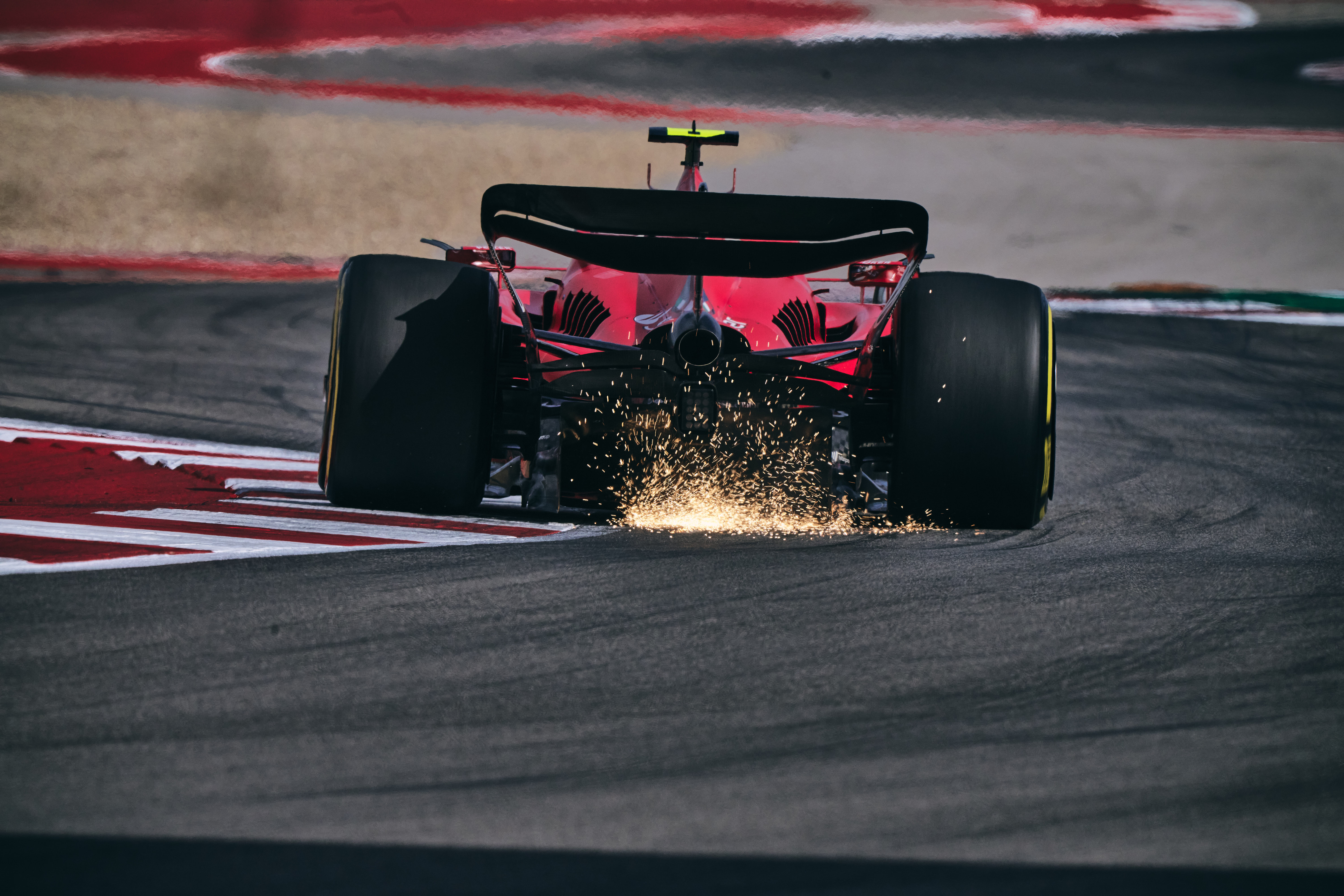
Carlos Sainz driving the Ferrari SF-23 around COTA during the 2023 US F1 GP
The plank is a strip of Jabroc, a wood-composite material, mounted along the underside of every Formula 1 car's floor to enforce a legal minimum ride height. The FIA measures its thickness before and after every race, and a plank that has worn beyond a strict 1mm tolerance leads to instant disqualification. It is one of the simplest and most consequential regulatory tools in the sport.
What is the plank in F1?
The plank is a rectangular Jabroc composite skid block bonded to the flat central portion of the F1 underfloor. Its full thickness is set by the Technical Regulations, and the entire plank must remain intact and worn only by a small legal amount at the end of a race. Any car whose plank has worn more than 1mm below the specified thickness is disqualified from the results.
Why the plank exists
The plank was introduced in 1994 as an emergency safety measure after the deaths of Roland Ratzenberger and Ayrton Senna at Imola. The FIA wanted to enforce a legal minimum ride height that could not be gamed through hidden mechanical devices. By putting a wear-sensitive board under every car, the regulator ensured that any team running the car too low would leave physical evidence, and that evidence would be checked with a caliper at parc ferme.
The 1mm wear rule
The plank thickness is specified at a set dimension for the specification of the year, and it may not wear more than 1mm in a race. FIA scrutineers measure it at multiple points on the plank with a caliper. If any measurement exceeds the 1mm tolerance, the car is disqualified. Because the rule is objective and unambiguous, disqualifications tend to stand on appeal.
Recent plank-wear disqualifications
The plank drew headlines at the 2023 United States Grand Prix, when both Lewis Hamilton and Charles Leclerc were disqualified from the results for excessive plank wear. The pattern is common on street circuits and bumpy resurfaced tracks, and modern teams have to plan set-up carefully to stay within the tolerance across a full race distance.
Frequently asked questions about the plank
What is the plank in F1?
The plank is a strip of Jabroc composite bonded to the underside of an F1 car's floor to enforce a minimum ride height. It must not wear more than 1mm across a race.
Why was the plank introduced?
It was introduced in 1994 as a direct safety response to the deaths of Roland Ratzenberger and Ayrton Senna at Imola. The FIA wanted an unambiguous ride-height enforcement tool.
What is Jabroc?
Jabroc is a wood-composite material made from resin-bonded wood veneers. It provides consistent wear characteristics and does not shatter, making it ideal for the plank.
What happens if the plank wears too much?
The car is disqualified from the classification. The FIA measures wear with a caliper at multiple points, and any point that exceeds 1mm above the tolerance triggers exclusion.
Which recent races saw plank-wear disqualifications?
The 2023 United States Grand Prix saw both Lewis Hamilton and Charles Leclerc disqualified for excessive plank wear.






Recent F1 Comments

Shroppyfly on Honda stops short of backing F1's V8 return6 hours ago 
Nobodysperfect on Honda stops short of backing F1's V8 return7 hours ago 
Shroppyfly on Red Bull stays quiet on Verstappen's new 80 million deal7 hours ago
All F1 Fan Comments