





Graining
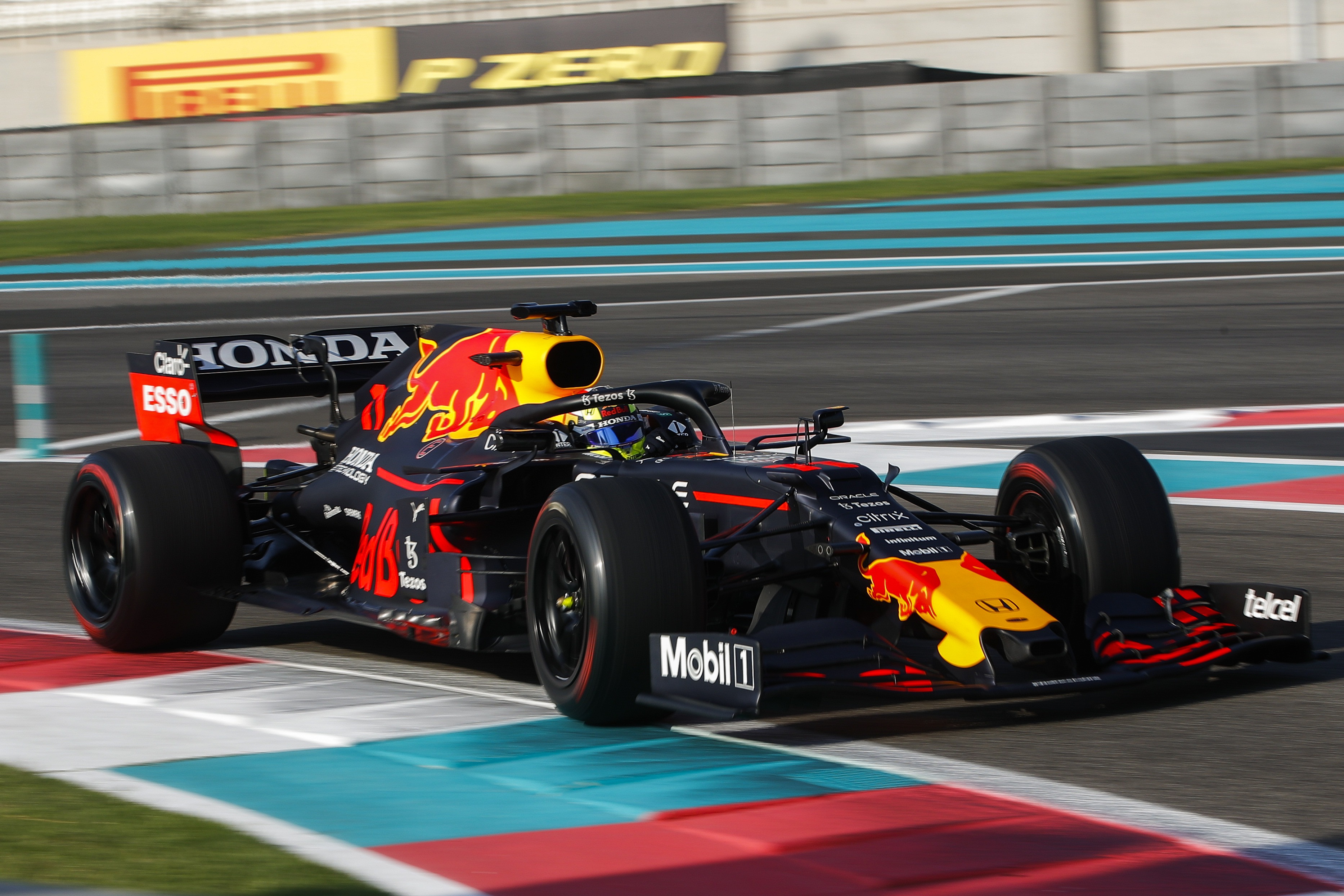
Sergio Perez, Red Bull Racing RB15 Mule during the Abu Dhabi November testing at Yas Marina Circuit on Wednesday December 15, 2021 in Abu Dhabi, United Arab Emirates. (Photo by Zak Mauger / LAT Images)
Graining is a tyre surface failure that happens when a Formula 1 compound is too cold and slides too much across the road. The tread tears itself into thin, ribbon-like ridges that reduce contact area and grip. It is the opposite failure mode from blistering, and the fix is opposite too, work the tyre harder to warm it up, rather than backing off.
What is graining in F1?
Graining is a surface phenomenon on a tyre. When the tread compound is below its operating temperature window and the driver is asking for more grip than it can provide, the rubber slides rather than gripping cleanly. That sliding tears the surface into thin ribbons of rubber, described in the paddock as grain, that break off from the tread. Once the ribbons form, the effective contact patch shrinks and the tyre loses further grip, which encourages more sliding, which produces more graining.
What causes graining
- track surface temperature below the tyre's working window;
- overly soft compound for the conditions;
- early-stint laps before the tyre has fully warmed;
- excessive front-end steering input on understeer;
- green or freshly resurfaced track surfaces with low grip;
- very light fuel loads that don't generate enough tyre load.
Graining versus blistering
The two failure modes are often confused. Graining is a surface effect from a cold tyre sliding. Blistering is an internal effect from a hot tyre releasing gases and lifting the tread. Both cost grip, but the responses are opposite: a graining tyre wants to be worked harder to bring temperature up, and a blistering tyre wants to be cooled. Get the diagnosis wrong and the problem gets worse fast.
How teams manage graining
Engineers focus on tyre warm-up strategies, pressure setups and driver coaching to avoid graining. Higher tyre pressures raise carcass temperature. Longer out-laps let the tyre come up to temperature gradually. Drivers are asked to use short bursts of full commitment early in a stint to reach the working window quickly. Once the tyre is graining, it will often recover if the driver can push through and heat the compound past the affected temperature.
Frequently asked questions about graining
What is graining in F1?
Graining is a surface tyre failure where the tread tears itself into thin ribbons because the compound is too cold and sliding too much. It reduces grip and can be difficult to recover from.
What is the difference between graining and blistering?
Graining is a surface effect caused by cold sliding. Blistering is an internal effect caused by heat. The fixes are opposite, graining wants heat, blistering wants cooling.
What causes graining on F1 tyres?
Cold track, cold compound, early laps of a stint, excessive steering input, green track surfaces, or a compound that is simply too soft for the conditions.
Can a driver recover a graining tyre?
Sometimes. Pushing through the graining to raise tyre temperature past the affected point can allow the surface to reset, though the tyre may never fully return to peak performance.
Do soft or hard tyres grain more?
Softer compounds tend to grain more easily in cold conditions because they are designed to work at higher temperatures. Hards are more resistant to graining but need very hot conditions to work at all.








LAST 3 F1 Fan COMMENTS

Shroppyfly on Honda stops short of backing F1's V8 return6 hours ago 
Nobodysperfect on Honda stops short of backing F1's V8 return7 hours ago 
Shroppyfly on Red Bull stays quiet on Verstappen's new 80 million deal7 hours ago
All F1 Fan Comments