





Oversteer
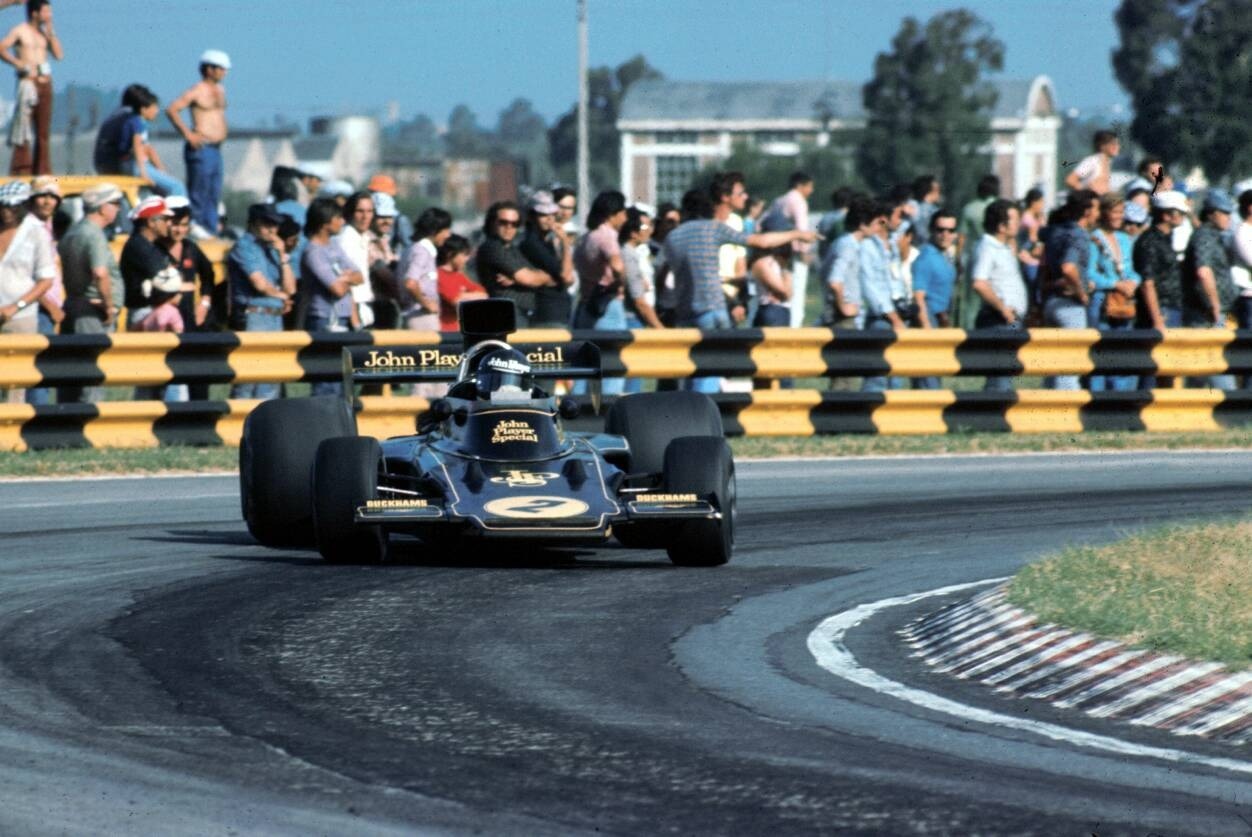
Jacky Ickx fighting oversteer in the Lotus 72E
Oversteer is what happens when a Formula 1 car's rear tyres lose grip before the fronts, and the back of the car steps sideways. It is one of the two fundamental balance problems in racing (understeer is the other), and it is what makes fast drivers look fast. A car that is neatly on the edge of oversteer through a fast corner is producing peak grip. A car that has crossed the edge is spinning.
What is oversteer in F1?
Oversteer is a chassis balance state in which the rear tyres are working harder than the fronts and the back end starts sliding outward through a corner. The driver has to catch the slide with steering input and throttle control, or the car spins. Small, controlled oversteer is desirable in fast corners because it points the nose to the apex without scrubbing off speed on the front tyres. Large, uncontrolled oversteer is a lap-time and race-winning problem.
What causes oversteer
- rear tyres worn or overheated;
- too much rear-end aero balance forward, unloading the rear wing;
- too much throttle applied too early on corner exit;
- too little rear downforce or too aggressive a differential setting;
- rear brake bias too heavy under trail braking;
- wet or slippery patches under the outside rear.
Oversteer versus understeer
The two are opposites. Understeer is a car that will not turn: the front tyres lose grip first, and the nose runs wide. Oversteer is a car that turns too much: the rear tyres lose grip first, and the back slides outward. Every driver has a preference for one or the other, and most modern drivers set the car up for a hint of oversteer on entry and neutrality on exit.
How drivers catch oversteer
The driver responds by counter-steering into the slide, easing off the throttle just enough to reload the rear tyres, and letting the car settle back into line. Modern F1 traction control was banned in 2008, so all of this is done on the driver's inputs. Slow-motion cameras on Verstappen or Alonso through Suzuka Turn 1 show tiny, constant steering corrections at every fraction of a second.
Frequently asked questions about oversteer
What is oversteer in F1?
Oversteer is a balance state in which the rear tyres lose grip before the fronts and the back of the car slides outward through a corner.
What is the difference between oversteer and understeer?
Understeer is when the fronts lose grip first and the nose runs wide. Oversteer is when the rears lose grip first and the back steps out. They are opposite failure modes.
Do F1 drivers want oversteer?
A hint of controlled oversteer on entry is desirable because it points the nose to the apex. Uncontrolled oversteer is a lap-time and reliability disaster.
What causes oversteer in an F1 car?
Rear tyre wear, aero balance too far forward, aggressive throttle application, differential settings, or rear brake bias, and wet patches on the outside line.
How do drivers catch oversteer?
By counter-steering into the slide, easing the throttle to reload the rear tyres, and letting the chassis settle back into line without abrupt inputs.








LAST 3 F1 Fan COMMENTS

Shroppyfly on Honda stops short of backing F1's V8 return7 hours ago 
Nobodysperfect on Honda stops short of backing F1's V8 return7 hours ago 
Shroppyfly on Red Bull stays quiet on Verstappen's new 80 million deal8 hours ago
All F1 Fan Comments