





Cockpit
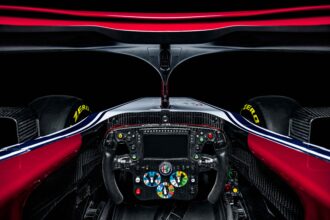
The cockpit is where the driver lives at 300 km/h, wrapped in carbon fibre and a survival cell built to FIA specification.
The cockpit is the driver's office in a Formula 1 car, and it is engineered to two competing goals: keep the driver physically small in the chassis and keep them alive if anything goes wrong. Every dimension of the modern F1 cockpit is written into the FIA Technical Regulations, from the width of the survival cell to the height of the halo and the escape time out of the seat.
What is the cockpit in Formula 1?
The cockpit is the section of the survival cell that houses the driver. It contains the seat, the steering wheel, the pedals, the harnesses and the primary controls. The bathtub-shaped carbon-fibre monocoque forms its structural walls, and the halo now caps it from above. It is the most safety-critical part of the entire car.
Key cockpit dimensions and features
- Halo: the titanium safety structure introduced in 2018, tested to withstand 12 tonnes of vertical load;
- Survival cell: carbon-fibre monocoque with internal padding and side impact structures;
- Steering wheel: quick-release rotary and toggle-heavy control centre, changed multiple times per season;
- Pedal box: two pedals only on modern F1 cars, brake and throttle;
- Escape test: drivers must be able to get out of the cockpit and take off the steering wheel within seven seconds.
The halo and the cockpit safety revolution
The 2018 introduction of the halo was the biggest single change to cockpit design in a generation. It has since been credited with saving multiple lives, most publicly Charles Leclerc at Spa 2018 and Romain Grosjean at Bahrain 2020. The halo added a new structural constraint that reshaped nose designs and roll hoop geometry across the grid.
Cooling and driver comfort
The cockpit is a hot place. Engineers route cooling flow past the driver via helmet air intakes and cockpit vents, and drink systems are integrated into the seat. Air temperature at the driver's feet can rise well above 50 C in a Singapore or Bahrain race, and cockpit temperature management has become part of the car's wider thermal design.
Latest cockpit news

Mercedes' F1 technical Chief dismisses cockpit position as key to
1
'Sceptical' Marko admits Halo saved Zhou's life last Sunday
1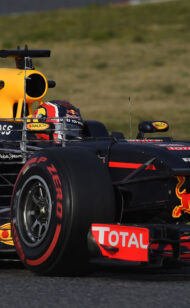
Red Bull to test F1 cockpit canopy in April

Hulkenberg no fan of closing F1 cockpit
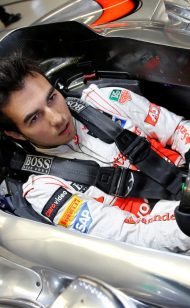
Montoya opposed to covering cockpits
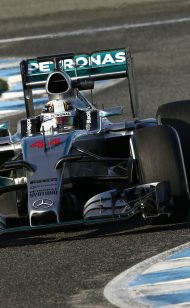
Mercedes promises 'halo' for cockpit safety

Marko - Ricciardo to slim down for 2014 cockpit
Frequently asked questions about the F1 cockpit
What is the cockpit in Formula 1?
The cockpit is the section of the survival cell that houses the driver. It contains the seat, steering wheel, pedals, harnesses and primary controls, and is defined by strict FIA safety regulations.
What is the halo?
The halo is a titanium safety structure introduced in 2018 that sits above the cockpit. It is tested to 12 tonnes of vertical load and has already been credited with saving multiple lives.
How quickly must a driver be able to exit the cockpit?
FIA regulations require drivers to be able to leave the cockpit and remove the steering wheel within seven seconds during the annual homologation test.
How many pedals does an F1 car have?
Two: a brake pedal on the left and a throttle pedal on the right. Modern F1 cars have not had a clutch pedal since paddle-shift and hand-clutch systems became standard.
How hot does the cockpit get?
Cockpit temperatures at hot-weather events like Singapore and Bahrain can rise well above 50 C at foot level. Teams use cooling ducts, drink systems and heat-reflective materials to manage the load on the driver.
Last updated:


