Ferrari's exhaust trick triggers grid-wide 2026 copy war
1





The exhaust system is a homologated power-unit element and its layout is dictated by the position of the turbo and MGU-H.
The Exhaust System, EX, is the homologated power-unit element that routes combustion gases from the engine, through the turbocharger and out of the car. It shapes exhaust back-pressure, feeds energy to the MGU-H and, in earlier eras, was directly weaponised for aerodynamic advantage. It is one of the six power-unit elements the FIA counts against each driver's season allocation.
The exhaust system carries hot gases from the cylinders of the 1.6-litre V6 turbo engine to the atmosphere. On its way it drives the turbo compressor, feeds the MGU-H harvester, and exits through a single tailpipe as required by the current regulations. Its shape, wall thickness and internal geometry are set by the Technical Regulations and are homologated at the start of each season.
Between roughly 2010 and 2013, teams routed exhaust gases into the rear diffuser to energise the airflow and generate additional downforce. The FIA progressively banned the practice because it forced engines to produce exhaust flow even when the driver was off the throttle, distorting engine calibration and inflating costs. The current single-tailpipe rule was written specifically to prevent that trick returning.
The exhaust is one of the six FIA-numbered power-unit elements, alongside the ICE, turbocharger, MGU-K, MGU-H and Energy Store. Each driver is allocated a set number of each per season, and going over the limit brings grid penalties in the same manner as an engine change.


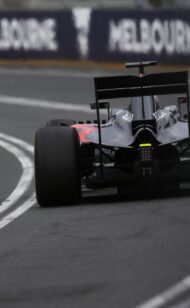




The exhaust system routes combustion gases from the V6 engine through the turbocharger and MGU-H to a single central tailpipe. It is homologated at the start of each season.
Yes. Alongside the ICE, turbo, MGU-K, MGU-H and ES, the exhaust is one of the six numbered power-unit elements each driver is allocated per season.
A design used from roughly 2010 to 2013 that routed exhaust into the diffuser to energise airflow and generate downforce. The FIA banned it because it distorted engine operation.
The single central tailpipe was mandated to prevent teams routing exhaust flow toward aerodynamic surfaces.
A broken exhaust usually forces retirement because it disturbs turbo pressures, MGU-H operation and often causes rear-end fire risks.