Why McLaren Wants Review of Plank Wear Rules Now
7





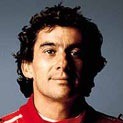
Disqualification is the sport's heaviest steward penalty, most famously Ayrton Senna at Suzuka 1989.
Disqualification is the FIA's heaviest race-day sanction, the total exclusion of a driver from the classified results of a session. It is reserved for the most serious rule breaches: technical non-compliance, dangerous driving that goes beyond a normal penalty, or a procedural offence the stewards judge to warrant complete removal. Where a five-second penalty is a warning shot, a disqualification wipes the result off the record.
Disqualification, abbreviated DSQ in the timing sheets, means the driver is removed from the classified finishing order of the session. In a race it costs both the points and the classification, in qualifying it costs the grid slot, and in a wider championship context it can cascade into constructors' points losses. A DSQ can be issued during the session or, more often, after post-race scrutineering.
Some of the sport's most consequential championship decisions have turned on disqualifications. Ayrton Senna was excluded from the 1989 Japanese grand prix result after a collision with Alain Prost, handing the title to his team-mate. Michael Schumacher was disqualified from the 1997 European Grand Prix at Jerez for his championship-deciding collision with Jacques Villeneuve. More recently, both Lewis Hamilton and Charles Leclerc were disqualified from the 2023 United States Grand Prix for excessive skid-block wear.


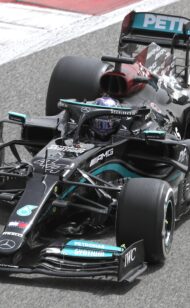
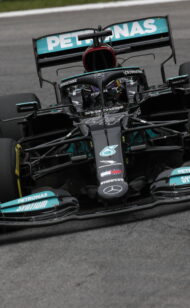
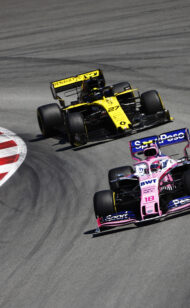

Disqualified means the driver is removed from the classified results of the session. It can be applied to a race, qualifying or practice, and is issued for serious rule breaches by the stewards.
Technical non-compliance, mostly ride height, plank wear or front-wing flexibility, plus fuel-flow irregularities and cars found underweight after the race. Serious sporting offences such as dangerous driving can also lead to disqualification.
Many drivers have been disqualified over the years. Notable examples include Ayrton Senna at Suzuka 1989, Michael Schumacher at Jerez 1997, and Lewis Hamilton and Charles Leclerc at the 2023 US grand prix for skid-block wear.
Yes. Teams can appeal to the FIA International Court of Appeal. Successful appeals are rare, and most disqualifications for technical breaches are upheld because the physical evidence is unambiguous.
A time penalty adds seconds to the driver's race time but leaves them classified. A disqualification removes the driver from the classification entirely, including their points and any trophy positions.