





1987 Japanese F1 Grand Prix Race Report & Results
Event: Japanese Grand Prix
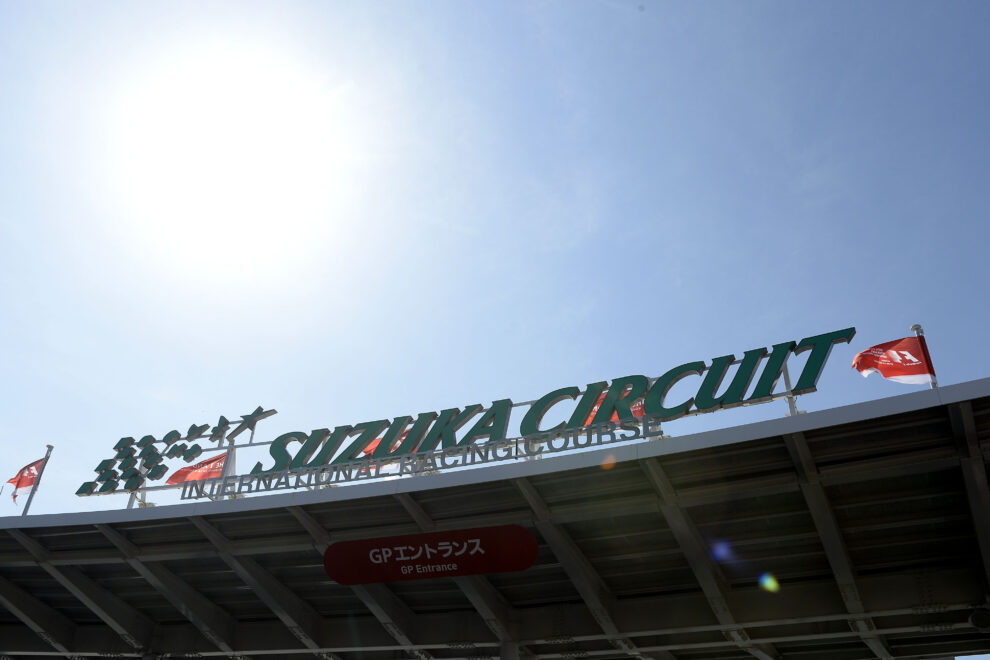
Track: Suzuka Circuit
Weather: cool, dry, autumn sun
Gerhard Berger won his 2nd F1 World Championship race at the 1987 Japanese F1 GP. The Ferrari driver started from pole and won on the Suzuka circuit for the first time. It was also his 1st win of the season and the 92nd win for the Ferrari F1 team.
Honda Land
Formula 1 returned to Japan for the first time in ten years on 1 November 1987, and did so at Suzuka, a Honda-owned circuit designed by John Hugenholtz in the early 1960s and rebuilt to international standard in time for this race at a cost of nine million dollars. The figure-of-eight layout (a pedestrian bridge crossing the back straight passed over the start-finish straight) was immediately and universally praised as a proper drivers' circuit: technical, undulating, with the high-speed Esses, the long Spoon Curve and the flat-in-sixth 130R already legendary inside one weekend. Fuji TV deployed 150 staff and 36 cameras. A Ferris wheel overlooked the paddock. A hundred thousand spectators turned out. Soichiro Honda, who would have preferred to call the place Honda Land Circuit Company Ltd., conceded "Suzuka Circuit Land Company Ltd." in deference to the other Japanese manufacturers, but everyone knew whose grand prix this really was.
The championship table going into the weekend read Piquet 73, Mansell 61, Senna 49, Prost 46. Mansell needed to win both remaining races, with Piquet scoring no higher than third in either, to take the title. Piquet, hampered by the dropped-score system, needed at least one win and one second place to secure it. The fight was technically alive.
Friday afternoon at the S-curves
Friday afternoon, the first official qualifying session, ended Mansell's title hopes. He set the morning's best time at 1m 42.616s, returned to the pit lane, and watched Piquet respond with 1m 41.423s. Stung, he went straight back out and pushed. He arrived too fast at the Shita corner, the last of the S-curve sequence, slid wide, the Williams's left-side wheels clipped the kerb on the exit, the chassis pitched into a half-spin, hit a pile of tyres rear-first hard, vaulted into the air and slammed back down across the track with terrifying violence. Mansell took his helmet off and screamed in pain. He could not move his head. He was airlifted to Nagoya University hospital and admitted to intensive care. A rising fluid level between his lung and his heart was the first concern; happily, the aorta was intact. He had concussion, contusions through his neck, back and legs, with the additional weight of two previous spinal injuries from 1977 and 1979. Driving the race the next day was out of the question. Saturday morning he telephoned Jean-Marie Balestre and his crew chief to tell them he was withdrawing and going home.
The moment Mansell scratched, Nelson Piquet became the 1987 world champion. He showed no visible satisfaction. He gave no statement. He was due his third world title in seven years, was not going to celebrate it on his absent rival's hospital pillow.
Berger's pole, the race nobody had ever raced
Senna and Piquet's championship had been settled. The race in front of them was the first F1 grand prix anyone had ever contested at Suzuka. Berger took the second pole position of his career, Ferrari's first since the same Portuguese pole he had won in September, by a quarter of a second from Prost, with Boutsen third for Benetton and Alboreto fourth in the other Ferrari. Fabi sixth. Piquet, his motivation gone with Mansell's airlift, qualified only fifth in a Williams that the team had set up around active-suspension parameters but were not running at Suzuka. Senna seventh in a Lotus he could not balance; Nakajima eleventh, the local hero playing to a crowd that had come specifically to watch him.
The race itself was the cleanest of Berger's career. He led from pole; on lap two Prost picked up a left-rear puncture from debris of the Arnoux-Alliot opening-lap collision and pitted with a tyre shredding in his wheel arch; one lap down and twenty laps later setting fastest lap to climb back to seventh. Boutsen led for two laps before his Benetton's clutch died; he ran fifth for the rest of the afternoon nursing fuel. Behind Berger, Senna and Piquet ran a controlled middle-of-the-grand-prix duel for second, with Johansson the McLaren shadowing them. The pit-stop cycle ran across laps twenty-one to twenty-eight without significant incident; Johansson's stop on lap twenty-one was the masterstroke that gained him second on the road, and Berger's lap-twenty-six stop returned the McLaren to him by three seconds. Berger crossed the line for his second career grand prix victory, Ferrari's first win since the 1985 Belgian Grand Prix, two and a half years of accumulated drought ended in a single dominant afternoon.
Piquet third in the table, Berger first to the flag
Senna took second after passing the fuel-starved Johansson on the last lap with a perfectly judged tow into the Spoon Curve approach to 130R. Johansson held on for third. Alboreto, having spun at 250 km/h on lap thirty-four after a Nannini blocking move, recovered to fourth for Ferrari's first double points-scoring weekend in months. Boutsen took fifth on a clutchless Benetton; Nakajima the sixth and final point at his home circuit, to the rapture of the grandstands. Prost finished seventh after one of the great unrewarded recovery drives, 51 laps run on used tyres against a one-stop strategy that was always futile. Piquet retired on lap forty-seven with a smoking engine, having already secured the championship.
Berger's win brought Ferrari its 92nd grand prix victory; the TAG-Porsche behind him in third (Johansson) took its 54th and final podium and Bosch's 18th and last fastest lap. Alfa Romeo, with Brabham's Megatron rebadged engines, recorded its 214th and last grand prix start. The 1988 transitions had begun. Jonathan Palmer in his Tyrrell brought home eighth and won the Jim Clark Trophy for atmospheric drivers, a quiet championship within the championship, won the way he wanted it.
"I had less pressure on me than when I cracked at Estoril, but I'm happy to have made up for that error," Berger said. "I'm sure the old man will sleep better this winter now that we've found the way back to winning." The old man, Enzo Ferrari, listening to the race in Modena before dawn, telephoned to congratulate him. Piquet himself, the new champion, opened his post-race press conference by attacking Senna for cutting across the inside white line at the start. The two Brazilians' rivalry was, if anything, going to intensify in 1988 when they finally lined up in different cars. Mansell, in a hospital bed in Nagoya, lost his last chance at a 1987 title by 12 points; he would not race at Adelaide either. The campaign that had at one point been his to take had, like the 1986 Adelaide finale before it, slipped through his fingers in the closing race of the year.
Classification 1987 Japanese F1 GP






Fastest lap: 1:43.844 min by Alain Prost (McLaren MP4-3) in lap 35
✅ Check out 1987 F1 Championship Standings
✅ Check out 1987 F1 Teams & Drivers
✅ Check out All Time F1 Drivers Rankings
✅ Check out All Time F1 Driver Records
✅ Check out All Time F1 Teams Rankings

3 F1 Fan comments on “1987 Japanese F1 Grand Prix Race Report & Results”
💬 Join the conversation — see the latest comments from F1 fans →










Nelson Piquet had an engine failure in lap 46, so he couldn’t have had the fastest lap in lap 57. And in a 51 lap race, it would have been hard to do either way. :-)
Hi Aj, thank you for your reply. We will check your feedback and update the info asap.
The info is updated AJ. You were right.