History
Racing Bulls F1 Team History
Racing Bulls F1: From Minardi to Red Bull Junior Team

Yuki Tsunoda the (22) Visa Cash App Racing Bulls VCARB 02 on track during practice ahead of the F1 Grand Prix of Australia at Albert Park Grand Prix Circuit on March 14, 2025 (Photo by Zak Mauger/LAT Images)
What fans now know as Racing Bulls is the latest chapter in one of Formula 1’s most characterful continuations: the Faenza-based team that began life as , became , rebranded to , then raced as RB under a title sponsorship deal, and has since been widely referred to under the Racing Bulls identity.
Names have changed, paint has changed, and the marketing department has occasionally had more fun than the commentators. The one constant is the team’s role in the Red Bull ecosystem: a competitive F1 outfit in its own right, but also the sport’s most famous finishing school for young talent.
The Minardi roots: plucky, proud, and permanently underdog
The story starts with Minardi, founded by Giancarlo Minardi and based in Faenza, Italy. Minardi entered Formula 1 in the mid-1980s and quickly became the paddock’s favourite underdog: rarely well-funded, often outgunned, but stubbornly present, and respected for giving opportunities to drivers who later became household names.
Minardi’s car was almost never the quickest, yet the team carved out a reputation for doing the basics well enough to spring the occasional surprise and, more importantly, for being a genuine gateway into F1. Over the years, drivers such as , , and all raced for Minardi early in their careers.
By the early 2000s, however, Formula 1 was becoming an increasingly expensive game. Minardi’s future as an independent outfit looked bleak, and that’s where Red Bull arrived.
Red Bull takes over: Toro Rosso is born
In 2005, Red Bull purchased Minardi, and the team was re-launched as Scuderia Toro Rosso for the . “Toro Rosso” literally means Red Bull in Italian, which was about as subtle as a can of energy drink in a monastery.
From day one, Toro Rosso was positioned as Red Bull Racing’s sister team: a place to run developing drivers and, at times, to test ideas and partnerships without risking the main team’s championship aspirations. The “junior team” label has stuck ever since, sometimes unfairly, because Toro Rosso also proved it could deliver proper F1 moments.
Monza 2008: the day Toro Rosso became giant-killers
Toro Rosso’s defining breakthrough came at the at Monza, in the wet, with a certain .
Vettel took a famous pole position and converted it into Toro Rosso’s first Grand Prix victory, a result that remains one of the standout stories of the modern era. It was the first (and to date only) time that Red Bull’s second team has won with a driver who went on to become a multiple world champion. It also neatly reinforced Toro Rosso’s mission statement: identify talent early, give it responsibility fast, and let the rest of the grid deal with the consequences.
The driver factory: Toro Rosso’s real legacy
If you’re looking for Racing Bulls’ “history” in one sentence, it’s this: the team has been F1’s most productive talent pipeline.
Across its Toro Rosso years, the Faenza squad became synonymous with Red Bull’s driver programme, running, and often rescuing, careers that later flourished elsewhere. The list of drivers who raced for the team and went on to become major F1 names is long, but the most notable include:
- Sebastian Vettel (race winner and future world champion)
- Daniel Ricciardo
- Max Verstappen
- Carlos Sainz
- Pierre Gasly
- Alexander Albon
- Yuki Tsunoda
Some graduated to Red Bull Racing, some became stars in their own right, and a few bounced between both teams, a Red Bull tradition almost as strong as late-braking.
A Honda audition: Toro Rosso and the 2018 turning point
Toro Rosso also played a key strategic role for Red Bull when it partnered with Honda.
In 2018, Toro Rosso became the first Red Bull-owned team to use Honda power in the modern turbo-hybrid era. That season effectively acted as a proof-of-concept for Red Bull’s wider switch, and it laid the groundwork for Red Bull Racing to adopt Honda power in 2019.
For Toro Rosso itself, the Honda relationship was significant: it marked the team out as more than a simple “B team”. It was a critical part of a manufacturer partnership that would go on to win world championships with the senior squad.
2019: podiums return and the midfield fight sharpens
Toro Rosso had one of its stronger modern seasons in 2019, scoring podium glory at the Brazilian grand prix when finished third (a result confirmed after post-race penalties elsewhere), and later that year Daniil Kvyat took third at the German Grand Prix in a race defined by changing conditions and chaos.
Those results mattered because they weren’t fairy tales. They were the product of a team that had learned how to operate like a serious midfield outfit: sharp strategy, tidy execution, and a car capable of taking advantage when the opportunity arrived.
AlphaTauri: a new name, and another Monza miracle
For 2020, the team was rebranded as Scuderia AlphaTauri, aligning it with Red Bull’s fashion label. The mission remained familiar, compete hard, develop talent, but the name change didn’t dilute the racing side. If anything, AlphaTauri immediately produced the kind of result you can build an entire brand presentation around.
At the 2020 Italian Grand Prix, again at Monza, delivered AlphaTauri’s first win. It was a brilliantly managed drive and a perfectly judged race from the pit wall, giving the team its second victory overall in Formula 1 (after Vettel’s 2008 triumph).
AlphaTauri’s most competitive season in this era was 2020, when it finished sixth in the constructors’ championship, a strong return for a team that lives in the sport’s most brutal postcode: the midfield.
AlphaTauri also added another modern highlight in 2021, when Gasly finished third at the Azerbaijan Grand Prix, putting the team back on the podium in the hybrid era without needing a Monza script.
RB and the Racing Bulls identity: the latest rebrand
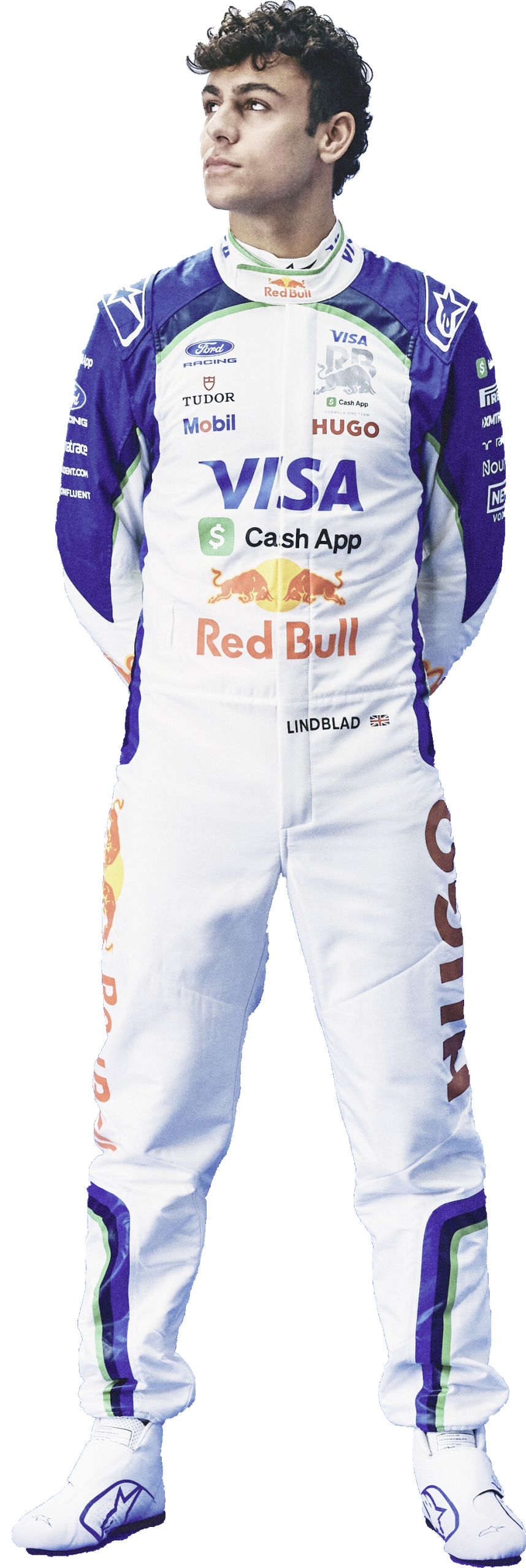
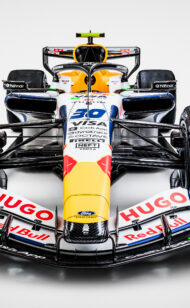
Ahead of 2024, the team changed name again, racing as RB under a title sponsorship deal (commonly rendered as Visa Cash App RB during that period). The shift was another reminder that this outfit has lived several lives without moving house: same core operation, same Faenza heartbeat, different badge on the overalls.
Around this era, the “Racing Bulls” label became widely used as shorthand for the project, fitting, given the team’s long-standing link to Red Bull branding and its identity as the sharper-edged sibling within the wider Red Bull F1 structure.
What Racing Bulls is in F1 terms
Strip away the naming history, and Racing Bulls’ place in the sport is clear and uniquely valuable:
- It is one of the longest-running operations on the grid through its Minardi lineage.
- It has scored two wins, both at Monza (Vettel in 2008; Gasly in 2020).
- It has produced a conveyor belt of drivers who have shaped the modern grid.
- It has repeatedly proven it can be more than a development outfit, capable of real results when the car and weekend align.
In a championship full of polished corporate narratives, Racing Bulls’ history is refreshingly real: an underdog team that survived, was reinvented, and then became one of the most influential talent-makers Formula 1 has ever seen.









 P201 pt