





1992 Japanese F1 Grand Prix Race Report & Results
Event: Japanese Grand Prix
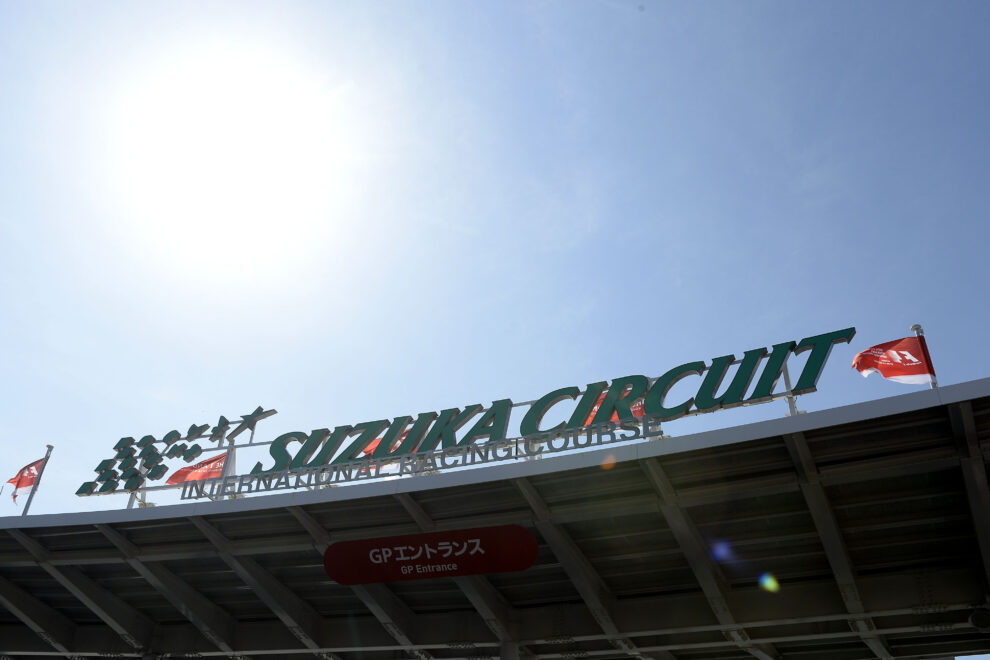
Track: Suzuka Circuit
Weather: overcast, dry, cool
Riccardo Patrese won his sixth F1 World Championship race at the 1992 Japanese F1 GP today. The Williams driver started from second and won on the Suzuka circuit for the first time. It was also his first win of the season and the 61st win for the Williams F1 team.
Hulme's last lap, Mosley's renewal, Honda's farewell
Suzuka opened in mourning. Three weeks earlier, in the Bathurst 1000 at Mount Panorama, Denny Hulme's BMW M3 had drifted gently from the racing line on the pit straight and slowed into the barriers; the 1967 world champion, 56, had died at the wheel of a heart attack. Bear's death was discussed across the paddock that week with the quiet respect reserved for men who had taken a young McLaren team onto the global stage and held it together through Bruce's death two years later. Max Mosley, meanwhile, had been unanimously re-elected FISA president for a four-year term, with full authority to renegotiate the Concorde Agreement; in three weeks' time he would meet Bernie Ecclestone to begin that conversation. And Honda, with the gala dinner at the Suzuka Circuit Hotel, kimonos by Kenzo, 180 covers, Mosley and Ecclestone presiding, quietly closed eleven years and six world titles.
"It was very hard for me to take such a decision, but I am sure Mr Honda would have taken it himself," Nobuhiko Kawamoto told Gérard Crombac. "We decided to stop last December and there were many reasons for it. One of the main ones was the weariness of our staff. There were 1,370 people involved in our F1 programmes, and many spent only two months a year at home." Ayrton Senna, whose engine supply had just evaporated, looked grey throughout the weekend. Friday morning he spent forty-five minutes with Mosley, who tried to talk him into staying. "Look at the Williams side!" the Brazilian snapped. McLaren still had no engine for 1993. The wild idea of buying Ligier whole to acquire the Renault V10 had run into Elf's refusal to share with Shell, into Renault's refusal to supply three teams, and into Frank Williams's barely concealed fury. Senna was openly threatening to follow Mansell to IndyCar. Emerson Fittipaldi had already arranged a Penske test.
Mansell's record-equalling 13th pole
The Saturday session was wet and unrepresentative; the grid was set by Friday's chronos, which favoured the special Renault and Honda "qualifying engines", Renault's Bernard Dudot insisted they were "race engines with special mapping", but Mansell admitted the bonus was "a second to a second and a half a lap". The champion duly took his 30th career pole and 13th of the season, equalling Senna's all-time record of 13 in 1988 and 1989, at 1m37.360s. Patrese was nine-tenths back, with Senna a thrilling third on a McLaren driven to the limit and Berger fourth. Schumacher tumbled three seconds adrift of pole in fifth, then watched team-mate Brundle, weakened by food poisoning, crash heavily on Saturday. Lotus put both cars in the top seven, Herbert sixth, Häkkinen seventh, and Ligier slotted Comas in eighth.
Sunday morning brought Senna an immediate sign that this would not be his weekend. Riding his scooter to the circuit, he was mobbed by fans, fled to the official shuttle bus, and only got through with a police escort. The McLaren V12 in his car then expired in the warm-up, his second blown engine of the weekend. Mansell, ten minutes later, crashed his FW14B chasing Boutsen at full speed through the Esses. The mechanics had it ready for the race.
Senna's third, Schumacher's first, Mansell's last
Senna's race lasted three laps. The V12 simply stopped in the Esses, the third engine to die under him in three days. Schumacher's lasted thirteen, the Benetton's gearbox jammed solid, his first mechanical retirement of the season. Herbert's Lotus broke on lap 15 with the same complaint. By half-distance, the only show left was Mansell, leading by a tranquillised margin from Patrese, with Berger taking what little McLaren could offer. The Mansell-Patrese gap stretched to twenty seconds by lap 33 before Mansell, deliberately, began to slow.
What he was doing, exactly as at Monza three races earlier, was waiting for Patrese to close up so he could wave him through. The Italian, who had spent ten races at his team-mate's mercy, was due. On lap 36 Mansell duly held back at the chicane and let his team-mate through unchallenged. He then settled himself into Patrese's wheel tracks, as if to escort him home and prove that the gesture had not cost him anything he could not have reclaimed.
On lap 45 the V10 Renault behind Mansell's cockpit went up in flames. The crankshaft had failed. Mansell coasted to the pits, climbed out, removed his helmet, and walked away from his last competitive Williams chassis. "I was very happy to see Riccardo win and satisfied to be second. I was enjoying myself behind him. Until my engine let go," he said with the calm of a man whose mind had already left for the United States. Berger inherited second and, with thirty-eight seconds in hand, drove the McLaren to the flag. Brundle took a deserved third for Benetton after one of his most professional weekends. De Cesaris hauled the Tyrrell to fourth, Alesi fifth for Ferrari, and Christian Fittipaldi sixth, Minardi's first point of the year and Fittipaldi's first ever in F1 at 21.
Patrese's sixth and last, a samurai's bow
Riccardo Patrese stepped from a Williams as a Grand Prix winner for the sixth and final time of his long career. Mansell, helmet off and in his casual jacket, hugged him at the pit entrance. "Do you not think I deserved this one?" Patrese threw at his mechanics. To the press, more measured: "I feel better after this success. For several races I had been carrying a huge weight on my shoulders, my morale was zero. Of course Nigel has been the strongest this year, that's why he's world champion. But for my contribution to this complete success, I think I deserved this win." That night, Nobuhiko Kawamoto and the widow of Soichiro Honda walked across the paddock to the Williams-Renault garage carrying a vast samurai helmet, which they presented to Frank Williams. It was, in 1992, almost unbearably gracious, a Japanese marque congratulating a French engine company on inheriting the throne they had occupied for five consecutive years. Renault's Christian Contzen accepted with bowed head. The constructors' championship had already been settled. Honda's eleven-year farewell had not, but it now had its final image.
Classification 1992 Japanese F1 GP






Fastest lap: 1:40.646 min by Nigel Mansell (Williams FW14B) in lap 44
✅ Check out 1992 F1 Championship Standings
✅ Check out 1992 F1 Teams & Drivers
✅ Check out All Time F1 Drivers Rankings
✅ Check out All Time F1 Driver Records
✅ Check out All Time F1 Teams Rankings









Last F1 Fan Comment

An Sionnach on Verstappen praised after Vegas win as rules lesson emerges25 minutes ago
All F1 Fan Comments