





Scrutineering
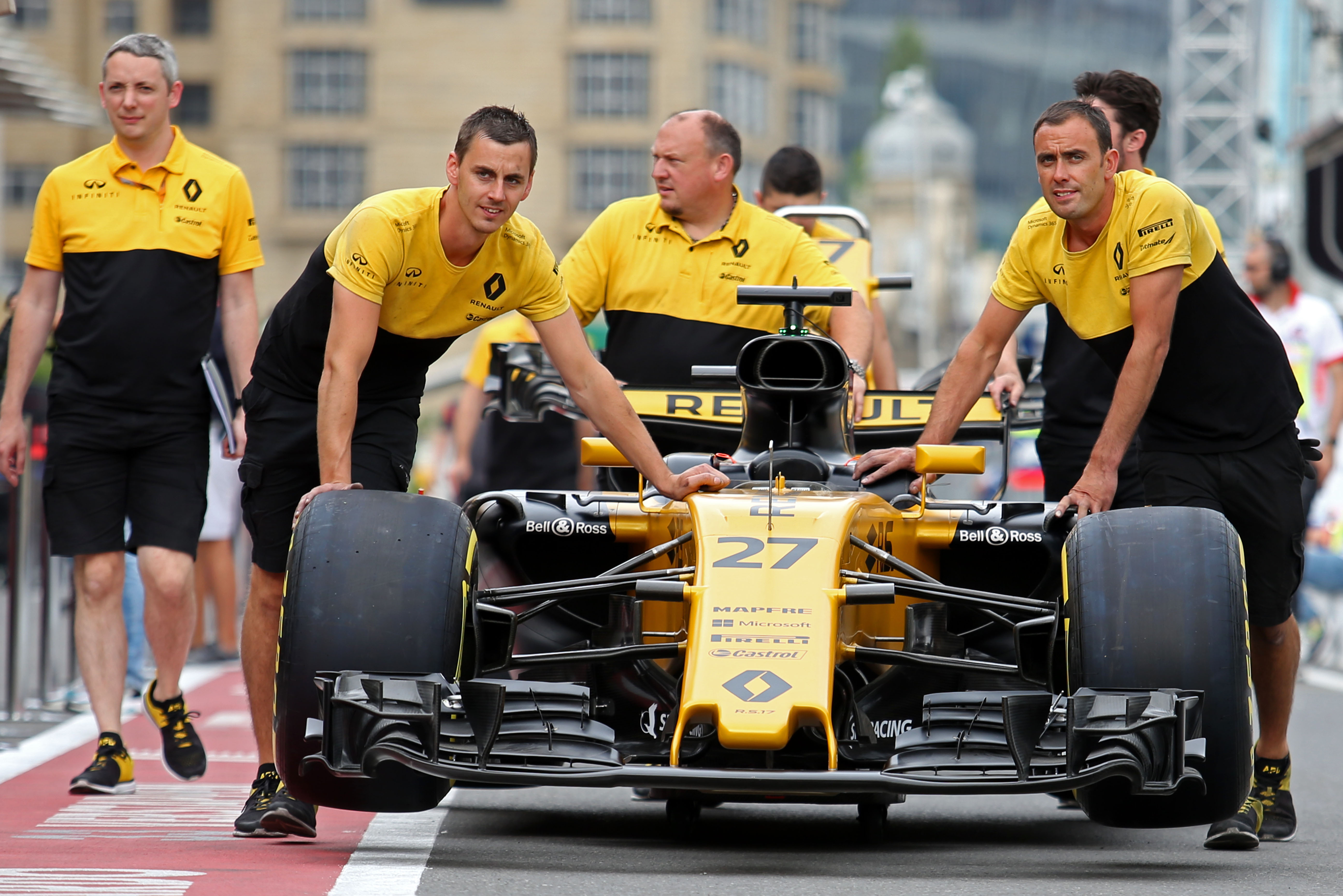
Renault Sport F1 Team RS17 of Nico Hulkenberg (GER) heads to scrutineering.
Azerbaijan Grand Prix, Thursday 22nd June 2017. Baku City Circuit, Azerbaijan.
Scrutineering is the FIA process of physically inspecting Formula 1 cars to confirm they comply with the Technical Regulations before and after every session. It is where race weekends legally begin and where they legally end, and it is the mechanism through which the FIA polices ride height, plank wear, wing flexibility, fuel samples and every other regulated dimension.
What is scrutineering in F1?
Scrutineering is the process by which FIA Technical Delegates inspect Formula 1 cars for compliance with the Technical Regulations. It happens at multiple points across a Grand Prix weekend: at initial pre-event scrutineering on Thursday, at post-qualifying and post-race compulsory checks, and at any random selection during the sessions themselves.
What scrutineers check
- Dimensions: ride height, wheelbase, track, front-wing width, rear-wing height and other geometric limits;
- Plank wear: maximum 1mm across a race, measured with a caliper;
- Wing flexibility: static load tests to confirm the wings do not exceed the Technical Regulations at load;
- Weight: minimum car weight at the FIA weighbridge in the pit lane;
- Fuel: samples taken to confirm the fuel matches the pre-registered specification;
- Safety: harness and seatbelt integrity, halo mounting, extinguisher operation.
Post-race scrutineering
After the race the top finishers are sent to parc-ferme scrutineering. Cars are held under the FIA's control, and full checks are carried out over the following hours. Any breach of the Technical Regulations discovered here can lead to disqualification, as it did to Lewis Hamilton and Charles Leclerc at the 2023 United States Grand Prix for excessive plank wear.
Scrutineering and the modern paddock
Modern scrutineering blends physical inspection with data audit. Every car's telemetry is checked for legality (fuel-flow at the ceiling of 100 kg per hour, MGU-K deployment inside the cap), and physical checks confirm the car matches the CAD homologated at the start of the season. Anything unusual, from a suspicious deflection pattern to an off-menu part number, is enough to trigger a full teardown.
Frequently asked questions about scrutineering
What is scrutineering in F1?
Scrutineering is the FIA process of inspecting Formula 1 cars for compliance with the Technical Regulations before, during and after every session.
When does scrutineering happen?
At pre-event checks on Thursday, at post-qualifying and post-race compulsory checks, and at random selections during any session.
What do scrutineers look for?
Ride height, plank wear, wing flexibility, weight, fuel specification, and safety-critical items like harnesses and halo mounting.
What happens if a car fails scrutineering?
Depending on the severity, the driver can be disqualified from the session, given a grid penalty, fined or reprimanded. Post-race technical breaches usually mean disqualification.
Who performs scrutineering?
FIA Technical Delegates and their staff, appointed for the season and present at every Grand Prix.


LAST 3 F1 Fan COMMENTS

Jere Jyrälä on Saturday Night Fight Between Antonelli and Verstappen? 2026 Las Vegas GP Preview49 minutes ago 
Nobodysperfect on F1 makers back V8 return but 2030 start at risk1 hour ago 
An Sionnach on Benoit warns F1 season could end in Vegas this weekend8 hours ago
All F1 Fan Comments