





Vortex Generator
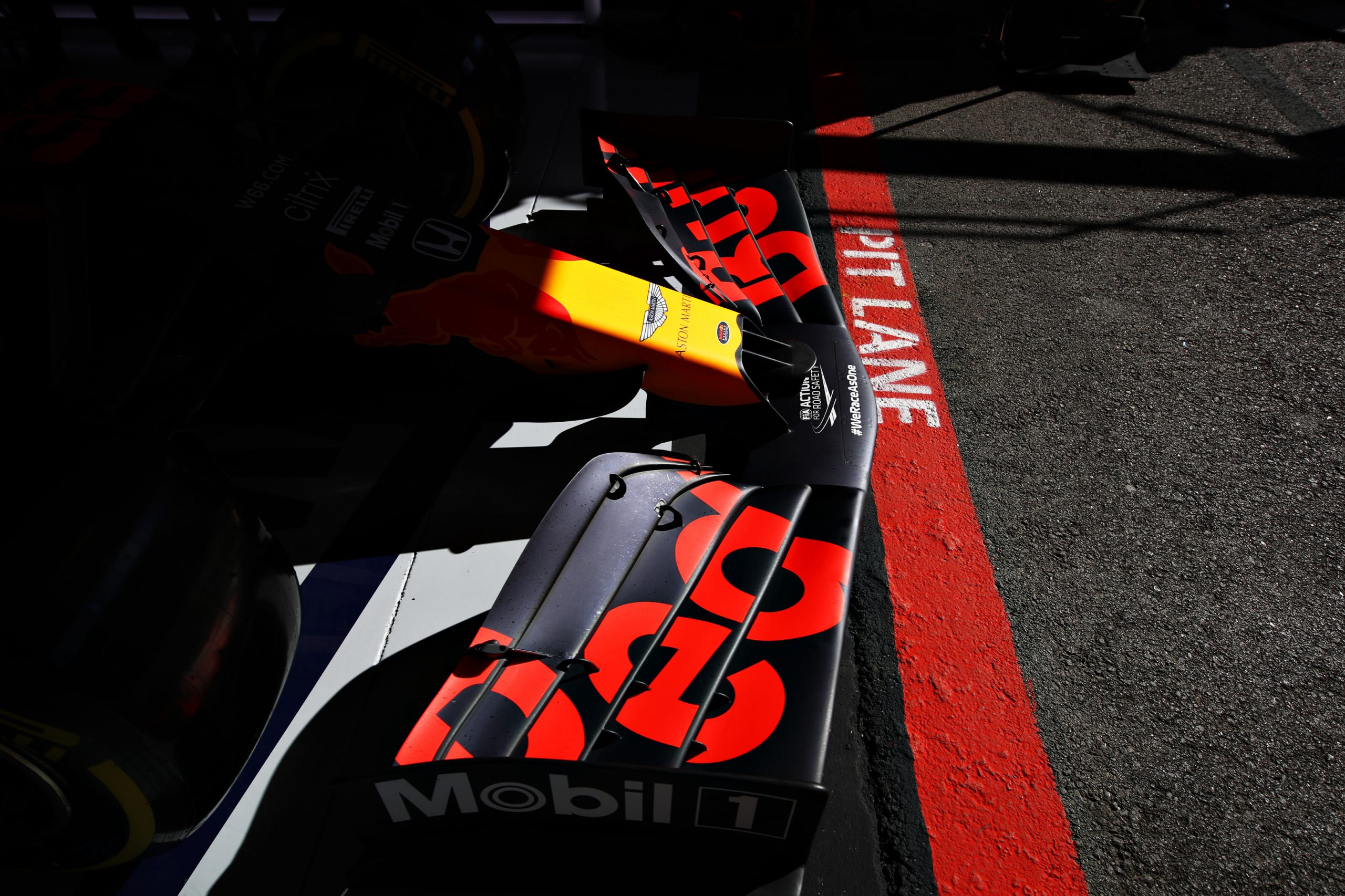
A detail shot of the front wing of the Red Bull Racing RB16 during practice ahead of the 2020 F1 Grand Prix of Portugal
A vortex generator is a small aerodynamic surface on a Formula 1 car designed to create a controlled swirling airflow that keeps the boundary layer attached to the bodywork downstream. The best vortex generators solve airflow separation problems that would otherwise cost downforce, and they turn what would be turbulent chaos into a useful, energised flow structure.
What is a vortex generator in F1?
A vortex generator is a small vane or fin fitted to an F1 car's bodywork to shed a controlled vortex, which then travels downstream and energises the boundary layer flowing along the panel behind it. The vortex adds energy to the local flow, preventing separation and keeping downforce-producing surfaces working correctly. They are typically small in scale but enormously powerful in their effect on downstream aerodynamics.
Where vortex generators are used
- on front wing endplates, to shape the outwash into the sidepod flow;
- on floor edges, to energise the underfloor Venturi tunnel flow;
- on brake ducts, to condition the flow off the front tyre wake;
- on diffuser strakes, to keep expansion flow attached;
- on sidepod inlets, to protect radiator-flow separation.
How a vortex generator works
A small vane placed perpendicular to the flow generates a rotating vortex on its downstream side. That vortex has more kinetic energy per unit volume than the surrounding flow, and as it travels along the surface behind the generator it mixes with the boundary layer and prevents it from stalling. It is not intuitive that a small disturbance can improve overall flow quality, but the aerodynamics are well understood since the 1960s.
Vortex generators and modern F1
Vortex generators are a core part of every 2022-onwards F1 aerodynamic design, especially around the floor edges and diffuser. The FIA regulates their maximum height and profile shape to prevent teams from exceeding the intended aero envelope. When the regulations changed in 2022, teams spent much of the season learning which vortex generator positions actually paid off on their specific chassis.
Frequently asked questions about vortex generators
What is a vortex generator in F1?
A vortex generator is a small aerodynamic vane fitted to F1 bodywork to shed a controlled vortex that keeps the boundary layer attached downstream.
Where are vortex generators used on F1 cars?
On front wing endplates, floor edges, brake ducts, diffuser strakes, and sidepod inlets.
Why do vortex generators help downforce?
They energise the boundary layer flowing along the bodywork behind them, preventing airflow separation and preserving downforce production.
Are vortex generators regulated?
Yes. The FIA controls their maximum height, profile shape and permitted location under the Technical Regulations.
Did vortex generators change in 2022?
Yes. The 2022 ground-effect rules simplified the front wing and removed bargeboards, shifting the emphasis of vortex generation onto floor edges and diffuser strakes.


LAST 3 F1 Fan COMMENTS

An Sionnach on Benoit warns F1 season could end in Vegas this weekend3 hours ago 
Shroppyfly on Camara returns for second Haas outing this weekend7 hours ago 
Jere Jyrälä on F1 makers back V8 return but 2030 start at risk8 hours ago
All F1 Fan Comments