Qualifying Report & Results 2026 Azerbaijan F1 GP
1





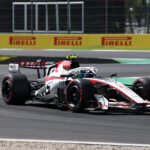
Pole position qualifier Max Verstappen driving the Red Bull RB18 stops in parc ferme during qualifying ahead of the 2022 F1 Grand Prix of Emilia Romagna
Pole position is the number-one slot on the Formula 1 grid, awarded to the fastest driver in qualifying. It offers the best line into Turn 1, the widest choice of racing line, and historically the highest probability of leading the race and winning it. In modern F1 it also earns a championship point and, until 2025, a decisive tactical advantage on Sunday.
Pole position is grid slot number one, given to the driver who set the fastest lap time in Q3 of qualifying. The name comes from historical horse-racing, where the pole was the inside marker at the start of a race. In F1 it usually sits on the "clean" side of the track, the side that produces the best getaway grip, though the choice sometimes depends on the corner geometry of Turn 1.
Modern qualifying is a three-stage knockout format. Q1 lasts 18 minutes and eliminates the slowest five drivers. Q2 lasts 15 minutes and eliminates another five. Q3 lasts 12 minutes and features the ten fastest drivers battling for the top ten grid slots. Pole goes to the fastest driver in Q3 on a single flying lap, usually attempted twice for margin.
Lewis Hamilton holds the outright record for career pole positions at 104 and counting. Michael Schumacher sits second on 68. Ayrton Senna won 65 poles in a career shorter than either. Senna also holds the record for most poles at a single Grand Prix (Monaco, five times) and Hamilton for most consecutive poles (five in 2015).


Pole position is grid slot number one, awarded to the fastest driver in Q3 qualifying. It offers the best line into Turn 1 and the highest chance of leading the race.
The term comes from horse racing, where the inside marker at the start line was known as the pole. F1 adopted the terminology from other early motor-racing series.
Lewis Hamilton, with 104 pole positions and counting. Michael Schumacher is second with 68, Ayrton Senna third with 65.
Through a three-stage knockout qualifying session on Saturday. Pole goes to the driver with the fastest lap in Q3.
No, though it correlates strongly. Historically about 35 to 45 per cent of pole positions convert to race wins, depending on the era. The trend rises when the fastest car is also the most reliable.