





Understeer
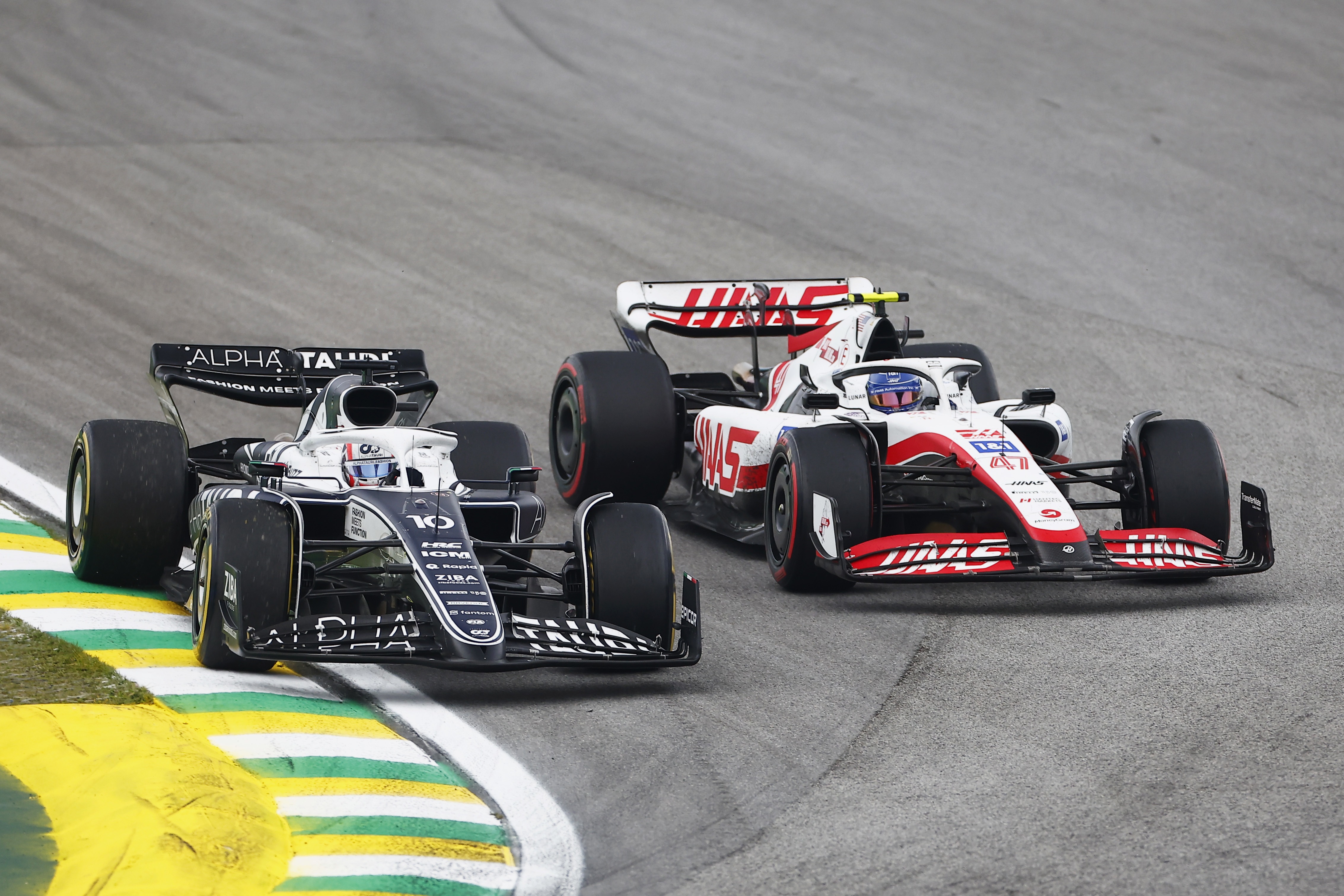
Pierre Gasly, AlphaTauri AT03, leads Mick Schumacher, Haas VF-22 during the São Paulo GP at Autódromo José Carlos Pace on Sunday November 13, 2022 in Sao Paulo, Brazil. (Photo by Sam Bloxham / LAT Images)
Understeer is what happens when a Formula 1 car's front tyres lose grip before the rears, and the nose runs wide of the intended racing line. It is one of the two fundamental balance problems in racing (oversteer is the other), and it is the more common of the two on modern high-downforce F1 cars. A driver fighting understeer cannot commit fully to the apex, and every corner exit is compromised.
What is understeer in F1?
Understeer is a chassis balance state in which the front tyres reach the limit of their grip before the rear tyres. The driver turns the wheel but the front tyres slide, and the car pushes wide of the intended line instead of tucking into the apex. It is often called "washing wide" and it can add several tenths per corner while overheating the front tyres.
What causes understeer
- front tyres overheated or worn;
- aero balance too far rearward, unloading the front wing;
- too much steering input on entry, exceeding the front tyre capability;
- brake bias too far forward, locking the fronts under trail braking;
- anti-roll bar setup too stiff at the front;
- cold conditions where the front tyres cannot reach their working window.
Understeer versus oversteer
Understeer and oversteer are opposite balance failures. Understeer is when the fronts wash out first and the nose runs wide. Oversteer is when the rears break loose first and the back steps out. Most drivers have a personal preference for one or the other, and set-ups are tuned around that preference. Modern F1 aerodynamics tend to produce understeery cars in fast corners, which is why "front-limited" tyre wear is one of the most common set-up complaints.
How drivers manage understeer
Drivers manage understeer by reducing entry speed, choosing a later apex, and using less steering input. On the set-up side, engineers reduce front anti-roll stiffness, adjust the front wing angle to add downforce, or shift brake bias slightly rearward to make the car rotate more into the corner. Some drivers prefer to accept mild understeer for stability; others chase a knife-edge neutral car.
Frequently asked questions about understeer
What is understeer in F1?
Understeer is a balance state in which the front tyres lose grip before the rears and the car runs wide of the intended racing line.
What is the difference between understeer and oversteer?
Understeer is when the fronts wash out first and the nose runs wide. Oversteer is when the rears break loose first and the back steps out.
What causes understeer in an F1 car?
Overheated or worn front tyres, aero balance too far rearward, too much steering input on entry, brake bias too far forward, and cold conditions.
Is understeer worse than oversteer?
They are opposite problems. Oversteer costs time on entry and can lead to spins. Understeer costs time on exit and overheats front tyres. Most modern F1 setups deliberately trend slightly understeery for stability.
How do drivers reduce understeer?
By reducing entry speed, choosing a later apex, using less steering input, and calling for setup adjustments like front wing angle and brake bias.




LAST 3 F1 Fan COMMENTS

Jere Jyrälä on 2026 Azerbaijan Formula 1 Grand Prix Results & Report21 hours ago 
Jere Jyrälä on Binotto finally ends rumours over Audi 2027 driver line-up22 hours ago 
Shroppyfly on Horner leaves the door open for a Ferrari role1 day ago
All F1 Fan Comments