





Jump start
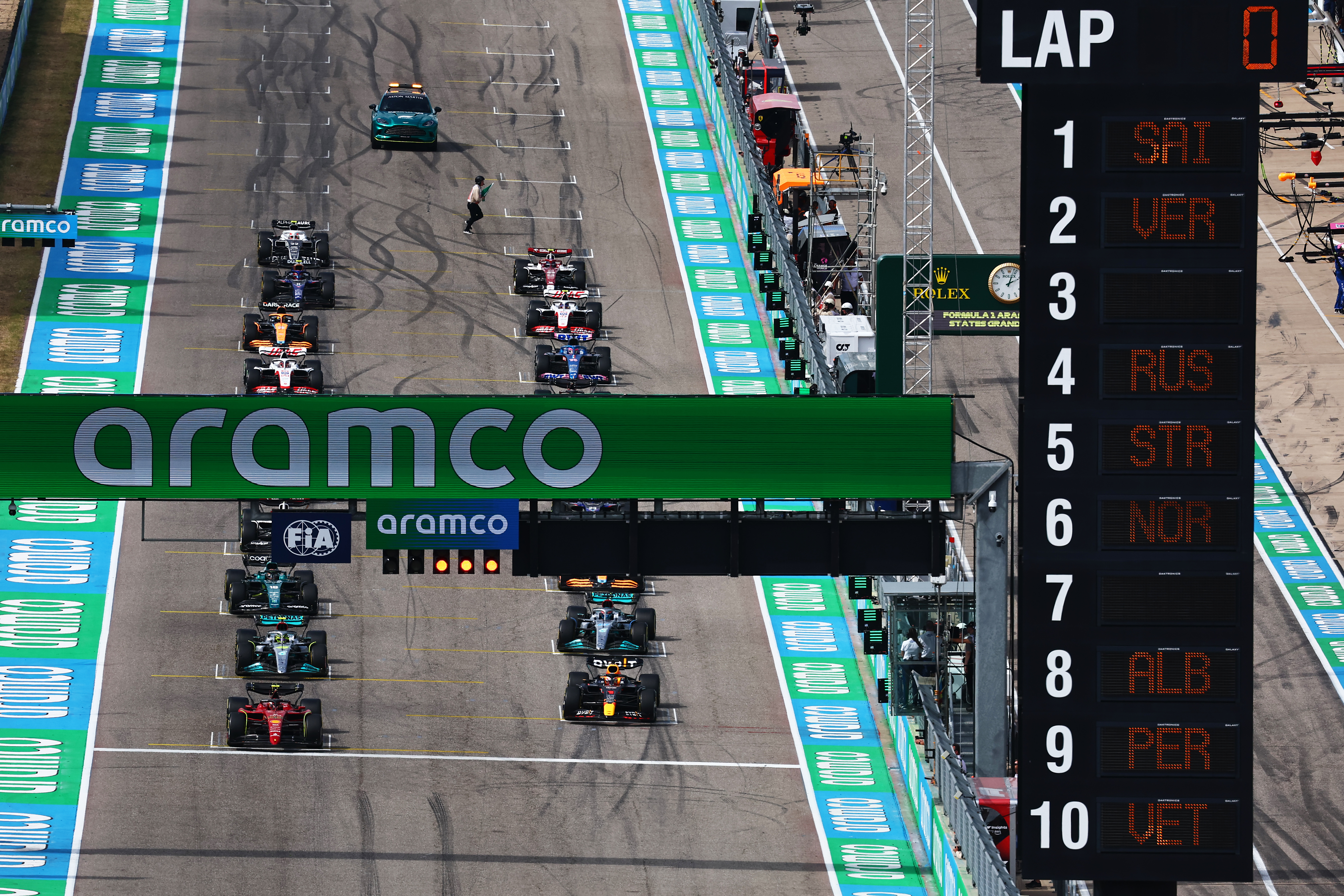
start of the 2022 F1 Grand Prix of USA at Circuit of The Americas
A jump start is a Formula 1 offence in which a driver moves from their grid slot before the five red starting lights go out. The transponders in each grid slot detect the movement instantly, and the FIA sensor system applies the penalty automatically without steward discretion. Sometimes a five-second penalty is applied, sometimes a drive-through, depending on how far the car actually moved before the start.
What is a jump start in F1?
A jump start is any forward movement of a car in its grid slot before the start of the race is officially given. Each grid slot has a transponder loop under the tarmac that reads the movement of the car's official position sensor. If that sensor moves at all before the lights go out, the system flags a jump start automatically.
How the FIA sensor system works
Every F1 car carries a mandatory FIA position sensor at a fixed height and location. The transponder loops in the grid, installed a few centimetres below the tarmac surface, read that sensor at a very high sample rate. If the sensor position changes beyond a small tolerance before the moment the five red lights extinguish, the system logs a jump-start event that is reported to Race Control within a few seconds. Stewards then confirm the classification and apply the standard penalty.
Penalties for a jump start
- Five-second time penalty: for a marginal jump start that is picked up by sensors but is not a large movement;
- Drive-through penalty: for a clear, significant jump start;
- Fine or reprimand: where telemetry proves the car crept but never actually left the slot before the lights;
- Grid drop next race: in cases of repeat offending across a single season.
Why drivers jump start
Modern F1 launch procedures leave almost no margin. Drivers hold the car on the clutch, dial the engine to the launch map and try to release the clutch at the exact moment the lights go out. Anticipating the start by even a couple of hundredths pushes the car over the sensor threshold. Wet conditions, cold clutches and torque control settings all raise the risk.
Frequently asked questions about jump starts
What is a jump start in F1?
A jump start is any forward movement of a car in its grid slot before the five red starting lights go out. It is detected automatically by grid transponders.
What is the penalty for a jump start?
A five-second time penalty for marginal cases and a drive-through for clear jumps. Repeat offences can escalate to a grid drop at the next race.
How does the FIA detect a jump start?
Each grid slot has a transponder loop under the tarmac that reads a mandatory FIA-position sensor on the car. Any movement of the sensor beyond a tight tolerance before the lights go out triggers an automatic flag.
Can a driver appeal a jump-start penalty?
Only in very rare cases, because the sensor evidence is unambiguous. Teams occasionally challenge marginal calls where their own data shows the movement was inside tolerance.
Has anyone won an F1 race despite a jump start?
Yes. Michael Schumacher famously won the 1994 British Grand Prix after ignoring a black flag for an earlier jump-start penalty, though he was disqualified from the result and later banned for two races.


LAST 3 F1 Fan COMMENTS

Shroppyfly on Camara returns for second Haas outing this weekend5 hours ago 
Jere Jyrälä on F1 makers back V8 return but 2030 start at risk5 hours ago 
Jere Jyrälä on Camara returns for second Haas outing this weekend5 hours ago
All F1 Fan Comments