





Degradation (deg)
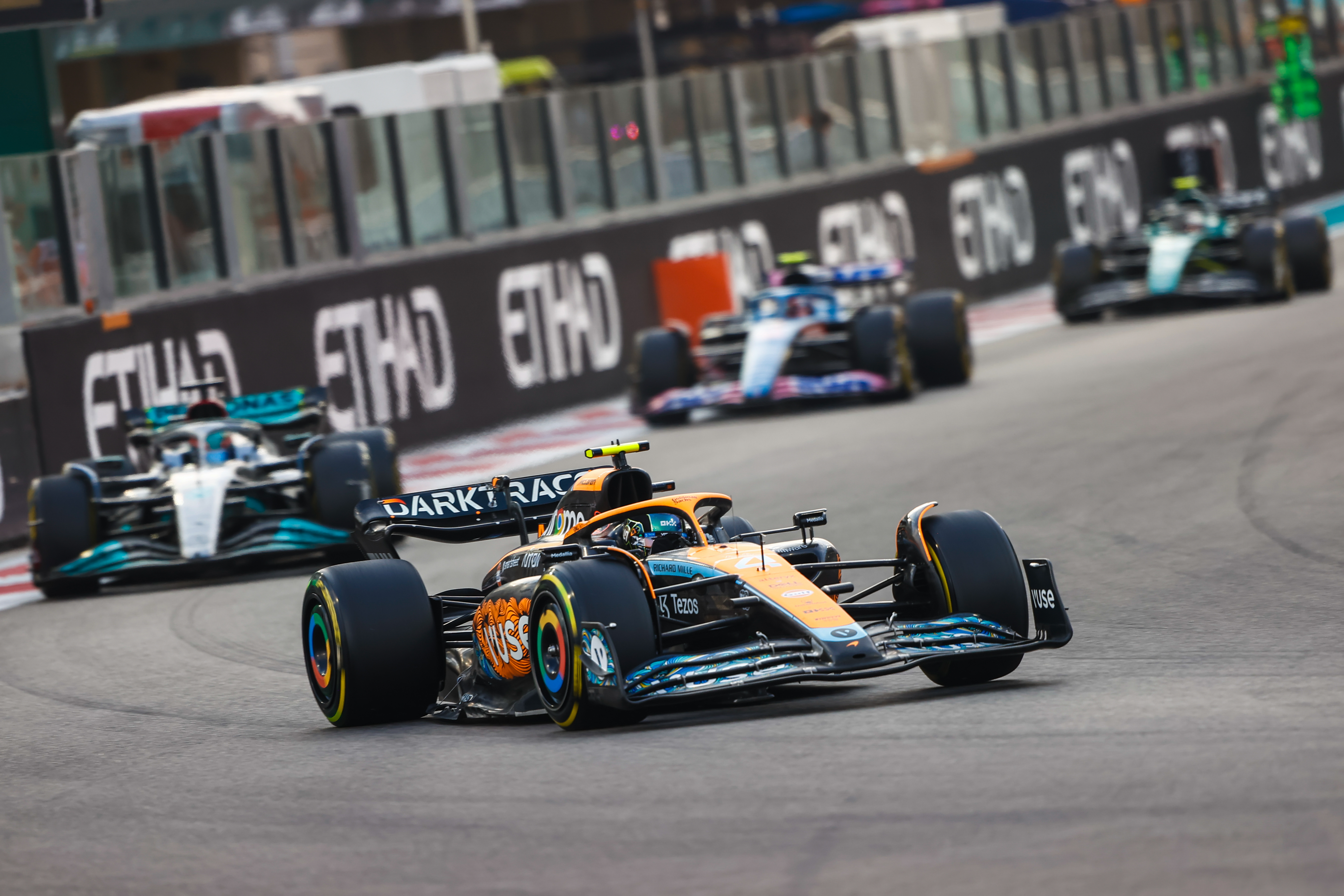
Degradation, or deg, decides when a driver has to stop and how much lap time they will give up before they do.
Tyre degradation, universally shortened in the paddock to "deg", is the rate at which a Formula 1 tyre loses lap time as its performance falls off. Every stint is a race against it. Get the tyre working in its optimal window and deg is a slow, manageable decline. Miss the window and lap time falls off a cliff, forcing an early stop and a strategy compromise that can decide a Grand Prix.
What is tyre degradation in Formula 1?
Degradation is the loss of grip, and therefore lap time, that occurs as a tyre is used through a stint. It is a mix of two effects: wear, meaning physical rubber loss from the tread, and thermal degradation, meaning changes to the compound's working temperature as it is repeatedly heated and cooled through corners.
What drives degradation
- Compound choice: softer compounds grip harder but degrade faster;
- Track temperature: higher surface temperatures accelerate thermal degradation;
- Track surface abrasiveness: resurfaced circuits like Silverstone or Suzuka are notoriously hard on tyres;
- Driver style: aggressive lock-ups, kerb use and sliding all cost tyre life;
- Car set-up: camber, ride height, wing levels and downforce distribution all move the deg number;
- Fuel load and pace: a heavier or faster stint pushes tyres harder.
Deg versus the cliff
Engineers separate linear degradation, a steady loss of a few tenths per lap, from the cliff, a sudden collapse in grip once the compound has completely overheated or worn beyond its working range. A driver in linear deg is manageable. A driver on the cliff needs to stop immediately, because every lap costs seconds rather than tenths.
How teams model degradation
Every team runs a tyre model that predicts stint length and lap time loss for each compound, at each track temperature, at each driver style. The model is calibrated during Friday practice, refined in qualifying and used live during the race by the strategist. Pit-stop decisions during a Grand Prix are almost entirely dictated by predicted deg curves.
Frequently asked questions about degradation
What is tyre degradation in F1?
Degradation is the loss of grip and lap time as a tyre is used through a stint. It combines physical wear with thermal effects as the compound is repeatedly heated and cooled.
What is the difference between wear and degradation?
Wear is the physical rubber loss from the tread surface. Degradation is broader and includes thermal effects, so a tyre with plenty of tread left can still be heavily degraded because its compound has overheated.
What is the tyre cliff?
The cliff is a sudden collapse in tyre performance after the compound reaches the end of its working range. Lap times fall off dramatically, and a stop is required almost immediately.
Which tyre compounds degrade fastest?
Softer compounds grip harder but degrade faster. The Pirelli soft compound at a given event will always have a shorter stint window than the medium or hard.
Can drivers reduce degradation?
Yes. Smoother steering inputs, careful throttle application, controlled lock-ups and cautious kerb use all extend tyre life. Teams often coach drivers on specific corners to protect the compound.


LAST 3 F1 Fan COMMENTS

Shroppyfly on Elkann Orders Ferrari Truce After Hamilton-Leclerc Clash?19 hours ago 
Susan on Elkann Orders Ferrari Truce After Hamilton-Leclerc Clash?1 day ago 
Shroppyfly on FIA Bans Daily Mail Reporter After Leclerc Column2 days ago
All F1 Fan Comments