

Use of MGU-H in power units will end
1




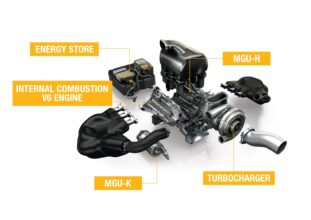
Renault 2014 Power Unit (engine)
The MGU-H, Motor Generator Unit Heat, is the ingenious hybrid component that has powered F1 turbo engines to unprecedented efficiency since 2014. Sitting on the same shaft as the turbocharger, it can either harvest waste exhaust energy to send to the Energy Store or spin the turbo up on demand to eliminate lag. The 2026 regulations remove it, ending one of the most technically brilliant chapters in modern F1.
The MGU-H is a small, high-speed electric motor-generator mounted on the shaft that connects the turbocharger's exhaust turbine to its compressor. It can act as either a generator, harvesting excess exhaust energy that would otherwise vent through the wastegate, or as a motor, spinning the turbo up before there is enough exhaust flow to do the job naturally. It is one of the six numbered power-unit elements each driver is allocated per season.
Under acceleration the exhaust flow drives the turbine faster than the compressor needs, and the MGU-H bleeds off the excess as electrical power, sending it to the Energy Store or directly to the MGU-K. Under braking and part-throttle, when exhaust energy falls off, the MGU-H can flip into motor mode, drawing electrical power from the Energy Store to keep the turbo compressor spinning. That eliminates the turbo lag that used to define turbocharged engines and delivers throttle response indistinguishable from a naturally aspirated V8.
The 2026 regulations drop the MGU-H entirely. The FIA cited three main reasons: manufacturers not currently in F1 said the MGU-H was one of the biggest barriers to entry because of its cost and complexity; the fuel-saving benefit was marginal on modern hybrid architectures; and the sport wanted to raise electrical power without adding another expensive shaft-mounted device. The 2026 power unit therefore relies on a much larger MGU-K, a larger Energy Store and sustainable fuels to hit its energy targets.
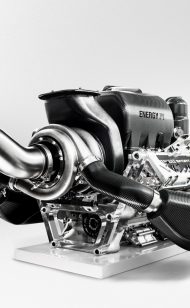

MGU-H stands for Motor Generator Unit Heat. It is the electrical unit mounted on the F1 turbocharger shaft that harvests exhaust energy and eliminates turbo lag.
Under high exhaust flow it generates electricity from excess turbine energy. Under low exhaust flow it draws electricity from the Energy Store to spin the turbo, preventing lag.
Because it was cited as a major barrier to entry for new power-unit manufacturers, its efficiency benefit had become marginal, and the sport wanted a simpler, cheaper architecture with more electrical power.
Yes. Alongside the ICE, turbo, MGU-K, ES and exhaust, the MGU-H is one of the six numbered power-unit elements each driver is allocated per season.
Effectively yes. By spinning the turbo shaft electrically from the Energy Store, the MGU-H removes almost all the lag associated with pre-hybrid turbocharged engines.


