





Downforce

Downforce lets an F1 car corner at speeds that would send a road car flying, all created by the shape of the bodywork.
Downforce is the aerodynamic force that pushes a Formula 1 car into the road. It is what allows a Grand Prix car to take a corner at speeds a road car could never approach, and it is generated entirely by shaping the bodywork. At maximum speed a modern F1 car can produce several times its own weight in downforce, enough that in theory it could drive on the ceiling of a long-enough tunnel.
What is downforce in Formula 1?
Downforce is a downward aerodynamic force created when the shape of the car accelerates air over some surfaces and slows it under others. The pressure difference generated by that flow pushes the car onto the road. The more downforce a car produces, the more grip its tyres can transmit, and the higher its corner speed can be.
Where downforce comes from on an F1 car
- Front wing: sets the balance and feeds the flow structure that everything downstream depends on;
- Floor and Venturi tunnels: since 2022 the largest single source of downforce on the car, around 60 per cent of the total;
- Diffuser: expands underfloor flow back to ambient pressure and multiplies the effect of the floor;
- Rear wing: adds high-value downforce and controls yaw stability;
- Sidepod flow structures: lower magnitude but essential for feeding the floor and diffuser.
How much downforce does an F1 car produce?
A modern F1 car can produce more than 2000 kg of downforce at top speed, roughly three times its own dry weight. That figure varies with wing setting, ride height and speed, and is not spread evenly across the car: engineers aim for an aerodynamic balance that puts the weight where the driver wants it, corner by corner.
Downforce, drag and the compromise
Every unit of downforce comes with a drag penalty, and top speed suffers as downforce goes up. Teams tune wing settings per circuit: skinny rear wings at Monza to maximise straight-line speed, high-downforce wings at Monaco to attack the twisty street layout. The ratio of downforce to drag is a car's aero efficiency, and improving it is the highest-value work in the wind tunnel.
Latest downforce news

2026 F1 Revolution: Official Release of Technical Regulations
2
F1 Cars: Mercedes' Shovlin Explains Why DRS Has Lost Power
2
Norris has 'No idea' if McLaren can improve quickly
1
McLaren has not got enough downforce says Norris

Sainz says Ferrari still lacking downforce to win this weekend
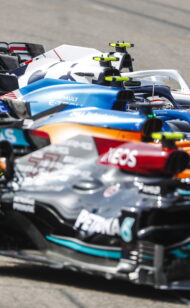
Pirelli says cars are already recovering lost downforce
1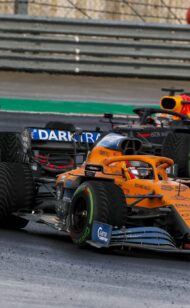
Teams to quickly recover lost downforce despite regulation changes this
2
F1 set to already reduce 2021 downforce despite 'freeze'
1
Teams 'exaggerating' data to Pirelli
Frequently asked questions about downforce
What is downforce in Formula 1?
Downforce is the aerodynamic force that pushes an F1 car onto the road, allowing high cornering speeds. It is generated by the shape of the bodywork accelerating airflow over some surfaces and slowing it under others.
How much downforce does an F1 car generate?
A modern F1 car can produce more than 2000 kg of downforce at top speed, roughly three times its own dry weight.
Where does most F1 downforce come from now?
Since the 2022 ground-effect regulations, around 60 per cent of downforce comes from the floor and its Venturi tunnels rather than the front and rear wings.
What is the trade-off between downforce and drag?
Every unit of downforce comes with a drag penalty. Teams tune wing settings per circuit to balance straight-line speed against corner speed, and improving the downforce-to-drag ratio is one of the most valuable aero targets.
Could an F1 car really drive on a ceiling?
In theory yes, once the car is above the speed at which its downforce exceeds its weight. In practice engine cooling, fuel supply and tyre lubrication are all designed for the right-side-up world, so nobody has ever tried.
Last updated:


