





Traction Control

Felipe Massa burnouts Brazil 2013
Traction control is the driver aid that limits engine torque to prevent the driven wheels from spinning under acceleration, and it has been banned in Formula 1 since 2008. Before then it defined an entire era: cars leaving corners with the electronic system managing the balance between grip and throttle. Its ban is the reason modern F1 drivers still have to manage traction with their right foot alone.
What is traction control?
Traction control is an electronic system that reads the rotational speed of every wheel and cuts engine power the moment the driven wheels start to spin faster than the non-driven wheels. On an F1 car it kept the rear wheels from over-rotating on corner exit, giving the driver full-throttle response without the risk of losing grip.
The traction-control era in F1
Traction control was permitted in F1 during the 1990s, banned for a period, then permitted again from 2001 to 2007 as part of a policy shift after regulators concluded they could not police it in software. Racing began to lose character as drivers could apply full throttle earlier in every corner without any risk. The FIA reversed course, and the introduction of the standard ECU built by McLaren Applied Technologies for the 2008 season removed the technical ability to run traction-control code.
Why F1 banned traction control
- Racing character: the FIA wanted the driver back at the centre of corner exit;
- Policing: hidden traction control code was very hard for scrutineers to detect before the standard ECU;
- Cost: the development arms race around driver-aid software was becoming ruinously expensive for smaller teams;
- Differentiation: removing electronic support brought differences between drivers back to the surface.
How modern F1 replaces traction control
Since 2008 all traction management is on the driver. The FIA polices this rigidly: any suspicious throttle-map behaviour is investigated immediately, and torque delivery has to be a monotonic function of pedal position at any given engine speed. In practice teams use torque maps that soften low-speed pedal response to help the driver, but they cannot use wheel-speed sensors to reduce power once a wheel is spinning. That is the line between an allowed torque map and an illegal traction-control system.
Latest traction-control news
KERS for traction used by Red Bull

Lauda not convinced Red Bull system is legal
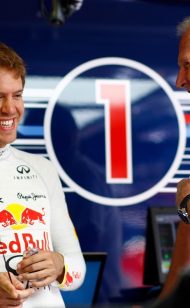
Vettel proud about Red Bull traction system

FIA backs Vettel amid of cheat claims

Vettel - Red Bull to further 'enhance' traction system
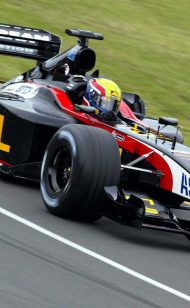
Vettel 'traction control' doubts raised by Minardi

Banned 'traction control' used by Red Bull?
Frequently asked questions about traction control
Do F1 cars have traction control?
No. Traction control has been banned in Formula 1 since the 2008 season.
Why did the FIA ban traction control?
Because it took the driver out of the corner-exit picture, was very hard to police in code, and drove up costs. The 2008 introduction of the standard ECU removed the technical ability to run it.
How do F1 drivers manage traction without it?
Purely with their right foot on the throttle pedal, guided by torque maps in the ECU that are allowed to soften pedal response but not to reduce power in response to wheel spin.
When was traction control used in F1?
It was permitted in early 1990s and again from 2001 to 2007. Its final ban came with the 2008 season and the standard McLaren-built ECU.
Would traction control help modern F1 cars?
Enormously, in raw lap time. Its absence is deliberate: the FIA wants driver differentiation on corner exit, not electronic assistance.
Last updated:


LAST 3 F1 Fan COMMENTS

Shroppyfly on Ferrari weighs penalties after latest Leclerc and Hamilton clash5 hours ago 
Jere Jyrälä on Brown rules out McLaren leaving Mercedes despite proposed 2030 cap19 hours ago 
Scott on Brown rules out McLaren leaving Mercedes despite proposed 2030 cap19 hours ago
All F1 Fan Comments