





Intermediates
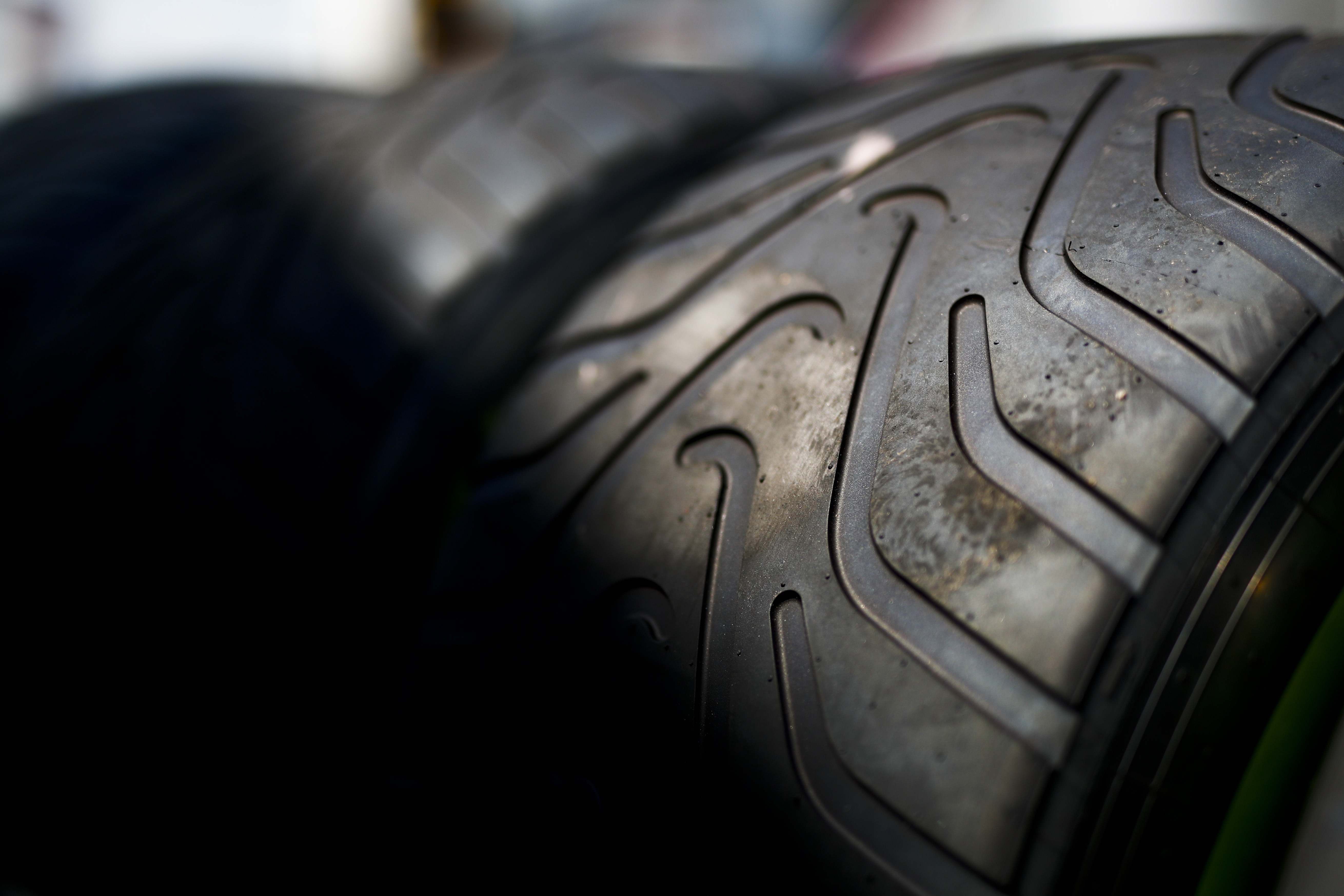
Pirelli intermediate tyres during the Hungarian GP at Hungaroring on August 01, 2019 in Hungaroring, Hungary. (Photo by Sam Bloxham / LAT Images)
Intermediates are the crossover tyre in Formula 1, designed to cope with a damp or drying track that is neither dry enough for slicks nor wet enough for full wet tyres. They are green-walled Pirellis with a shallow tread pattern that clears standing water at pit-lane speed and delivers grip on a track that is transitioning between conditions. Getting the timing of an intermediate stop right can decide a rain-affected Grand Prix.
What are intermediate tyres in F1?
Intermediate tyres, known in the paddock simply as "inters", are the middle tier of Pirelli's wet-weather rubber. They sit between slicks and full wet tyres and are designed for damp, drying or lightly rain-affected tracks. They can clear about 30 litres of water per second per tyre at speed and typically work between about 20 and 50 C track temperature.
When teams use intermediates
- rain starts falling and slicks lose grip;
- full-wet conditions dry to the point where the wet compound overheats;
- changing conditions during qualifying reward a bold set-up call;
- a starting grid where standing water is patchy but not uniform.
Intermediates and the cross-over zone
The most sensitive judgement in the F1 rain playbook is the cross-over: the moment when track conditions favour a different compound. Cross-overs work in both directions. On a drying track, teams watch for the point where slicks become faster than intermediates and try to be first to slick. On a wet track, teams watch for the moment where full wets become faster than intermediates, though this transition happens less often in the modern era because full wets are only used in the heaviest rain.
Full wet, intermediate and slick compared
- Full wet (blue wall): for standing water; clears about 85 litres of water per second per tyre;
- Intermediate (green wall): for damp or drying tracks; clears about 30 litres per second per tyre;
- Slicks (colour depending on compound): for dry tracks; no tread and maximum contact patch.
Frequently asked questions about intermediate tyres
What are intermediate tyres in F1?
Intermediates are the middle tyre in Pirelli's wet-weather line-up, designed for damp or drying tracks.
When do teams use intermediates?
When the track is damp but not fully wet, when a full-wet compound would overheat, or when rain has just started to fall on a slick-shod car.
What is the difference between intermediates and full wets?
Full wets have deeper tread and clear far more water (about 85 litres per second per tyre) for standing-water conditions. Intermediates have shallower tread and are quicker on a merely damp track.
Can intermediates be used on a fully dry track?
Only for very short periods. The green compound is designed to shed water, and once the track is fully dry the tread overheats quickly and grip collapses.
Are intermediate tyres included in the race allocation?
Yes, but separately from slicks. Pirelli supplies each driver with a fixed number of intermediate and full-wet sets per event.


LAST 3 F1 Fan COMMENTS

Shroppyfly on Ferrari weighs penalties after latest Leclerc and Hamilton clash5 hours ago 
Jere Jyrälä on Brown rules out McLaren leaving Mercedes despite proposed 2030 cap19 hours ago 
Scott on Brown rules out McLaren leaving Mercedes despite proposed 2030 cap19 hours ago
All F1 Fan Comments