





Grip
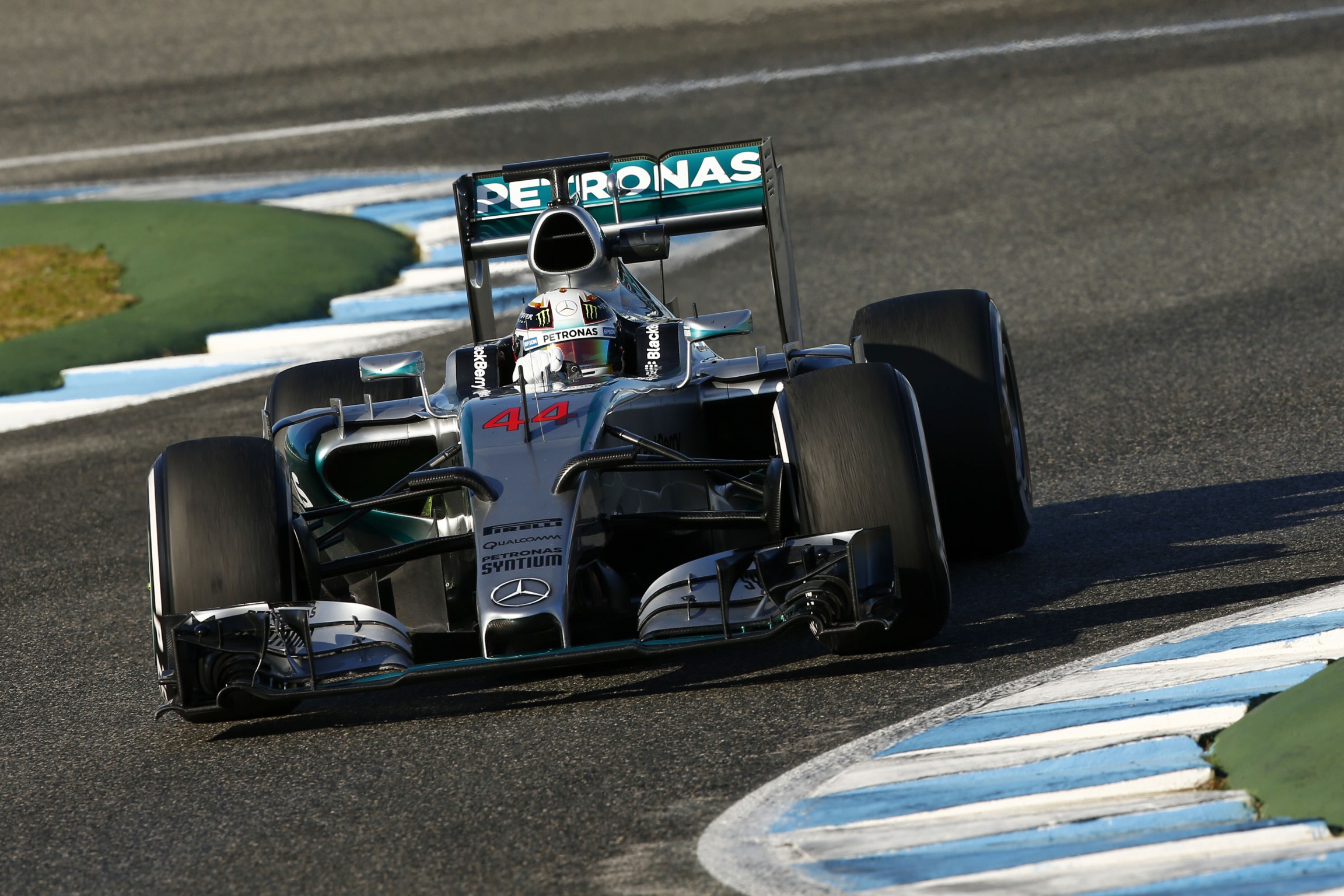
Lewis Hamilton gets to grips with the 2015 Mercedes.
Grip is the friction between an F1 tyre and the road surface, and it is the single quantity that decides how fast a Formula 1 car can go. Every design decision on the car, from downforce to weight distribution to suspension geometry, exists to buy more grip in specific corners. A car with poor grip is slow; a car with too much grip in the wrong place is slow in a different way.
What is grip in Formula 1?
Grip is the total lateral, longitudinal and vertical friction available between the tyre contact patch and the road. In F1 it is generated by three combined effects:
- Mechanical grip: from tyre compound, contact patch shape and suspension load transfer;
- Aerodynamic grip: from downforce pressing the tyre onto the road, boosting friction;
- Thermal grip: from the tyre being in its optimal temperature window.
Mechanical grip
Mechanical grip comes from what the tyre and suspension can do at low speed, before aerodynamic loads dominate. It is set by the compound, by tyre pressures, by camber and toe, by suspension roll and pitch behaviour, and by weight distribution. On low-speed circuits like Monaco, mechanical grip is close to the whole story of lap time.
Aerodynamic grip
Aerodynamic grip is grip generated indirectly by downforce. A car producing more than 2000 kg of downforce at top speed is pressing all four tyres onto the road much harder than gravity alone would. That extra vertical load lets the tyres transmit more lateral force in a corner, which is why fast-corner speed rises with downforce.
Thermal grip and the working window
Every F1 tyre compound has a working temperature window. Below the window the tyre grains and slides. Above it, the tyre blisters. Inside it, the compound bonds properly with the road surface and gives its designed grip. Managing tyre temperature across a lap, especially in qualifying, is a large part of what separates the top drivers.
Frequently asked questions about grip
What is grip in Formula 1?
Grip is the friction between the tyre and the road that determines how fast an F1 car can corner, brake and accelerate. It combines mechanical, aerodynamic and thermal effects.
What is the difference between mechanical and aerodynamic grip?
Mechanical grip comes from tyres and suspension at low speed. Aerodynamic grip comes from downforce pressing the tyres onto the road at higher speed. Modern F1 cars rely heavily on both.
What is the tyre working window?
The tyre working window is the temperature range at which the compound bonds properly with the road. Below the window the tyre grains, above it the tyre blisters.
Why do F1 cars lose grip in dirty air?
Following another car reduces downforce, which reduces aerodynamic grip. That is why a car chasing closely often loses lap time and struggles to overtake.
How much grip does a modern F1 car have?
A modern F1 car can generate cornering forces of up to about 6 g and produce more than 2000 kg of downforce at top speed. Its peak grip level lets it corner and brake at rates no other production or racing category can match.


LAST 3 F1 Fan COMMENTS

Shroppyfly on Ferrari weighs penalties after latest Leclerc and Hamilton clash5 hours ago 
Jere Jyrälä on Brown rules out McLaren leaving Mercedes despite proposed 2030 cap19 hours ago 
Scott on Brown rules out McLaren leaving Mercedes despite proposed 2030 cap19 hours ago
All F1 Fan Comments