





F1 2026 Technical Innovations

The Formula 1 landscape is about to undergo an unprecedented metamorphosis. The year 2026 marks a historic turning point. A new generation of technical regulations will come into effect. These radical rules aim for several ambitious objectives. Power, aerodynamics, and all other aspects are being redefined. Motorsport is entering a completely new era.
The rise of technical innovations in disciplines like Formula 1 is transforming the way teams and analysts approach performance. Advances in data analysis, predictive modeling, and performance tracking are finding applications far beyond the racetrack. In other sectors, such as sports betting, understanding the dynamics and results in football, basketball, and other major sports increasingly relies on sophisticated analytical tools.
The hybrid engine is changing dramatically.
The evolution of power units and aerodynamics is already influencing the analyses of enthusiasts.
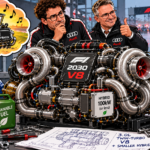
The power unit remains based on the 2014 V6 turbo. However, its operation is undergoing radical changes. Electrical power is playing a more significant role. Drivers will have enhanced energy deployment, which will be adjustable depending on the race phase. Engineers will need to develop sophisticated maps to optimize the use of this resource.
Energy recovery is becoming equally strategic. Systems must capture more energy, requiring faster control electronics and more robust components. Reliability could thus become a determining factor.
The End of the MGU-H
The elimination of the MGU-H (Motor Generator Unit-Heat) is a political and technical choice. This device harnessed the heat of the exhaust gases. Its complexity hindered the entry of new engine manufacturers. By removing it, the sport hopes to broaden competition and reduce development costs.
In return, the MGU-K's role is strengthened. It must deliver significantly more power. Batteries are becoming a priority area for innovation, as are power electronics and cooling systems.
Sustainable Fuel
The central pillar of the new regulations concerns the use of sustainable fuel. This fuel will be entirely synthetic. Its production will not use crude oil. It will rely on sustainable processes. The FIA is considering atmospheric carbon capture. The ambition is to create a carbon-neutral cycle. The expertise developed in F1 will benefit the production cars of tomorrow. The environmental impact of transportation could decrease.
Redesigned Aerodynamics
The cars will have a radically different profile. The 2026 regulations encourage more compact dimensions to promote agility. The wheelbase is reduced by 20 cm, from 3.60 m to 3.40 m. The width is reduced from 2 m to 1.90 m. The weight is reduced by 30 kg. As for the tires, they are thinner (2.5 cm at the front, 3 cm at the rear).
The DRS system is eliminated. It is replaced by a manual mode. The driver will activate it at a chosen time. The front wing becomes an active element. It adjusts automatically on the straights. This reduces drag without any driver input. The goal is to facilitate overtaking. Races should become more unpredictable. The on-track spectacle will be enhanced.
The Perpetual Quest for Safety
Safety remains a top priority. The FIA continues its continuous improvement efforts. The cockpit is reinforced against intrusions. The survival structure around the driver is evolving. It offers increased protection during side impacts. Composite materials will absorb and dissipate even more energy. Driver equipment will also evolve. Fireproof suits and underwear will gain performance.
A New Racing and Driving Philosophy
These changes redefine race strategy. Managing electrical energy becomes paramount. Electric power will dominate on the straights. The internal combustion engine will provide power in the corners. Drivers will have to master this new balance. Driving style will adapt accordingly. The art of regenerative braking will be crucial. It will allow for efficient battery charging. Race strategies will become more complex. Overtaking should be technically easier. The performance gap between cars could narrow. The driver's role in race management will be amplified. Their talent will make an even greater difference.
The dawn of a new era
In conclusion, 2026 will mark a new beginning. Formula 1 is reinventing itself for its future, reconciling extreme performance with environmental responsibility. The technical innovations are spectacular and numerous, affecting every aspect of the single-seater. From hybrid engines to aerodynamics, everything is changing. The spectacle promises to be renewed and intense. Fans will discover a more agile and strategic sport. The technological battle between manufacturers will intensify. F1 is positively influencing the future of mobility.




LAST 3 F1 Fan COMMENTS

Nobodysperfect on Race Report & Results 2026 Singapore Formula 1 Grand Prix1 hour ago 
Shroppyfly on Race Report & Results 2026 Singapore Formula 1 Grand Prix8 hours ago 
Jere Jyrälä on Race Report & Results 2026 Singapore Formula 1 Grand Prix8 hours ago
All F1 Fan Comments