



Graham Hill F1 Profile & Career Stats

Graham Hill †
F1 career: 1958 - 1975
Driver Profile
| Country |  United Kingdom United Kingdom |
| Height | 1.80 meter / 5 feet 11 inch1.80 m / 5'11" |
| Place of Birth | Hampstead |
| Date of Birth | Feb 15th 1929 |
| Date of Death | Nov 29th 1975: 46 years old |
| Season Entries | 18 (1958–1975) |
| Car Number | 23 |
Championship Titles
- 1962BRM12 clear of Jim Clark
- 1968Team Lotus12 clear of Jackie Stewart
Full Career Statistics
| Drivers' Titles | 2 |
| Grand Prix Entries | 179 |
| Grand Prix Starts | 177 |
| Total Points | 289.00 |
| Avg. Points per GP | 1.61 |
| Grand Prix Wins | 14 (7,8%) |
| Wins from pole | 4 (2,2%) |
| Pole Positions | 13 (7,3%) |
| Front Row Starts | 31 (17,3%) |
| Avg. GP Grid | 10.1 |
| GP Podiums | 36 (20,1%) |
| GP Fastest Laps | 10 (5,6%) |
| GP Points Finish | 59 (33,0%) |
| Avg. GP Position | 6.0 |
| Hat-tricks | 2 (1,1%) |
| GP DNFs | 81 (45,3%) |
| Total GP Laps | 8.791 |
F1 Career Team History
Key Career Landmarks
 1958 Monaco F1 Grand Prix1958 MON F1 GP 29 years, 92 days29y, 92d
 1975 Brazilian F1 Grand Prix1975 BRA F1 GP 45 years, 345 days45y, 345d
 1962 Belgian F1 Grand Prix1962 BEL F1 GP 33 years, 122 days33y, 122d1968 British F1 Grand Prix1968 GBR F1 GP 39 years, 156 days39y, 156d
 1962 Dutch F1 Grand Prix1962 NED F1 GP 33 years, 94 days33y, 94d1969 Monaco F1 Grand Prix1969 MON F1 GP 40 years, 92 days40y, 92d1960 Dutch F1 Grand Prix1960 NED F1 GP 31 years, 112 days31y, 112d1969 Monaco F1 Grand Prix1969 MON F1 GP 40 years, 92 days40y, 92d1960 British F1 Grand Prix1960 GBR F1 GP 31 years, 152 days31y, 152d
 1967 USA F1 Grand Prix1967 USA F1 GP 38 years, 228 days38y, 228d1960 Dutch F1 Grand Prix1960 NED F1 GP 31 years, 112 days31y, 112d
 1974 Swedish F1 Grand Prix1974 SWE F1 GP 45 years, 114 days45y, 114d1963 USA F1 Grand Prix1963 USA F1 GP 34 years, 233 days34y, 233d1968 Monaco F1 Grand Prix1968 MON F1 GP 39 years, 101 days39y, 101d1965 Monaco F1 Grand Prix1965 MON F1 GP 36 years, 104 days36y, 104d1965 USA F1 Grand Prix1965 USA F1 GP 36 years, 230 days36y, 230d
 1962 South African F1 Grand Prix1962 RSA F1 GP 33 years, 317 days33y, 317d
 1968 Mexican F1 Grand Prix1968 MEX F1 GP 39 years, 262 days39y, 262d
F1 Career Finishing Positions
Performance Breakdown
Graham Hill Biography
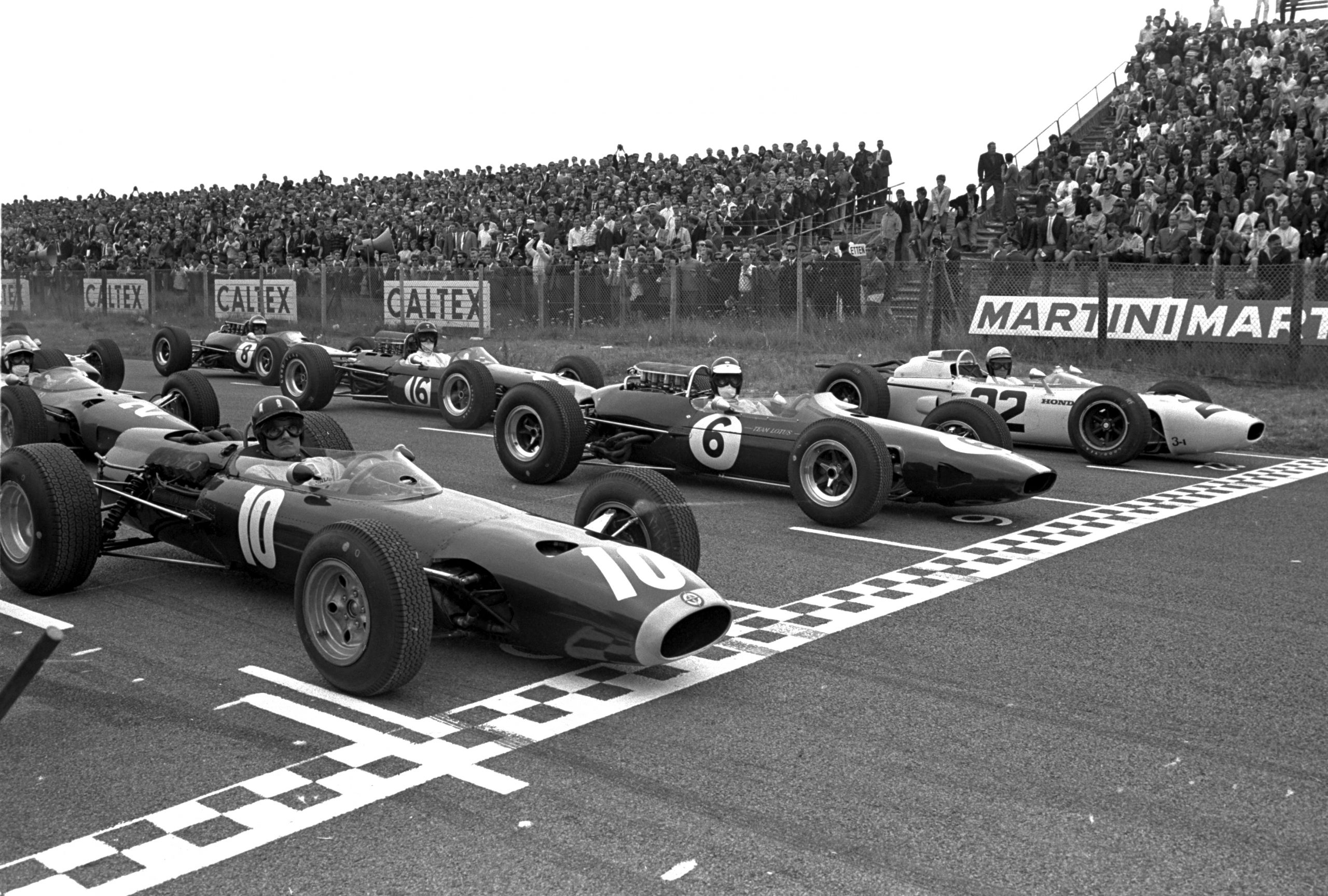
1965 Dutch GP Start Richie Ginther Honda RA272, Graham-Hill (10) & Jim Clark (6)
Graham Hill drove a lot of Formula 1 seasons. He started his F1 career in 1958 in Monaco and drove his last race in 1975 in Brazil, which helped to have the record for most starts from 1975 until the 1986 British Grand Prix when Jacques Laffite tied the record.
Norman Graham Hill was born on the 15th of February of 1929 in Hampstead, England. He grew up during war times, but his sense of humour prevailed. At an early age, he tried his hands into music, then attended a technical college. He was an engineering apprentice in the Smiths Instruments company before joining the Royal Navy (due to conscription).
Unable to have the ability to drive a road car, Hill loved motorcycles and rowing. Rowing played a huge role in Graham’s life and its influence carried onto his successful Formula One career. He was a member of the London Rowing Club and he adorned his racing helmet with the club’s insignia.
His motorsport career began with big differences to some of the other all-time greats. Hill learned to drive road cars at 24 years of age and his love for racing started after driving a short stint at Brands Hatch in a Formula Three single-seater. He found a job as a mechanic in a motorsport academy and soon became an employee for the Lotus F1 team, due to his incipient relationship with Colin Chapman.
His successful Formula 1 career started with lowlights, as he retired in his first seven races, six of those with mechanical problems on the unreliable Lotus 12 and Lotus 16 with a Climax L4 engine. He finished just two races in 1958, the Italian and Moroccan Grands Prix, albeit eight and seven laps behind the leader.
The 1959 season was, again, horrible for Hill as he did not score a single point. However, Hill qualified frequently in the top ten and in the 1959 Dutch Grand Prix started in fifth place, seven-tenths of the poleman (Jo Bonnier in British Racing Motors’ car) and 1.6 seconds ahead of the Lotus of Innes Ireland. Coincidentally, Hill’s best qualifying with Lotus occurred in the same Grand Prix British Racing Motors achieved its first F1 victory.
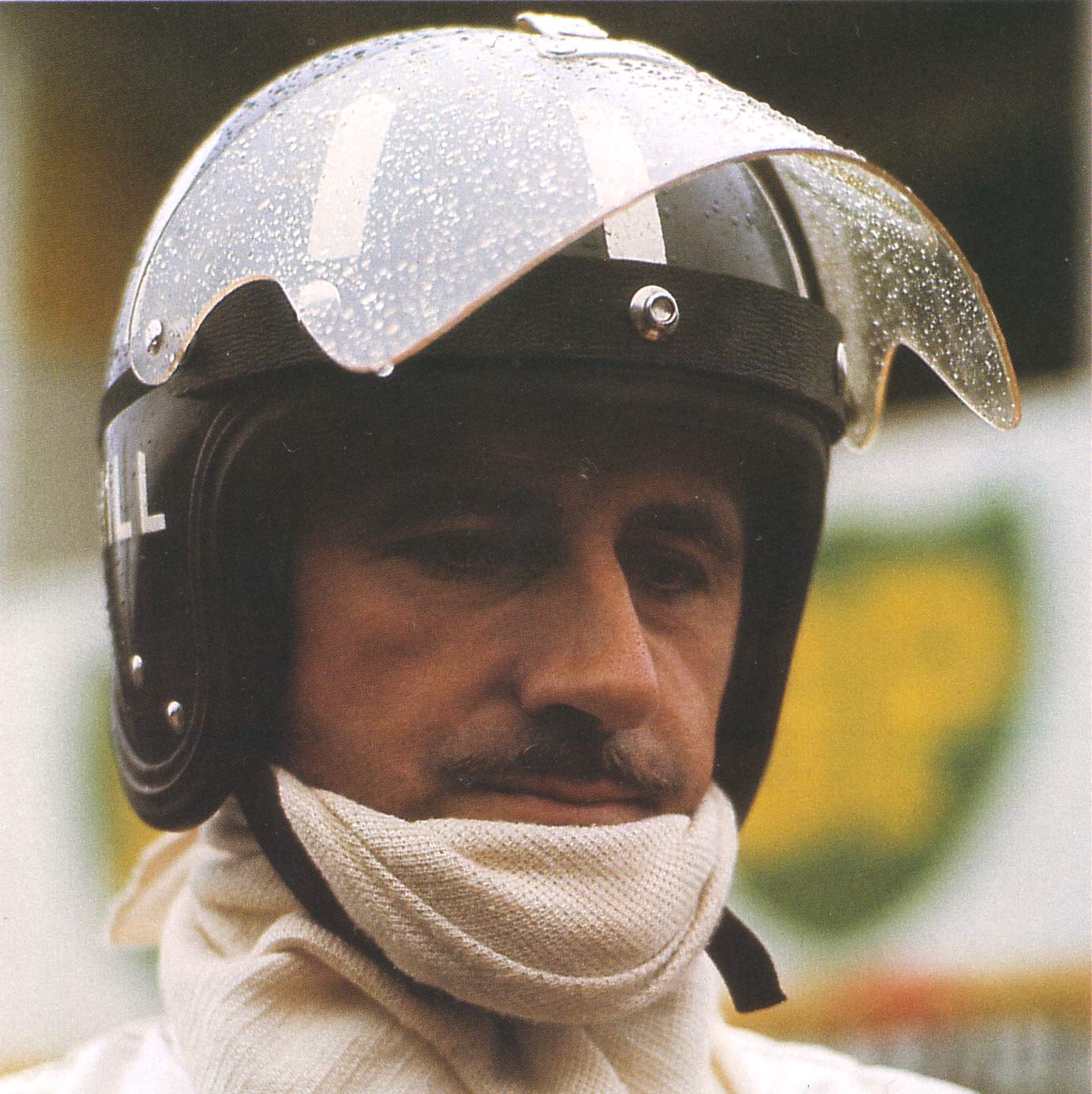
Graham Hill in Italy (1969)
Of course, there was not much to analyze from the 1959 season, but Hill showed his impressive qualifying since he was the pace-setting Lotus in every qualifying session of the year. For 1960, Hill chose to change his equipment and went to the BRM team.
In 1960 he retired from six of the eight races of the year, five DNFs caused by mechanical failures. In the first race with BRM, Hill qualified in third place at Argentina. In just his third Grand Prix with the team, he achieved the first of the 36 podiums of his career. His solid run of qualifying sessions continued and he started the 1960 British Grand Prix at Silverstone from second place. After a bad start, Hill recovered and took the lead in the middle part of the race. With seven laps remaining and reigning champion and championship leader Jack Brabham pressuring him, Hill’s brake struggles sent him into a spin at Copse. He retired from the race and missed a good chance to secure his first victory.
The first year of his union with BRM was a struggle and his move did not look very good at the time. Lotus had stepped up fixing their reliability issues and Ireland finished fourth in the championship with three podiums. Hill finished in 15th place in the 1960 F1 World Drivers’ Championship with four points. The 1961 campaign was tougher for Hill and BRM, as the team scored just seven points. Hill and his teammate Tony Brooks each finished only twice in the points. Even with the struggles and with the lacklustre performances during the year, they closed out the campaign with a good result.
In the final race of 1961, the US Grand Prix at Watkins Glen, both BRM cars qualified in the top 5. Hill finished the race in fifth place after starting second, while Brooks took the only podium finish of the year for BRM with a third place.
Hill’s move to BRM and his help regarding the development of the car and the team’s spirit, delivered the ultimate goal for driver and constructor in 1962.
Hill secured his first title in the 1962 season with four wins and two P2 finishes, securing 93.3% of the possible points which counted for the championships (only the best five results counted towards the title). Also, BRM won the Constructors’ title in 1962 after scoring 42 points, more than the previous three years combined.
In the last race of the season, the 1962 South African Grand Prix at East London, Hill secured the championship after a dramatic race. Jim Clark was leading the Grand Prix from Pole Position and on course to his first championship until an oil leak left him out with 20 laps to go. Hill went on to win the Grand Prix and the title.
The 1962 runners-up in the Drivers’ and Constructors’ championship, Clark and Lotus, went on to win the 1963 titles with record-setting domination. Hill finished a distant second place in 1963 after winning his first race at Monaco and adding a second victory of the year at the US Grand Prix at Watkins Glen.
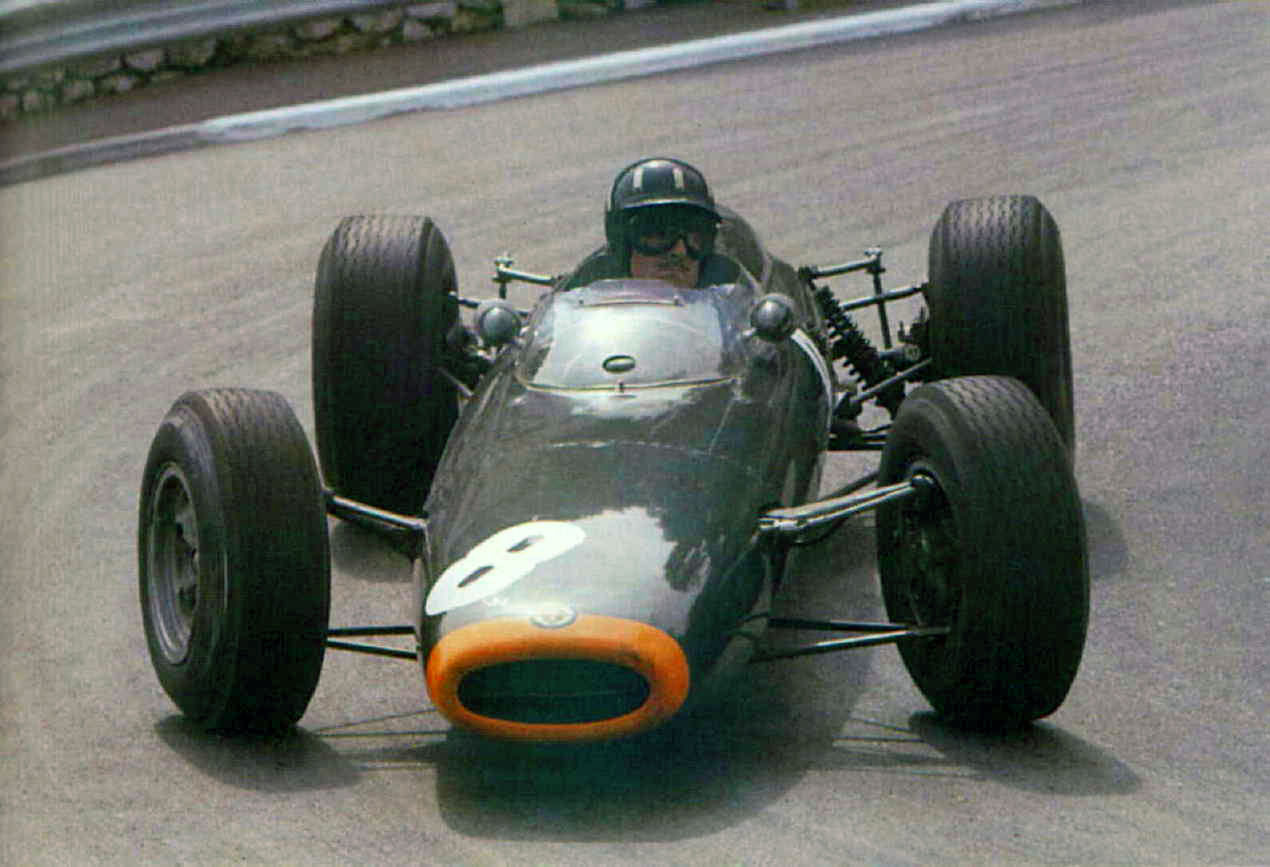
Graham HIll driving the BRM P261 at Monaco (1964)
In 1964, a heartbreaking title-deciding Mexican Grand Prix saw John Surtees become the first (and so far only) person to win World Championships both in two and four wheels. The last race of the 1964 season had Hill as the championship leader, followed closely by Surtees and Clark. In the first stages, Hill looked on pace to secure his second championship, but with Lorenzo Bandini crashing into his car and damaging the exhaust pipe of the BRM, Hill’s championship hopes were almost over.
Clark was winning the race, Surtees was fourth and Hill was not competitive, which would give Clark his second title. In the closing stages of the race, the Climax engine on Clark’s Lotus 33 exploded and his title went up in smoke. With Dan Gurney leading and the Ferraris of Bandini and Surtees behind, Hill was on course to win the championship, although he was running in the back of the field. However, Ferrari signalled Bandini to let Surtees through and the championship went to Maranello.
Hill again won at Monaco and Watkins Glen in 1965, but two wins and four other podiums were not near enough to stop Clark and Lotus run of success Hill finished second for the third straight year and the tension grew up inside the BRM garage, with Hill’s continuously lashing out his frustration. In 1966 he could not win a single F1 race, although he competed in the 1966 Indy 500 and took a controversial victory since Lotus thought Hill had not gone by Clark when he spun during the race, however, Lotus did not file a formal protest.
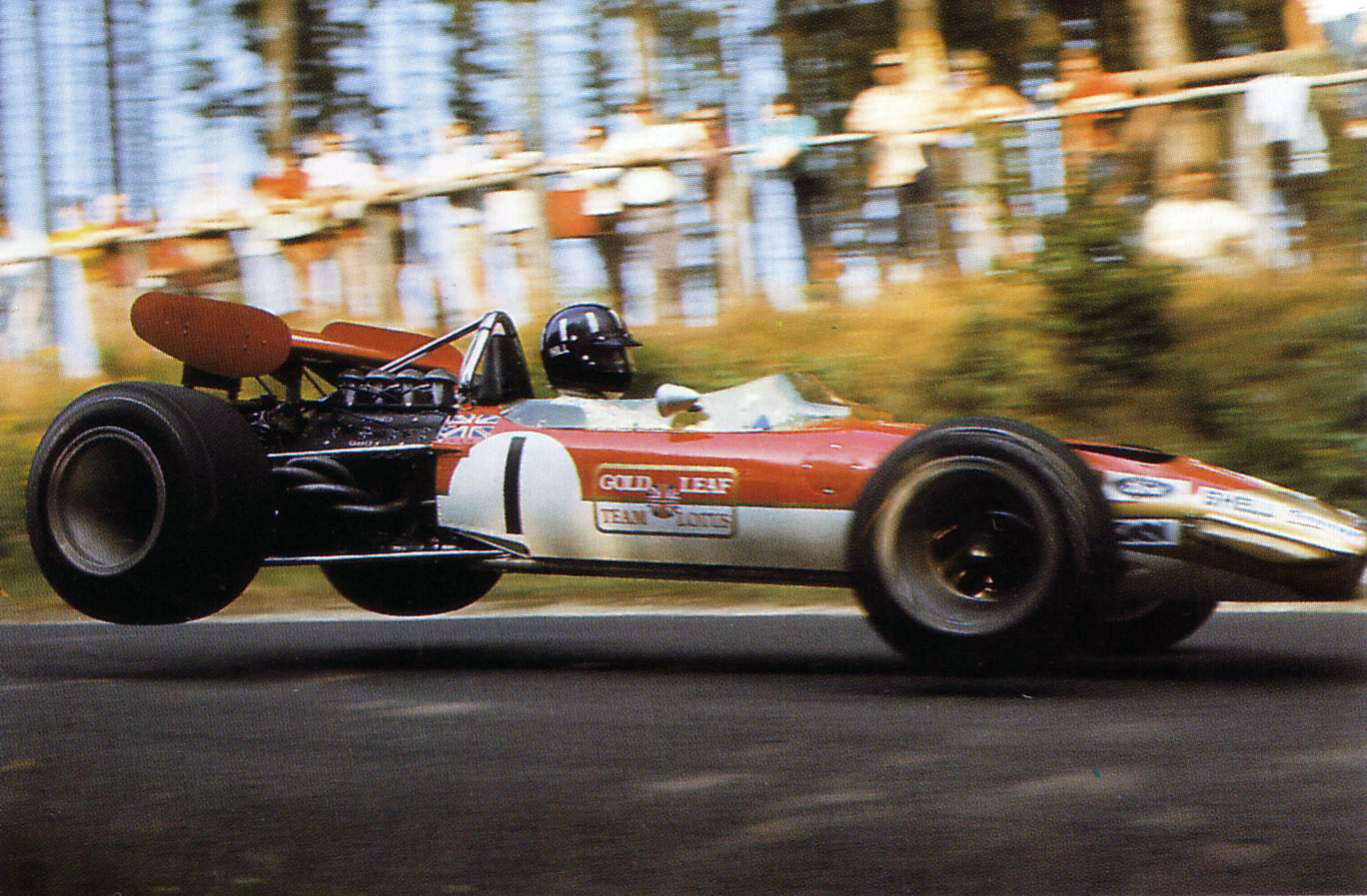
Graham HIll driving the Lotus 01 at the Nordschleife in Germany (1969)
Hill moved back to the Lotus F1 team in for the 1967 campaign, but his first year back with the team was even worse than his last with BRM. Hill scored just two podiums during the season and finished just three of the 11 races due to several mechanical woes. His teammate, Clark finished that year third in the WDC behind the two Brabham cars and won four races, the highest tally on the field that year.
For 1968, the Lotus 49 and its evolution, the 49B, were highly competitive machines. Clark won the first race of the season at South Africa on the 1st of January, but he tragically died at the Hockenheimring in April during a Formula Two race. Clark´s replacement at Lotus, Mike Spence, suffered a fatal crash in practice for the Indy 500, which meant the only driver for the devastated Lotus team in the 1968 Spanish Grand Prix was Hill.
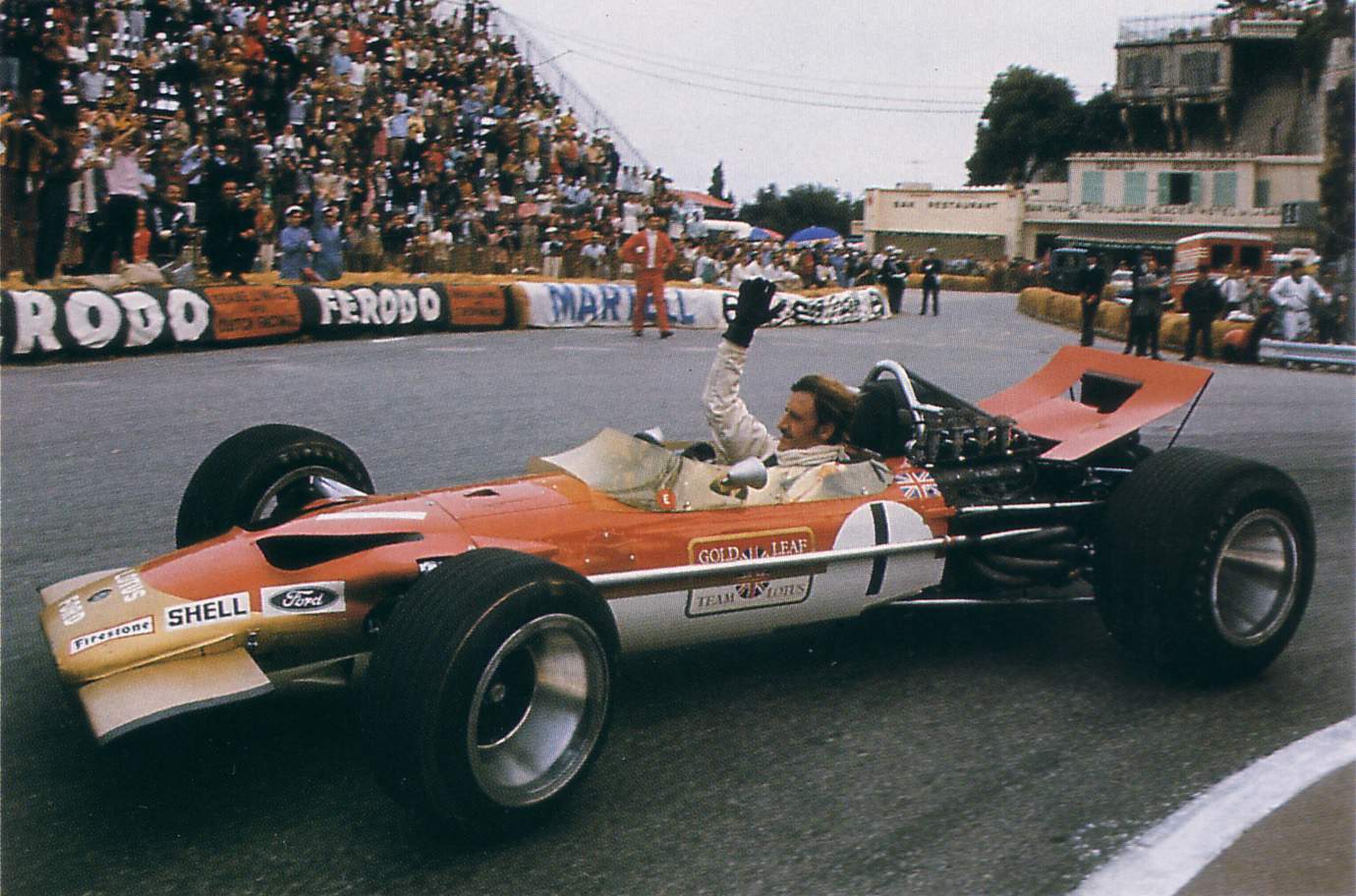
Hill delivered a heartfelt win for the Lotus team after starting from sixth on the grid. It was the first race a Lotus car was not running with its usual green-coloured livery, as they had painted the car with the colours of their main sponsor Gold Leaf.
The English champion went on to win his fourth Monaco Grand Prix with the Lotus 49B, which was the first car to have wings to further improve downforce. A couple of podiums and a win in the title-deciding last race of the year at Mexico saw Hill become fifth multiple World Champion and the third to do it with different teams after Juan Manuel Fangio (Alfa Romeo, Maserati, Mercedes, and Ferrari) and Jack Brabham (Cooper and Brabham).

Lotus 49B driven by Graham Hill in Monaco (1969)
A complete year with the Lotus 49B in 1969 did not produce similar results for Hill, although he took his fifth win in the most glamorous race of the season, the 1969 Monaco Grand Prix. He finished seventh in the WDC in 1969, but that was not the worst aspect of that year, as he suffered near-fatal crash at Watkins Glen in the 1969 US Grand Prix. His car stalled on lap 88 and he jumped out of the car to push it. As he restarted the car, he did not fasten his belts. His mechanics were ready to change the tyres of the car, but before entering the pits, a rear tyre exploded and Hill flew off the car, injuring his two legs severely.
He recovered in time for the 1970 F1 season when Chapman out him in Rob Walker’s team with a Lotus car. He scored only seven points that year, without a podium finish. Then, similar years followed in 1971 and 1972 with Brabham.
In 1972 he won the 24 Hours of Le Mans driving a Matra-Simca alongside Henri Pescarolo. With the win at Le Mans, Hill completed motorsport’s Triple Crown, which consists of winning the Monaco Grand Prix, the Indianapolis 500 and the Le Mans race. Also, some say that the real Triple Crown does not take in consideration success at the Monaco F1 race but the Formula 1 World Drivers’ Championship. In any case, Hill is the only driver to achieve such a feat.
The downwards row in Hill’s F1 career continued after he created his own team, Embassy Hill Racing. In the first 29 races with his own car, a Shadow then a Lola, Hill scored points just once, in the 1974 Swedish Grand Prix. After failing to qualify for the 1975 South African Grand Prix and especially for the 1975 Monaco Grand Prix, at a track he used to dominate, Hill retired from driving.
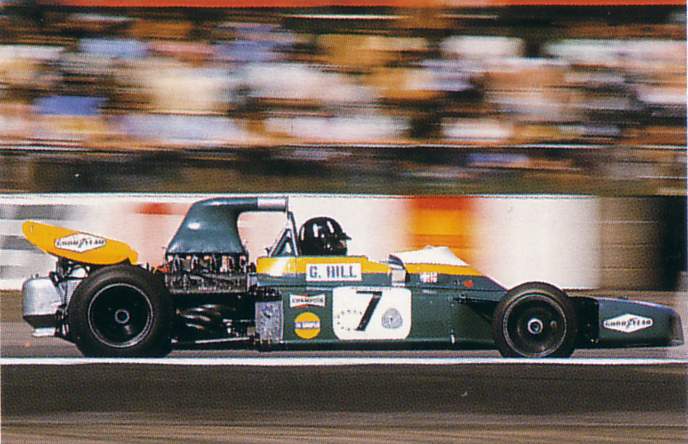
Brabham BT34 driven by Graham Hill in Britiain (1971)
He continued with his team and was a mentor to his driver Tony Brise, which was 23 years old. Brise replicated his mentor’s best result for his own team with a sixth place in the 1975 Swedish Grand Prix, the only point-scoring finish in his short career.
Hill was known to be the pilot of his own aeroplanes too. Hill, Brise and other key members of the Embassy Hill team were on a test in the south of France. As they were on their way back to England, the two-time F1 champion failed to land the plane during the dark night of the 29th of November of 1975 and the crash tragically took the lives of every passenger on the plane.
Damon Hill, Graham's son, became a Formula 1 World Champion in 1996 with Williams, making him the first son of a World Champion to replicate his father's triumphs. Damon wore a similar helmet to his father's during his career, with the insignia of the London Rowing Club as the main aspect of the livery.
“I am an artist. The track is my canvas, and the car is my brush.”
Graham Hill Championship Results
2× World Championships1962–1968 · BRM, Team Lotus
Two titles in seven seasons, and six years between the first and the last.
- 1962BRM42 pts12 clear of Jim Clarksealed at 1962 South African F1 GP
- 1968Team Lotus48 pts12 clear of Jackie Stewartsealed at 1968 Mexican F1 GP
28th
1975
18th
1974
26th
1973
15th
1972
21st
1971
13th
1970
7th
1969
1st
1968
7th
1967
5th
1966
2nd
1965
2nd
1964
2nd
1963
1st
1962
16th
1961
15th
1960
25th
1959
25th
1958
Graham Hill F1 Seasons Summary
| Year | Team | Engine | GP | 1st | 2nd | 3rd | Pod | Pole | Laps | FL | Avg Pts | Points |
|---|---|---|---|---|---|---|---|---|---|---|---|---|
| 1975 |
Lola |
Ford | 2 | 0 | 0 | 0 | 0 | 0 | 91 | 0 | 0.00 | 0 |
| 1974 |
Lola |
Ford | 15 | 0 | 0 | 0 | 0 | 0 | 845 | 0 | 0.07 | 1 |
| 1973 |
Shadow |
Ford | 12 | 0 | 0 | 0 | 0 | 0 | 529 | 0 | 0.00 | 0 |
| 1972 |
Brabham |
Ford | 12 | 0 | 0 | 0 | 0 | 0 | 650 | 0 | 0.33 | 4 |
| 1971 |
Brabham |
Ford | 11 | 0 | 0 | 0 | 0 | 0 | 355 | 0 | 0.18 | 2 |
| 1970 |
Team Lotus |
Ford | 12 | 0 | 0 | 0 | 0 | 0 | 643 | 0 | 0.58 | 7 |
| 1969 |
Team Lotus |
Ford | 10 | 1 | 1 | 0 | 2 | 0 | 584 | 0 | 1.90 | 19 |
| 1968 🏆 |
Team Lotus |
Ford | 12 | 3 | 3 | 0 | 6 | 2 | 659 | 0 | 4.00 | 48 |
| 1967 |
Team Lotus Team Lotus |
Ford BRM | 11 | 0 | 2 | 0 | 2 | 3 | 476 | 2 | 1.36 | 15 |
| 1966 |
BRM |
BRM | 9 | 0 | 1 | 2 | 3 | 0 | 365 | 0 | 1.89 | 17 |
| 1965 |
BRM |
BRM | 10 | 2 | 3 | 1 | 6 | 4 | 672 | 3 | 4.70 | 47 |
| 1964 |
BRM |
BRM | 10 | 2 | 3 | 0 | 5 | 1 | 540 | 1 | 4.10 | 41 |
| 1963 |
BRM |
BRM | 10 | 2 | 0 | 3 | 5 | 2 | 640 | 0 | 2.90 | 29 |
| 1962 🏆 |
BRM |
BRM | 9 | 4 | 2 | 0 | 6 | 1 | 606 | 3 | 5.78 | 52 |
| 1961 |
BRM |
Climax | 8 | 0 | 0 | 0 | 0 | 0 | 315 | 0 | 0.38 | 3 |
| 1960 |
BRM |
BRM | 8 | 0 | 0 | 1 | 1 | 0 | 327 | 1 | 0.50 | 4 |
| 1959 |
Team Lotus |
Climax | 7 | 0 | 0 | 0 | 0 | 0 | 187 | 0 | 0.00 | 0 |
| 1958 |
Team Lotus |
Climax | 9 | 0 | 0 | 0 | 0 | 0 | 307 | 0 | 0.00 | 0 |
Graham Hill F1 Cars
-

- Brabham BT34 driven by Graham Hill in Britiain (1971)
-
- Lotus 49B driven by Graham Hill in Monaco (1969)