





Niki Lauda F1 Profile & Career Stats

Former Formula 1 Driver
Niki Lauda †
F1 career: 1971 - 1985
Driver Profile
| Country |  Austria Austria |
| Height | 1.71 meter / 5 feet 7 inch1.71 m / 5'7" |
| Place of Birth | Vienna |
| Date of Birth | Feb 22nd 1949 |
| Date of Death | May 20th 2019: 70 years old |
| Season Entries | 13 (1971–1979, 1982–1985) |
| Car Number | 1 |
Championship Titles
- 1975Ferrari19.5 clear of Emerson Fittipaldi
- 1977Ferrari17 clear of Jody Scheckter
- 1984McLaren0.5 clear of Alain Prost
F1 Career Team History
Full Career Statistics
| Drivers' Titles | 3 |
| Grand Prix Entries | 174 |
| Grand Prix Starts | 173 |
| Total Points | 420.50 |
| Avg. Points per GP | 2.42 |
| Grand Prix Wins | 25 (14,4%) |
| Wins from pole | 9 (5,2%) |
| Pole Positions | 24 (13,8%) |
| Front Row Starts | 31 (17,8%) |
| Avg. GP Grid | 8.3 |
| GP Podiums | 54 (31,0%) |
| GP Fastest Laps | 24 (13,8%) |
| GP Points Finish | 73 (42,0%) |
| Avg. GP Position | 4.0 |
| Hat-tricks | 3 (1,7%) |
| GP DNFs | 80 (46,0%) |
| Total GP Laps | 8.217 |
Key Career Landmarks
Race1971 Austrian F1 Grand Prix1971 AUT F1 GP 22 years, 174 days22y, 174d 1985 Australian F1 Grand Prix1985 AUS F1 GP 36 years, 254 days36y, 254d
1971 Austrian F1 Grand Prix1971 AUT F1 GP 22 years, 174 days22y, 174d1985 Australian F1 Grand Prix1985 AUS F1 GP 36 years, 254 days36y, 254dPole 1974 South African F1 Grand Prix1974 RSA F1 GP 25 years, 36 days25y, 36d1978 South African F1 Grand Prix1978 RSA F1 GP 29 years, 10 days29y, 10d
1974 South African F1 Grand Prix1974 RSA F1 GP 25 years, 36 days25y, 36d1978 South African F1 Grand Prix1978 RSA F1 GP 29 years, 10 days29y, 10dWin 1974 Spanish F1 Grand Prix1974 ESP F1 GP 25 years, 65 days25y, 65d
 1985 Dutch F1 Grand Prix1985 NED F1 GP 36 years, 184 days36y, 184d
1974 Spanish F1 Grand Prix1974 ESP F1 GP 25 years, 65 days25y, 65d1985 Dutch F1 Grand Prix1985 NED F1 GP 36 years, 184 days36y, 184dPodium 1974 Argentine F1 Grand Prix1974 ARG F1 GP 24 years, 325 days24y, 325d1985 Dutch F1 Grand Prix1985 NED F1 GP 36 years, 184 days36y, 184d
1974 Argentine F1 Grand Prix1974 ARG F1 GP 24 years, 325 days24y, 325d1985 Dutch F1 Grand Prix1985 NED F1 GP 36 years, 184 days36y, 184dFastest lap1974 Spanish F1 Grand Prix1974 ESP F1 GP 25 years, 65 days25y, 65d 1985 German F1 Grand Prix1985 GER F1 GP 36 years, 163 days36y, 163d
1974 Spanish F1 Grand Prix1974 ESP F1 GP 25 years, 65 days25y, 65d1985 German F1 Grand Prix1985 GER F1 GP 36 years, 163 days36y, 163dPoints finish 1973 Belgian F1 Grand Prix1973 BEL F1 GP 24 years, 87 days24y, 87d1985 Dutch F1 Grand Prix1985 NED F1 GP 36 years, 184 days36y, 184d
1973 Belgian F1 Grand Prix1973 BEL F1 GP 24 years, 87 days24y, 87d1985 Dutch F1 Grand Prix1985 NED F1 GP 36 years, 184 days36y, 184dWin from pole1974 Spanish F1 Grand Prix1974 ESP F1 GP 25 years, 65 days25y, 65d 1976 British F1 Grand Prix1976 GBR F1 GP 27 years, 147 days27y, 147d
1974 Spanish F1 Grand Prix1974 ESP F1 GP 25 years, 65 days25y, 65d1976 British F1 Grand Prix1976 GBR F1 GP 27 years, 147 days27y, 147dHat-trick1974 Spanish F1 Grand Prix1974 ESP F1 GP 25 years, 65 days25y, 65d1976 British F1 Grand Prix1976 GBR F1 GP 27 years, 147 days27y, 147d
1974 Spanish F1 Grand Prix1974 ESP F1 GP 25 years, 65 days25y, 65d1976 British F1 Grand Prix1976 GBR F1 GP 27 years, 147 days27y, 147dTitle 1975 Italian F1 Grand Prix1975 ITA F1 GP 26 years, 197 days26y, 197d
 1984 Portuguese F1 Grand Prix1984 POR F1 GP 35 years, 242 days35y, 242d
1975 Italian F1 Grand Prix1975 ITA F1 GP 26 years, 197 days26y, 197d1984 Portuguese F1 Grand Prix1984 POR F1 GP 35 years, 242 days35y, 242dF1 Career Finishing Positions
1st
25
2nd
20
3rd
9
4th
7
5th
7
6th
5
7th
1
8th
4
9th
2
10th
1
11th
1
12th
2
13th
2
16th
1
DNF
80
DSQ
3
NC
1
WD
2
DNQ
1
DNF Did Not FinishDSQ DisqualifiedNC Not ClassifiedWD WithdrawnDNQ Did Not Qualify
Performance Breakdown
Bio
Niki Lauda Biography
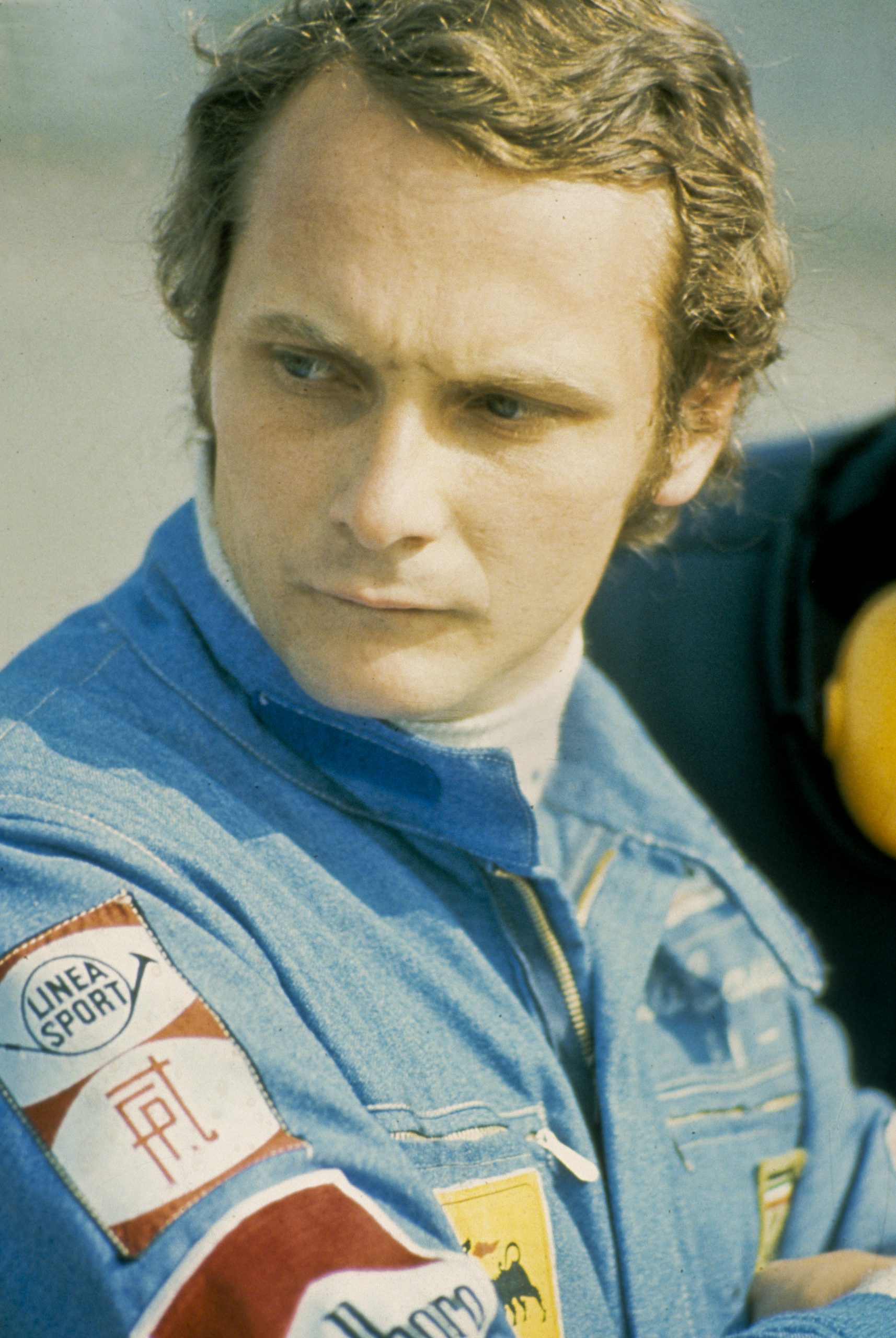
Last photo of Niki Lauda before his crash at the Nurburgring when driving for Ferrari (1976)
Lauda was born into a wealthy paper manufacturing family in 1949. He started his racing career despite his family’s disapproval, eventually taking out a bank loan secured by his life insurance policy to buy a seat with March in the Formula 2 series for 1971.
He was quickly promoted by March to Formula 1 and, by 1973, had moved into a seat with BRM. When Lauda’s teammate, Clay Regazzoni, left BRM at the end of 1973 to join Ferrari, he relayed to Enzo how good Lauda was, and Niki was promptly signed to Ferrari for the 1974 season. Ferrari’s faith in Lauda was rewarded in the fourth race of 1974, when he captured his first F1 victory, and Ferrari’s first victory since 1972, at the Spanish Grand Prix. Lauda would win two races and achieve nine pole positions on his way to 4th in the 1974 World Championship in the 312B3.
The debut of Forghieri’s new 312T at the third race of the 1975 season in South Africa was a turning point for Ferrari. This new design continued to utilize the proven flat-12 engine, which became known as the tipo 015, which was then coupled to a transverse gearbox that was packaged between the engine and the car’s differential. This layout reduced the car’s polar moment of inertia, creating a marked improvement in the Ferrari’s overall handling balance. Aerodynamic and suspension revisions were made as well, and Ferrari finally had the handling to fully exploit the power advantage they had enjoyed in recent years. Ferrari’s new machine was as beautiful as it was effective, and the 312T was instantly quick, but an accident in practice and problems in the race relegated Lauda to a 5th Place finish in South Africa.
The next outing for the 312T, and the inaugural one for the chassis offered here, 022, was the non-championship BRDC International Trophy at Silverstone. This race would be something of a beginning to one of the great rivalries the sport of F1 had ever seen – Niki Lauda versus James Hunt. Hunt qualified on pole in his Hesketh, but after laps of dicing with Lauda, would suffer an engine failure, and Lauda would take the first victory for the 312T in chassis 022.
The next race for Lauda and 022 would be at the Spanish Grand Prix at the daunting Montjuïc circuit outside of Barcelona. Lauda would take pole position in qualifying, as he did in every subsequent Grand Prix event while driving 022. The start saw Lauda’s car being run into by Mario Andretti’s Parnelli, and the Ferrari was spun into the barriers, damaging the front wing and right front suspension, ending Lauda’s race. One month later, Clay Regazzoni would contest the Belgian Grand Prix at Spa-Francorchamps in 022, finishing 5th. Lauda was back in the car for the Dutch Grand Prix at Zandvoort, where he placed 2nd.
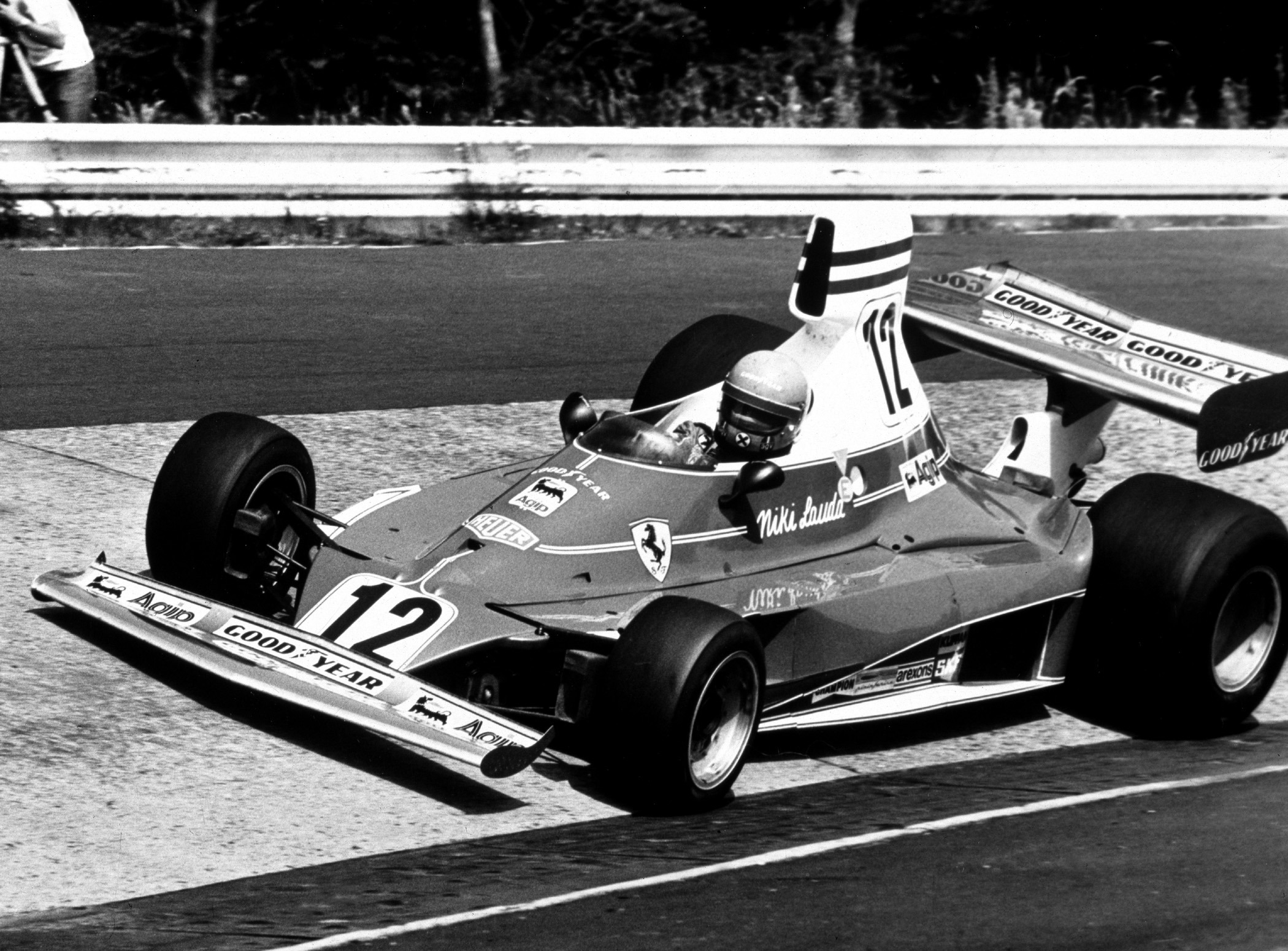
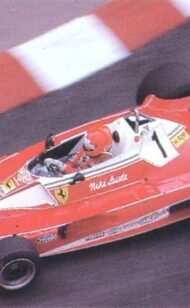
Ferrari 312T on the Nurburgring driven by Niki Lauda (1975-1976)
The French Grand Prix at Circuit Paul Ricard was next, and Lauda was again on pole in 022, having easily bested the competition in qualifying. On a hot and windy day, he would drive a dominating race, leading flag to flag, and claiming victory over James Hunt, who finished 2nd. The German Grand Prix at the Nürburgring (Nordschleife) saw Lauda again dominate qualifying in 022, only to have a front tire puncture during the race while leading. He would limp the car to the pits and recover to finish in 3rd in a spirited drive. The final outing for 022 for the 1975 season was in Lauda’s home country of Austria. He was again on pole, alongside Hunt, and the two led the race early on in awful, wet conditions, with Lauda going on to finish 6th.
The 1975 season had been an unbelievable success, and Ferrari had again become the champion of the world’s top form of motorsports. It was the Italian automaker’s first title since 1964, and Lauda’s first of three championships he would win in his storied career. Lauda and Regazzoni had combined to win six of that year’s 14 races, and generally dominated their competition in the 312T. Chassis 022, having been such an integral part of the team’s 1975 title, would go on to be raced a single time by Regazzoni in South Africa in 1976, where it did not finish due to an engine problem.
The 1976 season started off great for the defending champion Lauda. The Austrian champion won five of the first nine races of the 1976 calendar.
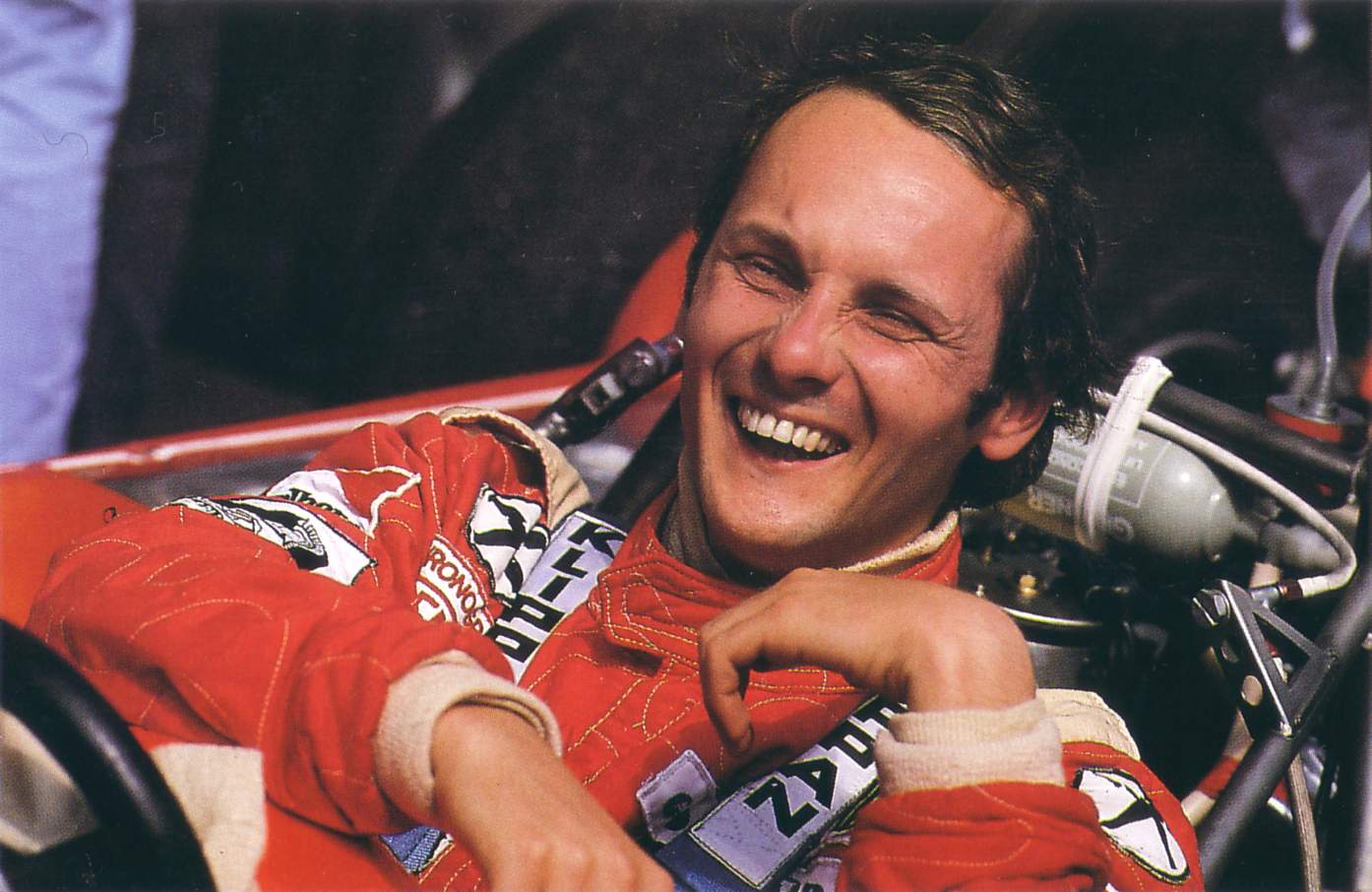
Niki Lauda, Spanish F1 GP (1976)
After his fifth win of the year, in the controversial 1976 British Grand Prix at Brands Hatch, Lauda enjoyed a 23-point lead over McLaren's James Hunt. Hunt was involved in an accident at the start, then he entered the pits through an access road, not completing the full lap. Hunt won the race after the stewards allowed him to take part in the restart,reverting their decision not to let him race— but was later disqualified.
Crash at Nurburgring Nordschleife
For the next race,the 1976 German Grand Prix at Nürburgring— Lauda himself asked the drivers to force the race to be cancelled due to the bad conditions of the track and the little to no safety provided to the participants of the event. As the drivers voted for the race to go on, Lauda's request was denied.
Lauda started the wet race from second place. He changed tyres on the first lap and as he was recovering time, his car crashed before the Bergwerk corner and it burst into fire. As Lauda was trapped in his car, four drivers, including Italian Arturo Merzario, managed to take the Austrian champion out of the car, but not before he suffered severe burnings in his head and further damage due to the toxic smoke and various fractures. Here you can see the Lauda Nurburgring crash footage.
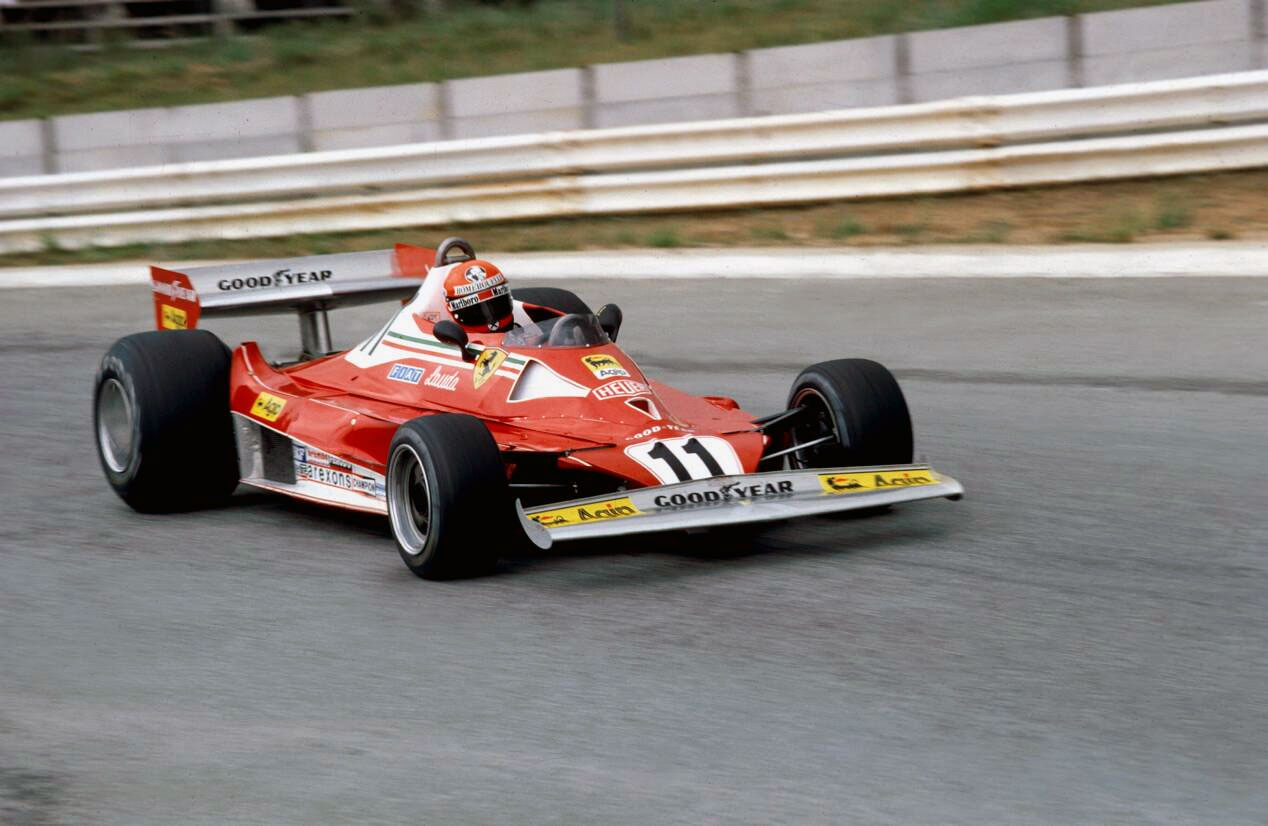
Niki Lauda in the Ferrari 312T2 2nd place (1977)
At the hospital, Lauda was given the last rites, assuming he would succumb to his injuries. However, as the Formula 1 World Championship travelled to Italy, six weeks after the crash, Lauda returned to racing and even finished fourth in the race. Due to the damage in his head, Lauda elected to cover it with a red cap that became his trademark for the rest of his life.
After missing two races and finishing fourth at Italy, Lauda only managed a third place in the last three races of 1976 and lost the title fight to Hunt by one point. In the final race, the 1976 Japanese Grand Prix, Lauda had a three-point lead over Hunt, but as the rain fell hard in the Fuji Speedway, Lauda withdrew from the race due to the unsafe conditions and ultimately lost the title.
Lauda's decision was not well-received by the Ferrari team. However, he went on to dominate the 1977 season even after winning only three races in the year. With his three victories and seven other podiums, Lauda won the 1977 World Drivers' Championship for Ferrari before leaving the team with a couple of races to go in 1977 due to his discomfort with some of the team's decision's such as putting Carlos Reutemann as his teammate.
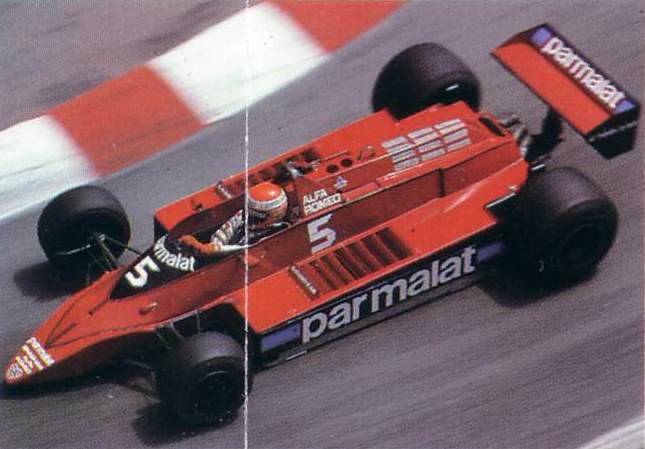
Brabham BT48 driven by Niki Lauda at Monaco (1979)
For 1978, Lauda went to Brabham and started the year with a couple of podiums in a row. He qualified on Pole Position for the 1978 South African Grand Prix but retired due to engine trouble. Reliability was a big concern in the Brabham team since Lauda retired four times in the first seven races and three were due to mechanical issues.
At Lauda's eighth race with Brabham, the BT46B Fan Car made its entrance and the Austrian dominated the 1978 Swedish Grand Prix. The win at Sweden pushed him to third in the WDC, just 11 points behind the leader Mario Andretti with eight races to go. the BT46B was not used by Brabham ever again due to protest by other teams.
After a couple of podiums and three retirements in the following five races after his win at Sweden, Lauda won the 1978 Italian Grand Prix. He won the race after Andretti and Gilles Villeneuve suffered penalties for jumping the start.
He finished fourth in the 1978 WDC, but 1979 proved to be a tough year for him and the team as Lauda only scored four points the entire season. Lauda retired from racing to focus on his airline, Lauda Air.
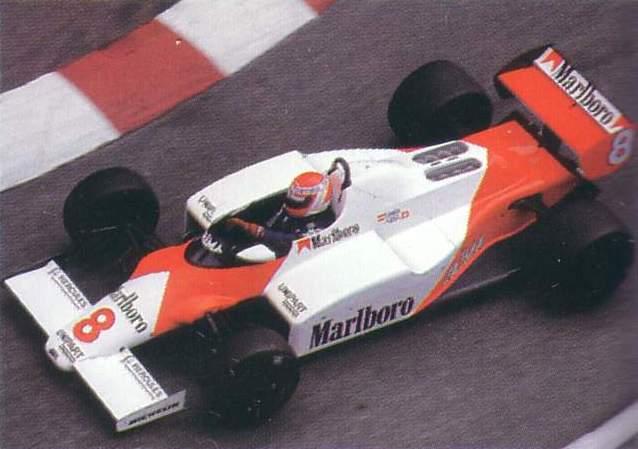
Niki Lauda, McLaren MP4-1C at Monaco (1983)
In 1982 he returned to Formula 1 with McLaren after signing what was the biggest contract ever at that time. The money, however, was needed to maintain his airline going. In 1982, Lauda showed good speed and his consistency as a driver was still there. His first win with McLaren came in the 1982 United States Grand Prix West, the third race of the year. Then, he had a streak of five races without scoring points for various reasons (the FOCA-FISA war during the 1982 San Marino Grand Prix, disqualification from the 1982 Belgian Grand Prix and three DNFs).
Before the end of the season, Lauda won the 1982 British Grand Prix at Brands Hatch and finished third in the 1982 Swiss Grand Prix at Dijon-Prenois. Ultimately, his comeback season was solid and he finished fifth in the WDC.
The 1983 season was not a good one for the team and Lauda suffered. However, in the final four races of the year, Lauda tested the new TAG-Branded Porsche engine and got close to winning the last race of the season before an engine issue ended his chances.
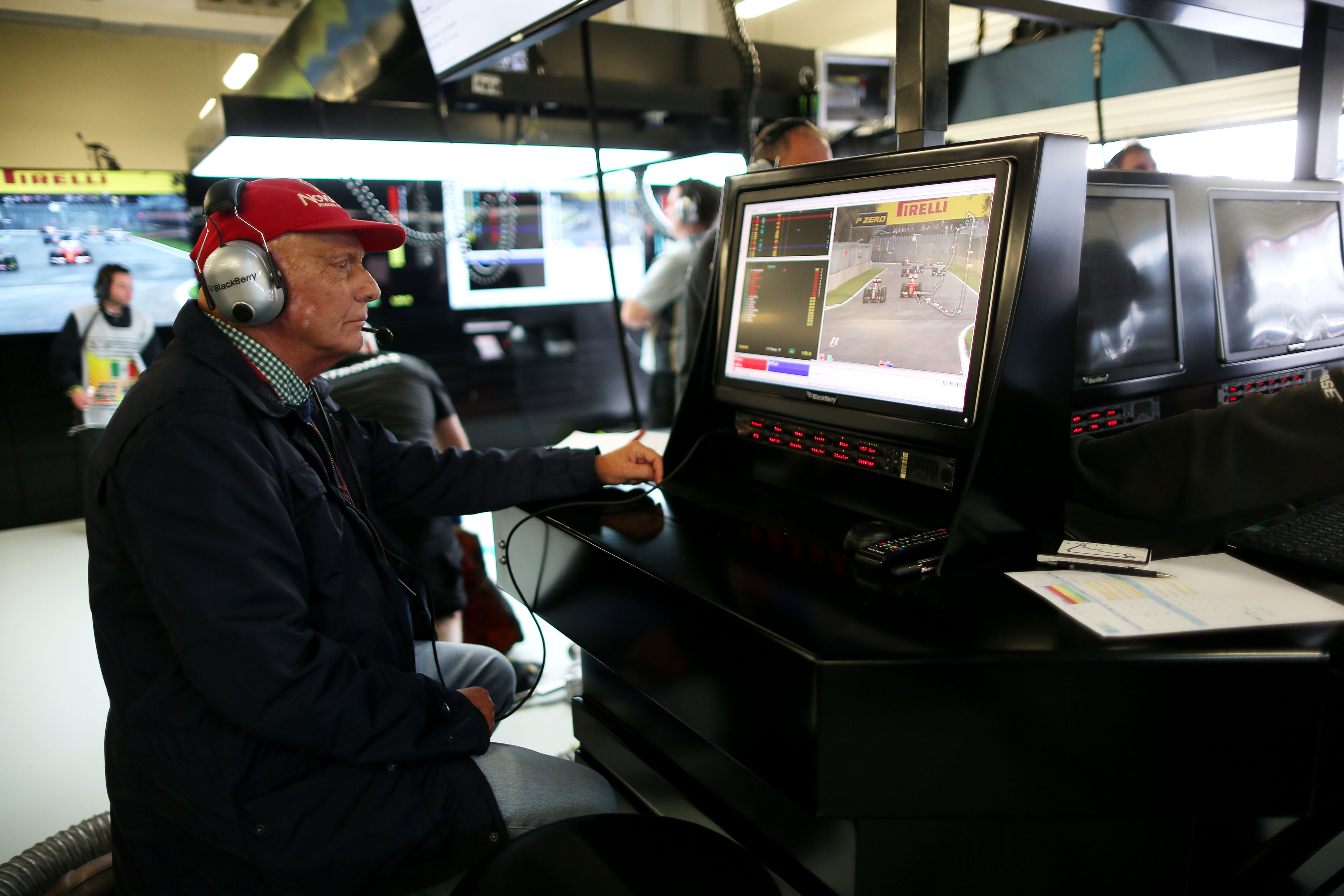
Niki Lauda watching TV
In 1984, Lauda's teammate was a young Alain Prost who had won nine races for Renault and was a force to be reckoned with in the sport. Lauda looked seemingly unable to match the Frenchman in qualifying, and in the races, Prost was normally ahead. The Frenchman won seven races in the year, while Lauda won five. Prost suffered various setbacks, including five DNFs due to car issues and his victory in the 1984 Monaco Grand Prix only giving him half the points. Lauda, who also retired four times with car trouble and twice due to mistakes, overcame a big margin to take the championship away from his teammate by half a point.
In the last race of the year, the 1984 Portuguese Grand Prix, Prost started from the front row and Lauda from 11th. As Prost took the lead and was comfortably ahead, the Austrian needed to finish second, and he did it with a masterful drive to take his third World Drivers' Championship.
The following year, Lauda scored points only three times in the season, but he got the last win of his illustrious career at Zandvoort in the 1985 Dutch Grand Prix. As Prost became the unquestioned team leader, Lauda retired (although not because of it) from driving.
He was involved with Formula 1 ever since, working for Ferrari, Jaguar, and most prominently with Mercedes since 2013. As Non-Executive Chairman of Mercedes F1, Lauda helped bring Lewis Hamilton to the team and was a key part of the team's domination of the sport from 2014 onwards. He was definitely an inspiration for the latter half of 2018 and the whole of 2019 for the Silver Arrows.
Lung transplant & Death
As his health deteriorated, his image and legacy grew even larger. In 2018, he had to undergo lung transplant to repair damages generated by his crash in 1976. On the 20th of May of 2019, Lauda passed away, which represented a big loss in his family and the paddock, where he will forever be missed.

Tribute to Lauda by Hamilton and Vettel
Lauda died six days before the 2019 Monaco Grand Prix, in which the teams paid homage to his legacy and celebrated the impact he had on the sport and the heroic life he lived. Mercedes ran red halos during that weekend and Hamilton won the race wearing a replica of the helmet Lauda wore during the 1984 season.
Sebastian Vettel also gave his respect to Lauda by wearing a replica of the Austrian's Ferrari helmet. The entire paddock wore red caps to remember the great Niki.
Ultimately, Mercedes remembered Lauda and dedicated the two titles achieved in 2019 to the three-time World Champion who was much more than that.
"From success, you learn absolutely nothing. From failure and setbacks, conclusions can be drawn. That goes for your private life as well as your career."
Seasons
Niki Lauda Championship Results
3× World Championships1975–1984 · Ferrari, McLaren
Three titles in ten seasons, two of them with Ferrari, and nine years between the first and the last.
- 1975Ferrari64.5 pts19.5 clear of Emerson Fittipaldisealed at 1975 Italian F1 GP
- 1977Ferrari72 pts17 clear of Jody Schecktersealed at 1977 USA F1 GP
- 1984McLaren72 pts0.5 clear of Alain Prostsealed at 1984 Portuguese F1 GP
10th
1985
1st
1984
10th
1983
5th
1982
14th
1979
4th
1978
1st
1977
2nd
1976
1st
1975
4th
1974
17th
1973
23rd
1972
40th
1971
Niki Lauda F1 Seasons Summary
| Year | Team | Engine | GP | 1st | 2nd | 3rd | Pod | Pole | Laps | FL | Avg Pts | Points |
|---|---|---|---|---|---|---|---|---|---|---|---|---|
| 1985 |
McLaren |
TAG | 14 | 1 | 0 | 0 | 1 | 0 | 589 | 1 | 1.00 | 14 |
| 1984 🏆 |
McLaren |
TAG | 16 | 5 | 4 | 0 | 9 | 0 | 853 | 5 | 4.50 | 72 |
| 1983 |
McLaren McLaren |
TAG Ford Ford | 14 | 0 | 1 | 1 | 2 | 0 | 577 | 1 | 0.86 | 12 |
| 1982 |
McLaren |
Ford | 14 | 2 | 0 | 1 | 3 | 0 | 764 | 1 | 2.14 | 30 |
| 1979 |
Brabham Brabham |
Alfa Romeo Ford | 14 | 0 | 0 | 0 | 0 | 0 | 358 | 0 | 0.29 | 4 |
| 1978 |
Brabham |
Alfa Romeo | 16 | 2 | 3 | 2 | 7 | 1 | 667 | 4 | 2.75 | 44 |
| 1977 🏆 |
Ferrari |
Ferrari | 15 | 3 | 6 | 1 | 10 | 2 | 846 | 3 | 4.80 | 72 |
| 1976 |
Ferrari |
Ferrari | 14 | 5 | 2 | 2 | 9 | 3 | 770 | 4 | 4.86 | 68 |
| 1975 🏆 |
Ferrari |
Ferrari | 14 | 5 | 1 | 2 | 8 | 9 | 733 | 2 | 4.61 | 64.5 |
| 1974 |
Ferrari |
Ferrari | 15 | 2 | 3 | 0 | 5 | 9 | 783 | 3 | 2.53 | 38 |
| 1973 |
BRM |
BRM | 14 | 0 | 0 | 0 | 0 | 0 | 626 | 0 | 0.14 | 2 |
| 1972 |
March |
Ford | 12 | 0 | 0 | 0 | 0 | 0 | 631 | 0 | 0.00 | 0 |
| 1971 |
March |
Ford | 1 | 0 | 0 | 0 | 0 | 0 | 20 | 0 | 0.00 | 0 |
Cars
Niki Lauda F1 Cars
-

- Brabham BT48 driven by Niki Lauda at Monaco (1979)
-

- Niki Lauda in the Ferrari 312T2 2nd place
Races
Wins
Podiums
Poles
Teammates
News
Latest Niki Lauda News

Remembering Zandvoort's Previous Farewell From F1 in 1985

Niki Lauda in His Own Words: Peter Windsor 2014 Interview

On This Day in F1 History: Stewart Secures Title as
Back in 1978: Lauda Wins at Sweden With the 'Fan

Remembering Niki Lauda: Three-Time F1 Champion and Inspiring Fighter

The Most Accomplished McLaren Drivers of All Time
5Niki Lauda's Widow Faces Legal Challenges Amidst Fierce Inheritance Clash
2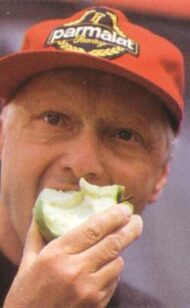
Thrilling Onboard: Niki Lauda in the 1973 Spanish Grand Prix
The Dramatic Story of Niki Lauda's Survival: Aftermath of the
Read more Niki Lauda News »
Niki Lauda — Frequently Asked Questions
When did Niki Lauda start racing in Formula 1?
Niki Lauda started racing in Formula 1 in 1971.
Is Niki Lauda still racing in Formula 1?
Niki Lauda passed away in 2019. Last competed in Formula 1 in 1985.
How many Formula 1 races has Niki Lauda won?
Niki Lauda has won 25 Formula 1 races.
How many F1 World Championships has Niki Lauda won?
Niki Lauda has won 3 Formula 1 World Drivers' Championships (1975, 1977, 1984).
How many F1 podiums does Niki Lauda have?
Niki Lauda has finished on the podium 54 times in Formula 1.
When did Niki Lauda win their first F1 race?
Niki Lauda won their first Formula 1 race at the 1974 Spanish F1 GP.
What nationality is Niki Lauda?
Niki Lauda is Austrian.
Which teams has Niki Lauda driven for in Formula 1?
Niki Lauda has driven for March, BRM, Ferrari, Brabham and McLaren in Formula 1.
How many F1 races has Niki Lauda entered?
Niki Lauda has competed in 174 Formula 1 Grands Prix.


