




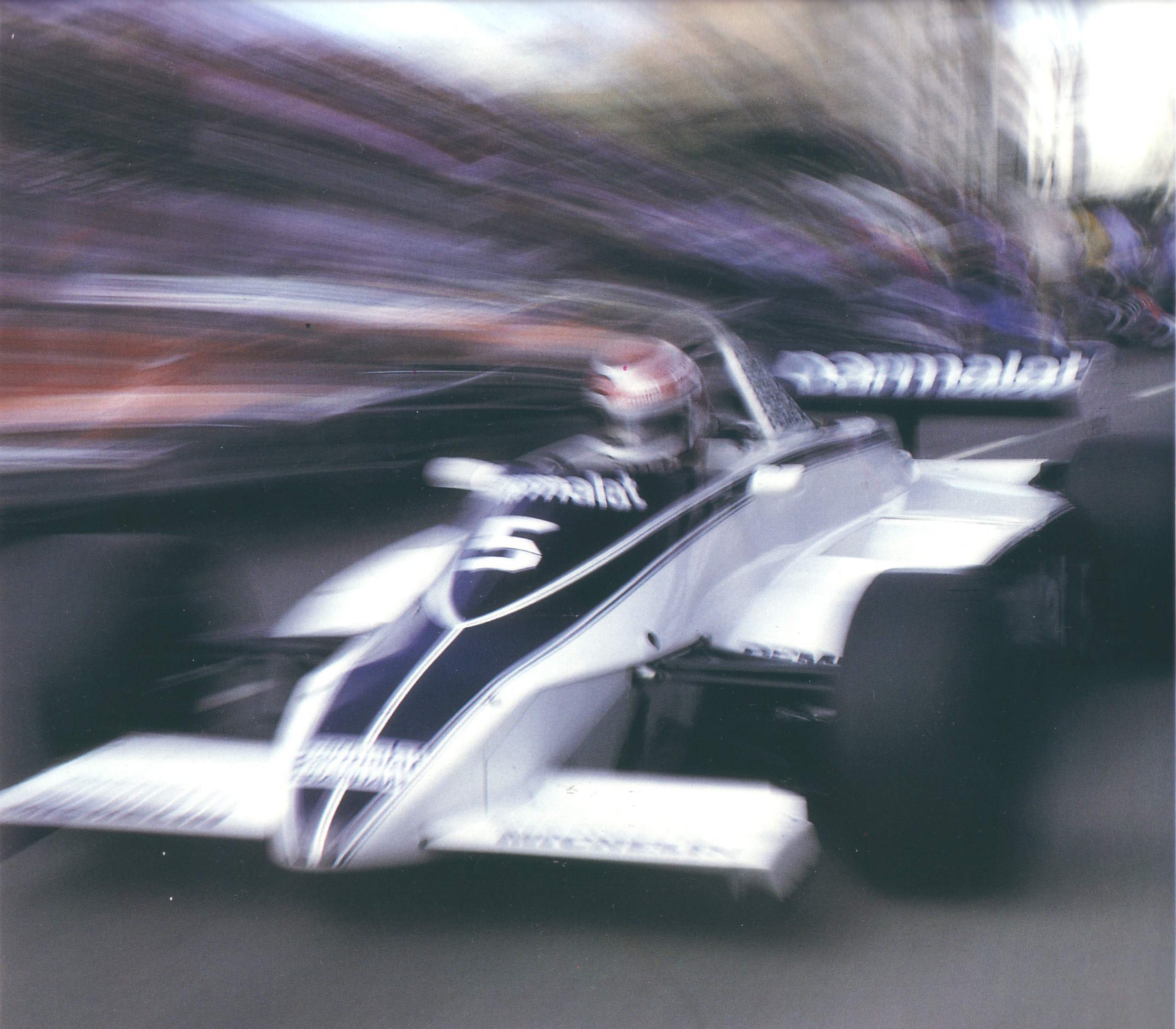
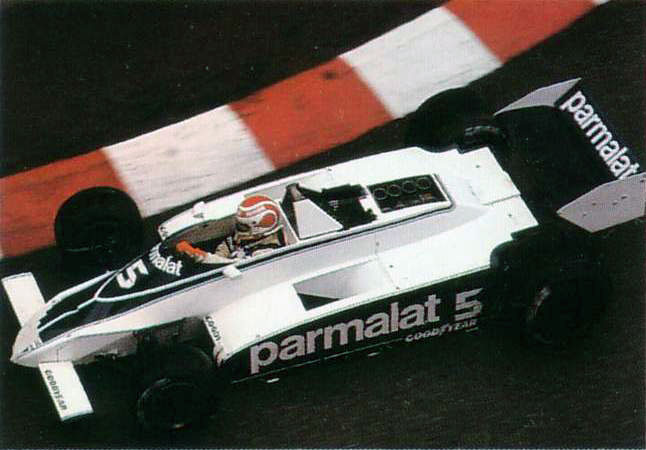

Nelson Piquet F1 Profile & Career Stats

Former Formula 1 Driver
Nelson Piquet
F1 career: 1978 - 1991
Driver Profile
| Country |  Brazil Brazil |
| Height | 1.73 meter / 5 feet 8 inch1.73 m / 5'8" |
| Place of Birth | Rio de Janeiro |
| Date of Birth | Aug 17th 1952: 74 years old |
| Family | SonNelson Piquet Jr. |
| Season Entries | 14 (1978–1991) |
| Car Number | 20 |
Championship Titles
- 1981Brabham1 clear of Carlos Reutemann
- 1983Brabham2 clear of Alain Prost
- 1987Williams12 clear of Nigel Mansell
Full Career Statistics
| Drivers' Titles | 3 |
| Grand Prix Entries | 207 |
| Grand Prix Starts | 204 |
| Total Points | 485.50 |
| Avg. Points per GP | 2.35 |
| Grand Prix Wins | 23 (11,1%) |
| Wins from pole | 5 (2,4%) |
| Pole Positions | 24 (11,6%) |
| Front Row Starts | 44 (21,3%) |
| Avg. GP Grid | 6.6 |
| GP Podiums | 60 (29,0%) |
| GP Fastest Laps | 23 (11,1%) |
| GP Points Finish | 100 (48,3%) |
| Avg. GP Position | 4.2 |
| Hat-tricks | 3 (1,4%) |
| GP DNFs | 86 (41,5%) |
| Total GP Laps | 9.872 |
F1 Career Team History
Key Career Landmarks
Race 1978 German F1 Grand Prix1978 GER F1 GP 25 years, 347 days25y, 347d
 1991 Australian F1 Grand Prix1991 AUS F1 GP 39 years, 78 days39y, 78d
1978 German F1 Grand Prix1978 GER F1 GP 25 years, 347 days25y, 347d1991 Australian F1 Grand Prix1991 AUS F1 GP 39 years, 78 days39y, 78dPole1980 USA West F1 Grand Prix1980 USA F1 GP 27 years, 226 days27y, 226d 1987 Spanish F1 Grand Prix1987 ESP F1 GP 35 years, 41 days35y, 41d
1987 Spanish F1 Grand Prix1987 ESP F1 GP 35 years, 41 days35y, 41dWin1980 USA West F1 Grand Prix1980 USA F1 GP 27 years, 226 days27y, 226d 1991 Canadian F1 Grand Prix1991 CAN F1 GP 38 years, 289 days38y, 289d
1991 Canadian F1 Grand Prix1991 CAN F1 GP 38 years, 289 days38y, 289dPodium 1980 Argentine F1 Grand Prix1980 ARG F1 GP 27 years, 149 days27y, 149d
 1991 Belgian F1 Grand Prix1991 BEL F1 GP 39 years, 8 days39y, 8d
1980 Argentine F1 Grand Prix1980 ARG F1 GP 27 years, 149 days27y, 149d1991 Belgian F1 Grand Prix1991 BEL F1 GP 39 years, 8 days39y, 8dFastest lap 1979 USA F1 Grand Prix1979 USA F1 GP 27 years, 51 days27y, 51d
 1987 Mexican F1 Grand Prix1987 MEX F1 GP 35 years, 62 days35y, 62d
1979 USA F1 Grand Prix1979 USA F1 GP 27 years, 51 days27y, 51d1987 Mexican F1 Grand Prix1987 MEX F1 GP 35 years, 62 days35y, 62dPoints finish 1979 Dutch F1 Grand Prix1979 NED F1 GP 27 years, 9 days27y, 9d1991 Australian F1 Grand Prix1991 AUS F1 GP 39 years, 78 days39y, 78d
1979 Dutch F1 Grand Prix1979 NED F1 GP 27 years, 9 days27y, 9d1991 Australian F1 Grand Prix1991 AUS F1 GP 39 years, 78 days39y, 78dWin from pole1980 USA West F1 Grand Prix1980 USA F1 GP 27 years, 226 days27y, 226d 1987 Italian F1 Grand Prix1987 ITA F1 GP 35 years, 20 days35y, 20d
1987 Italian F1 Grand Prix1987 ITA F1 GP 35 years, 20 days35y, 20dHat-trick1980 USA West F1 Grand Prix1980 USA F1 GP 27 years, 226 days27y, 226d1984 Canadian F1 Grand Prix1984 CAN F1 GP 31 years, 305 days31y, 305d
1984 Canadian F1 Grand Prix1984 CAN F1 GP 31 years, 305 days31y, 305dTitle1981 Caesars Palace F1 Grand Prix1981 USA F1 GP 29 years, 61 days29y, 61d 1987 Japanese F1 Grand Prix1987 JPN F1 GP 35 years, 76 days35y, 76d
1981 Caesars Palace F1 Grand Prix1981 USA F1 GP 29 years, 61 days29y, 61d1987 Japanese F1 Grand Prix1987 JPN F1 GP 35 years, 76 days35y, 76dF1 Career Finishing Positions
1st
23
2nd
20
3rd
17
4th
18
5th
15
6th
6
7th
5
8th
7
9th
1
11th
3
12th
1
DNF
86
DSQ
2
DNQ
2
DNS
1
DNF Did Not FinishDSQ DisqualifiedDNQ Did Not QualifyDNS Did Not Start
Performance Breakdown
Bio
Nelson Piquet Biography
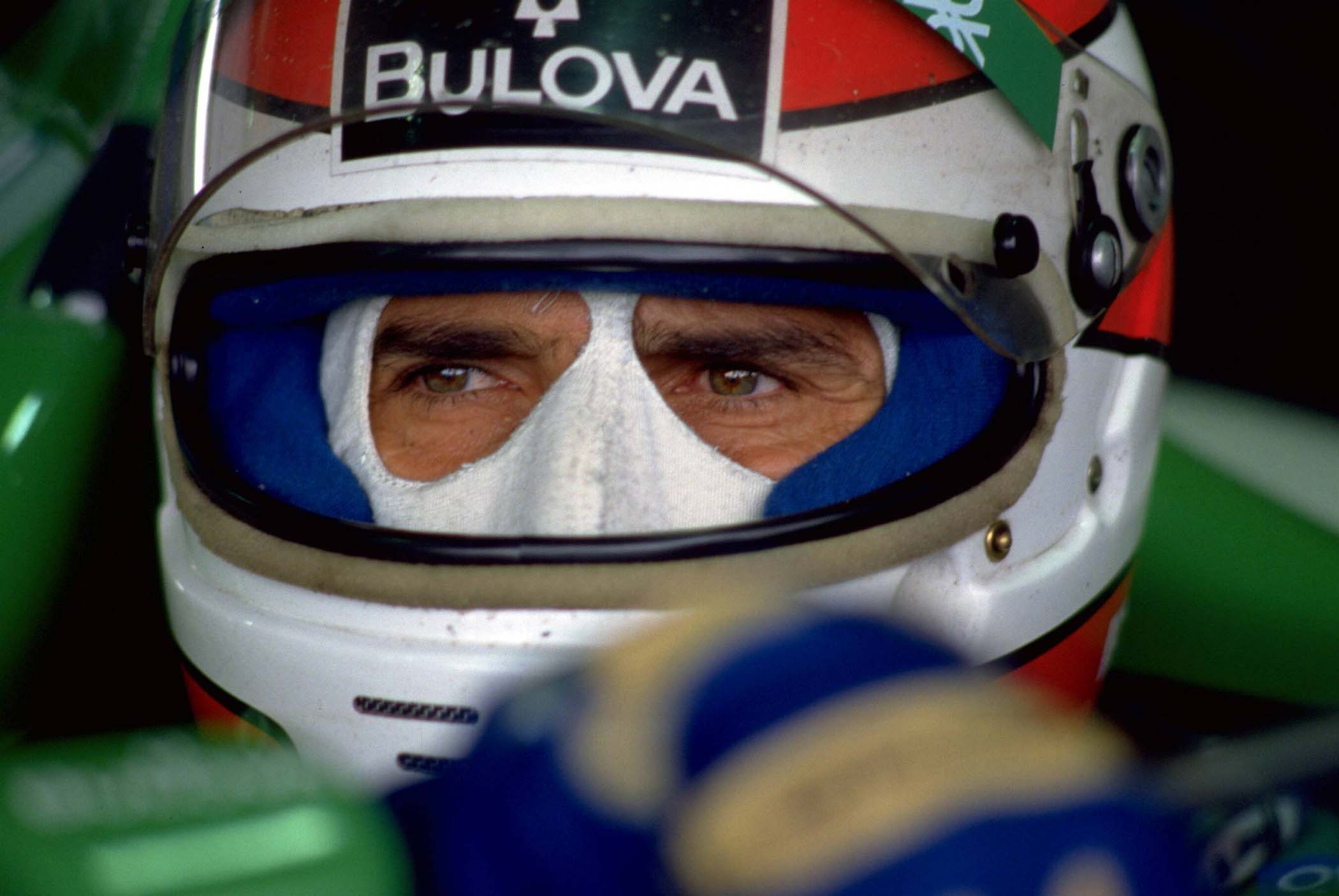
Nelson Piquet. testing the Benetton Ford Test, (1990)
Nelson Piquet was the second F1 champion from Brazil.
Born on the 17th of August of 1952 in Rio de Janeiro, Brazil, Nelson Souto Maior had a promising career in tennis, a sport his father Estácio excelled in, but he decided that his real route was headed to motorsports and racing.
He grew up in Brazilia and at 12 years of age, his talent in tennis was fairly recognizable. He made the trip to the United States to continue his growth in the tennis world at age 16. At that point in his life, he had started to drive karts as a 14-year-old and it quickly became his true passion.
Of course, his parents were not supportive of his racing career and it made Nelson Piquet use his mother’s surname to hide his racing trajectory from his family.
Before entering the university to study philosophy and engineering, Piquet was already a karting and sports car champions in Brazil. Emerson Fittipaldi was a big influence in Piquet’s racing career in the early stages. He won two National Championships in karting in Brazil and was recognized as a prodigy.
As Fittipaldi did, Piquet entered Formula Vee and won the championship in 1976 before moving to Europe, a move recommended by the World Champion Fittipaldi. After arriving in England with the economical opportunity of supporting his career, he entered two British Formula Three championships.
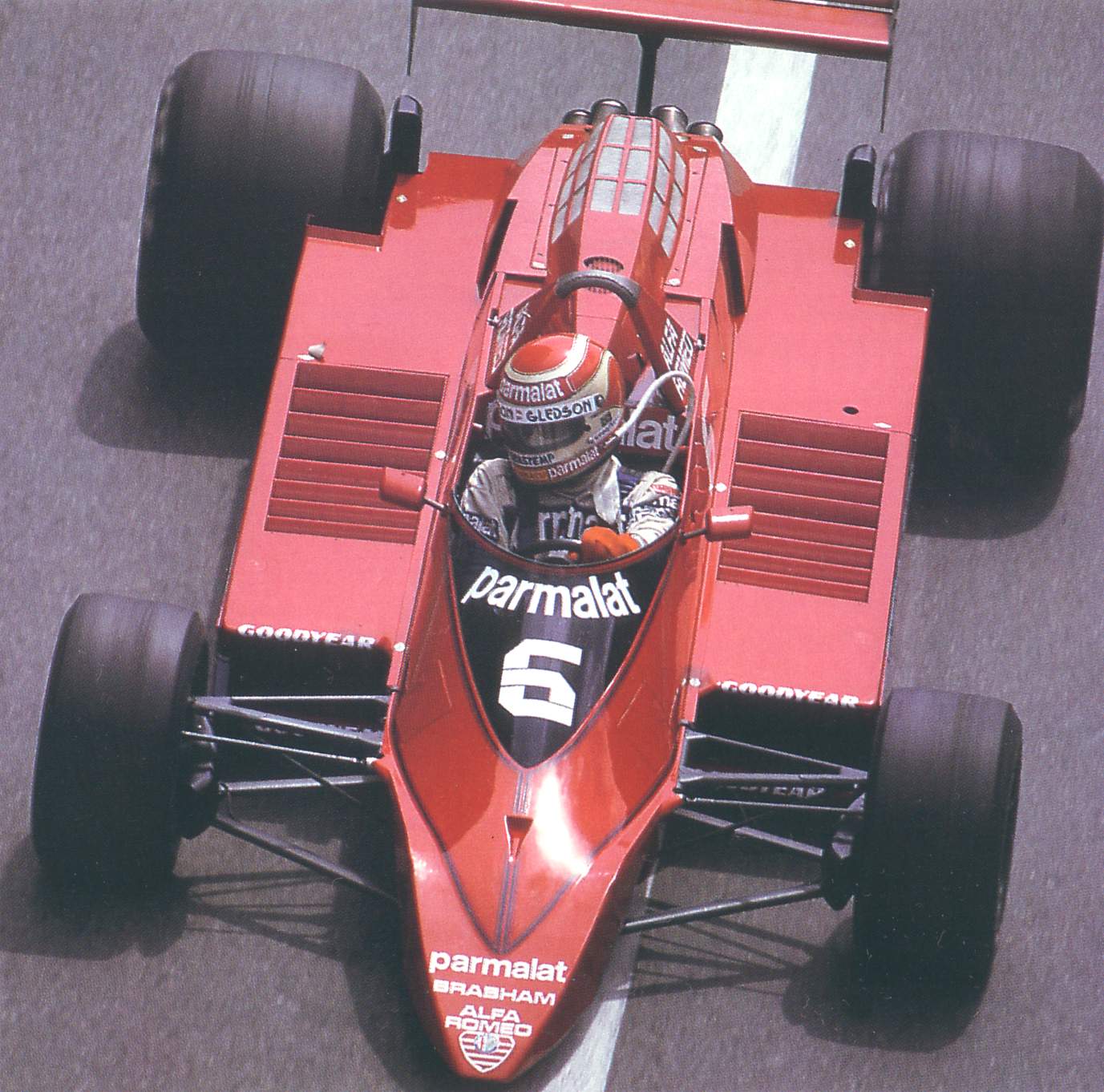
Nelson Piquet, Brabham Monaco (1979)
He arrived with plenty of experience and talent and established himself pretty quick, breaking Jackie Stewart’s record of most wins in a single year of Formula Three. Piquet won the Formula 3 Britain BARC championship and finished second in the Formula 3 Britain BRDC Vandervell in 1978.
Also in 1978, the chance to enter the Formula 1 circus arrived with Ensign at the 1978 German Grand Prix. Piquet qualified 21st for his first race and retired on race day with an engine issue.
After one race with Ensign, Piquet drove a McLaren M23 for BS Fabrications. He competed in three races with BS Fabrications,at Austria, the Netherlands and Italy— and his best finish was a ninth place at Italy, the only race which he finished.
For the last race of 1978, Bernie Ecclestone came calling and hired Nelson Piquet to drive for Brabham alongside Niki Lauda, who already was a double World Champion at the time.
The BT48 with an Alfa Romeo V12 engine was not a highly competitive car and had some reliability issues which hindered Piquet’s first full F1 season. The Brazilian only scored three points in the 1979 World Drivers’ Championship with a fourth-place finish at the Dutch Grand Prix.
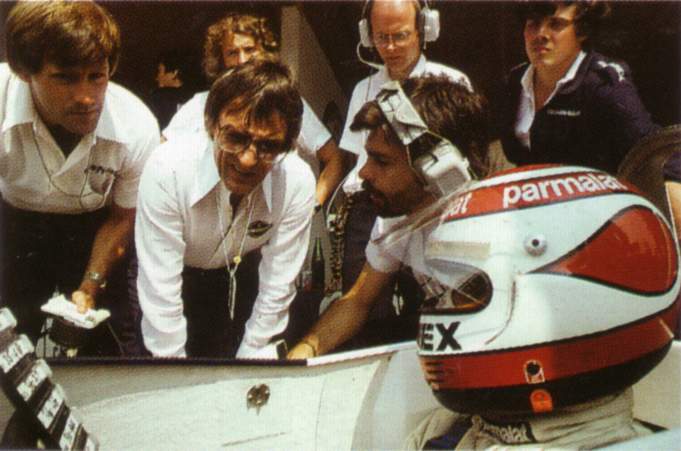
Nelson Piquet and Bernie Ecclestone in Spain (1979)
As Lauda retired after the 1979 season, Piquet became the leader of the team and took advantage of a good car for 1980.
Piquet achieved the first podium of his career in the inaugural race of 1980, the Argentine Grand Prix. Then, he won the fourth race of the season, at Long Beach. His first win came in dominant fashion, starting from Pole Position and winning with a 49-second gap over Riccardo Patrese.
The win had him tied for the championship lead with Renault’s René Arnoux and put him between the contenders. After the first 10 races, Piquet had four podiums and was in second place in the World Drivers’ Championship behind Williams’ Alan Jones.
Piquet went on to win the next two races: the 1980 Dutch Grand Prix and the 1980 Italian Grand Prix, which gave him the title lead with one point over Jones and two races to go. He started from Pole Position in the following race, the 1980 Canadian Grand Prix, but reliability damaged his chances and Jones won the title in 1980.
Piquet fought against the two Williams drivers in 1981, Carlos Reutemann and Jones, and came out victorious behind the wheel of the Cosworth-powered BT49C. To start 1981, Nelson Piquet had victories at Argentina and Imola, two Poles and three podiums in the first four rounds.
Reutemann was the championship leader early on due to a string of great results to start the season. After the first four races, Piquet retired from three straight races and fell to third on the WDC behind the Williams drivers.
After the three straight DNFs at Belgium, Monaco and Spain, Piquet put together a strong run of results which included a victory at Germany and three other podiums. Heading into the final race of the year at Las Vegas, Reutemann had a one-point advantage over the Brazilian.
In the final race, three drivers had a shot at the title: Reutemann, Piquet and Jacques Laffite, who was driving for Ligier-Matra. Reutemann started the race from Pole Position and looked set to win the title, however, a lost fourth gear in the early stages of the race meant he would suffer. As Piquet overtook Reutemann in a tremendous fight for fifth place, the Argentine faded away and the Brazilian just needed to keep his position to secure the title.
Lafitte was running behind Piquet, who was scoring the two points needed to win the championship as Reutemann was falling down the order. Ultimately, Piquet finished fifth and became the second Brazilian to win the World Drivers’ Championship and the third Brabham driver to win it after Jack Brabham himself (1966) and Denny Hulme (1967).
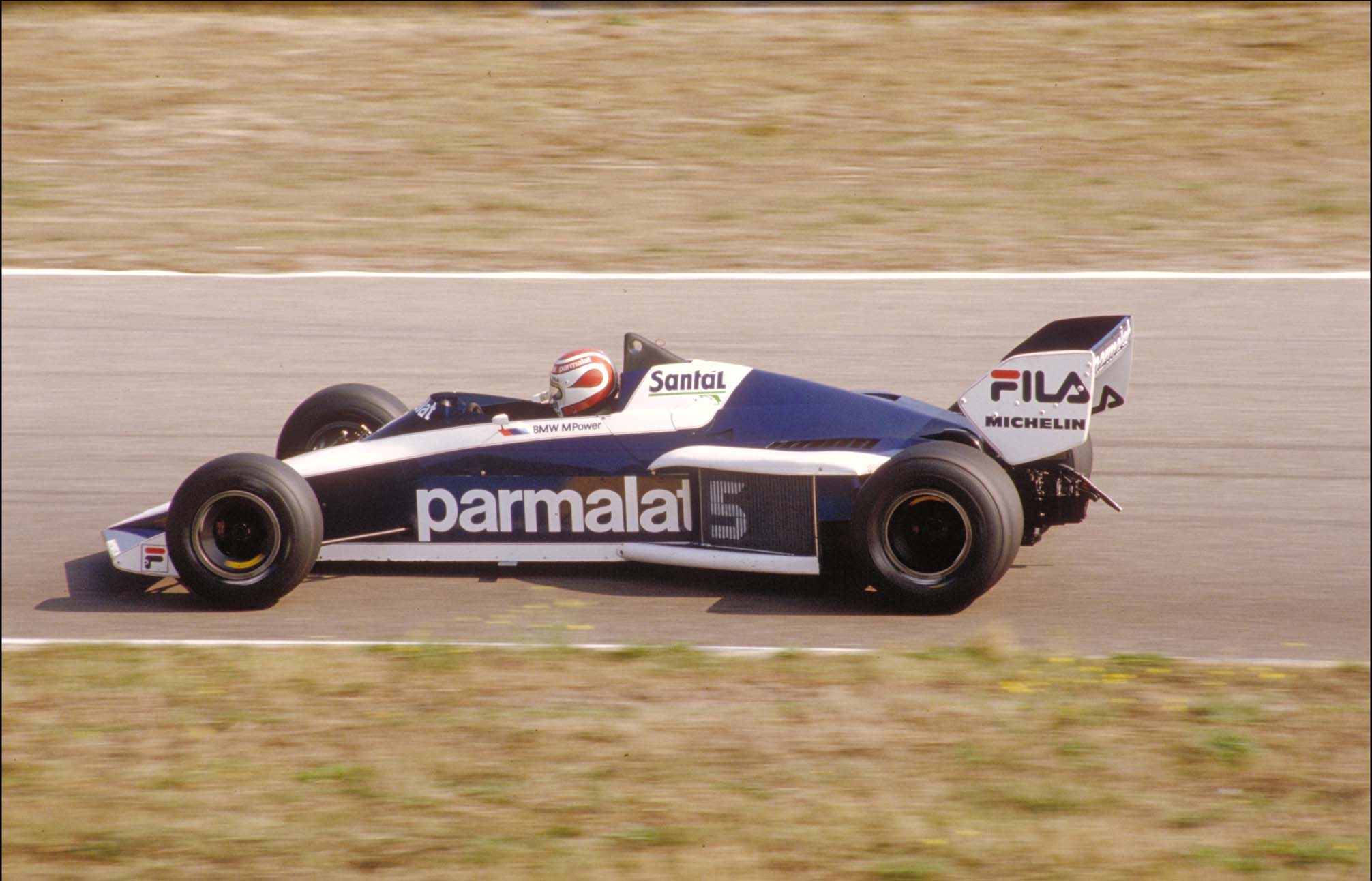
Nelson Piquet driving the Brabham BMW at Zandvoort (1983)
A move to BMW engines for 1982 did not pay off for the team and Piquet only won one race during the season, the 1982 Canadian Grand Prix, which was described as the best win of his career by Nelson Piquet himself and also was the first win for a BMW-powered car.
The non-Ground Effect Brabham BT52 was a big improvement from the previous car and Piquet again saw himself with a chance to fight for the title. This time, Renault’s Alain Prost was the main obstacle between the Brazilian and a second WDC.
Prost was consistent throughout the whole year, while Ferrari drivers René Arnoux and Patrick Tambay were consistently fighting for Poles and victories. Piquet was the championship leader in the first races, then Prost took the title lead until the last round of the year.
With three races left, Piquet had won only one race during the year,the 1983 Brazilian Grand Prix— and was sitting third in the standings behind Prost and Arnoux, who had four and three wins apiece.
Piquet won two straight races,the Italian Grand Prix and the European Grand Prix at Brands Hatch— and had a chance to snatch the title from Prost in the final round of the campaign. In the 1983 South African Grand Prix, Piquet started from second place and was leading in the initial phase of the Grand Prix. Arnoux retired and his title quest ended, while Prost had recovered from fifth to third but needed Nelson Piquet to finish second to earn the title if he ended the race in third.
As Prost suffered turbo issues and retired, Piquet only needed to finish the race inside the top four to win the championship. The Brazilian reduced his pace and ultimately finished third behind Patrese and Andrea de Cesaris to take his second WDC by two points over Prost.
Between 1984 and 1985, Piquet won three races and just finished on the podiums on three other times. With Brabham not producing competitive cars during those two years and Ecclestone unwilling to double up his salary, Piquet left Brabham for Williams.

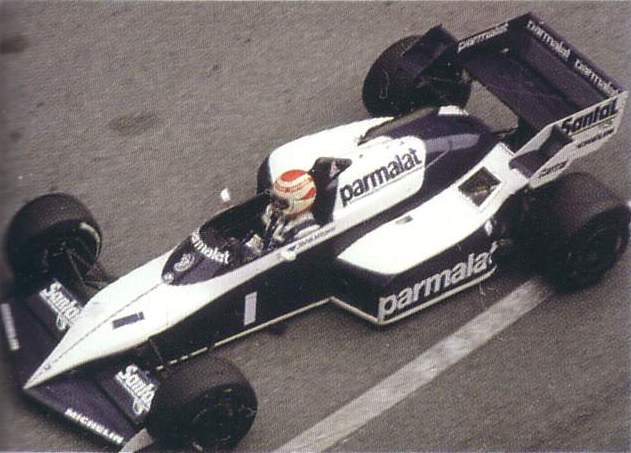
Brabham BT53 BMW driven by Nelson Piquet at Monaco (1984)
With a big contract from Williams, it was expected Piquet would be the number one driver and would enjoy preferential treatment within the team. However, Nigel Mansell was entering his second year with the team and planned to be the leader.
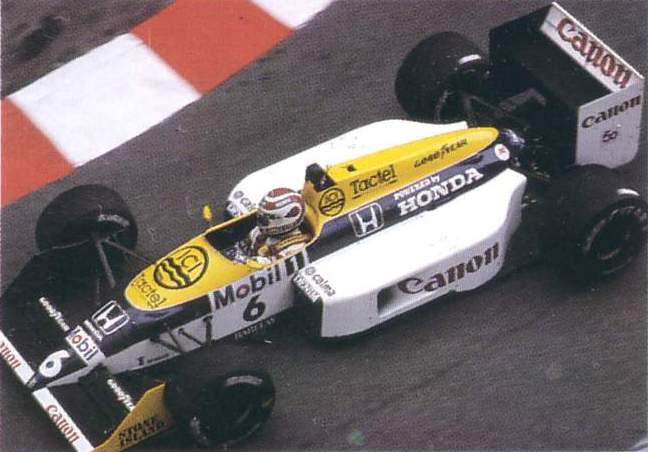
The Honda-powered FW11 proved to be a great car and Piquet won his debut race with the team in the 1986 Brazilian Grand Prix. As the season went on, the issues between the team, Mansell and Piquet got worst. Piquet accused the team of favouring the Englishman and also insulted Mansell publicly.
Given the struggles within Williams, it was merely logical for another driver to swamp them in the championship, which Alain Prost duly did, although with some luck. Mansell was on pace to win the title in the 1986 Australian Grand Prix before a puncture ended his race. Then, it was Piquet who was on course for his third championship, but Williams elected to precautionary pit him for new tyres and Prost took the World Drivers’ Championship.
The FW11B maintained the level from its predecessor and the Williams drivers were again in a heated battle for the WDC. It was right before the second race of 1987, the San Marino Grand Prix, in which Piquet suffered a huge crash during practice and was not able to start the race. Piquet has revealed in recent years that he never felt “quite right” after that crash but did not tell the team in fear they wouldn’t let him compete.
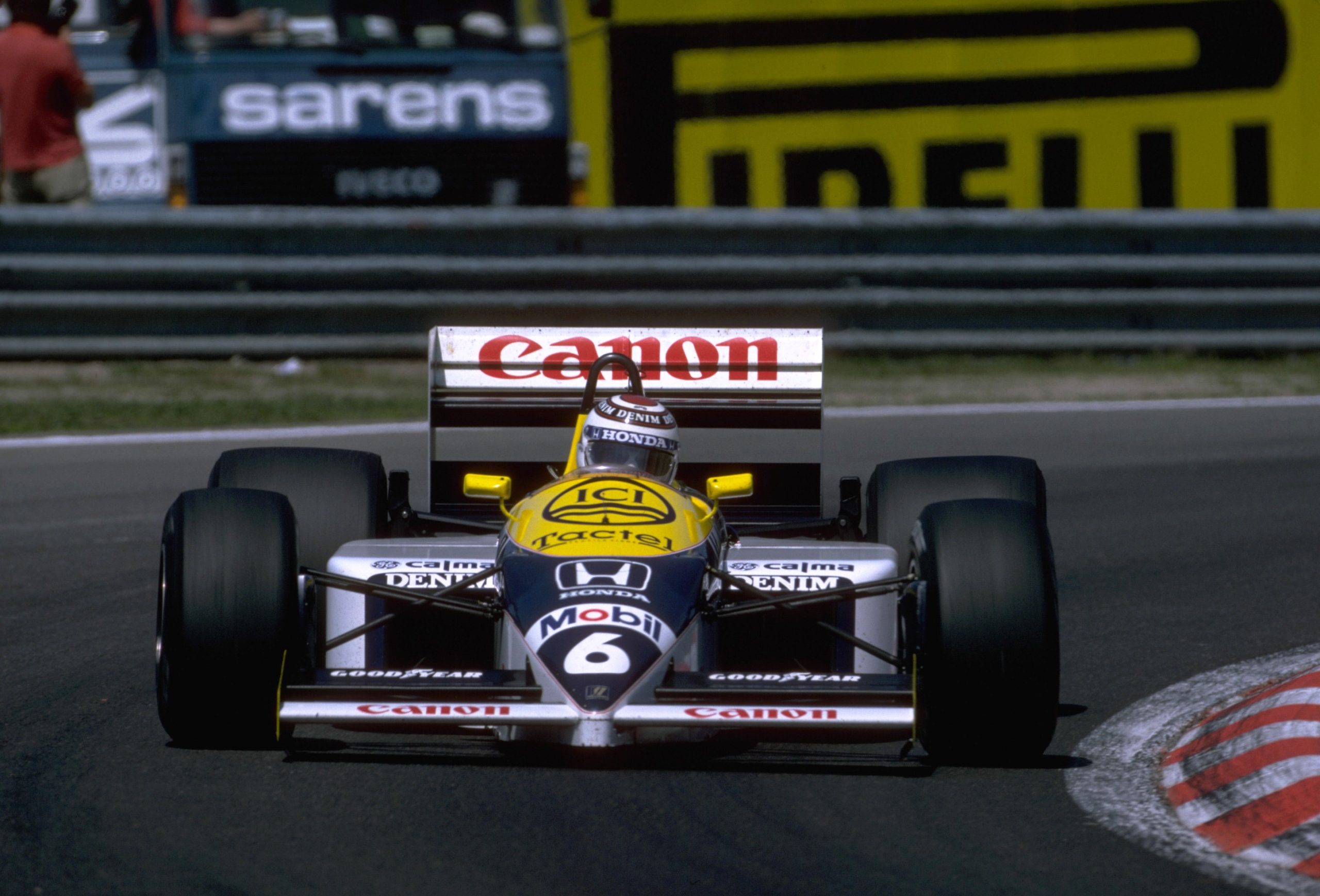
Nelson Piquet, Williams Honda FW11, Monaco GP (1986)
Mansell had the advantage in qualifying and won races with more consistency than the Brazilian. However, Piquet always found the way to get into podium places and was leading the championship with just two races left. As Mansell, who was pushing to catch Piquet at the top, crashed during practice for the 1987 Japanese Grand Prix and got injured, the title was decided in Piquet’s favour with two races left.
The Brazilian only won three races during the year, while Mansell won six. However, Piquet’s consistency was unmatched. The best 11 results counted towards the championship and Nelson Piquet played perfectly to that rule, achieving 11 podiums during the season while his teammate got only seven.
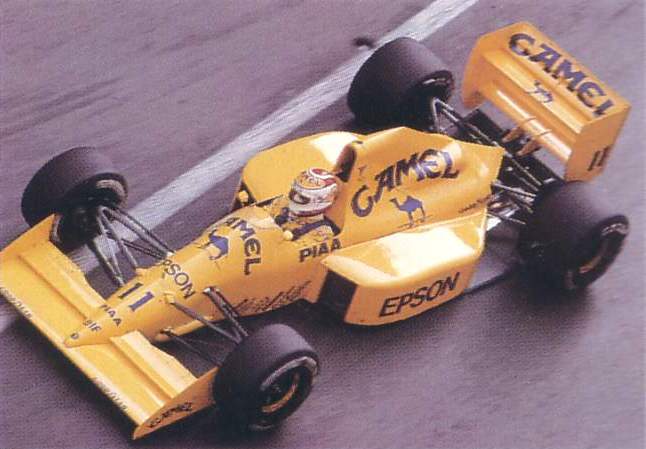
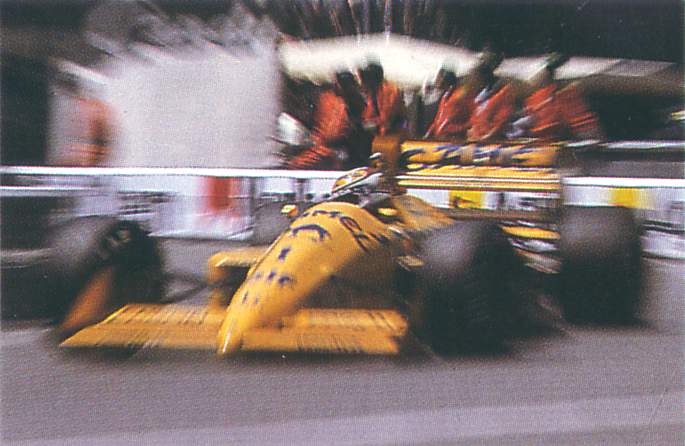
After winning the 1987 title, Piquet left to fill the void generated at Lotus after Ayrton Senna’s move to McLaren. After starting the year promisingly with straight podiums at Brazil and San Marino, Piquet’s first year with Lotus went downhill as the Honda-powered 100T struggled. He finished sixth in 1988 with three podiums. Then, the 1989 season was even worse for Piquet and Lotus, as the Brazilian could not finish a single race in podium places.
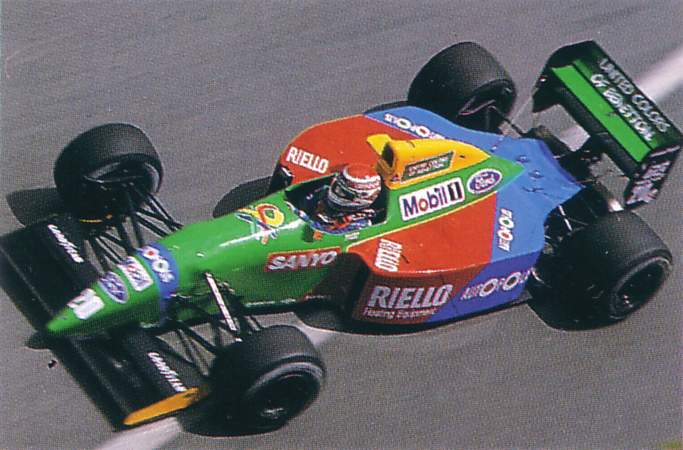
He joined Benetton for 1990 and even though the car was not the fastest, Piquet found reliability and his own consistency. In 1990, Piquet scored points in 12 of the 16 races on the calendar and even won the controversial 1990 Japanese Grand Prix, as well as the 1990 Australian Grand Prix, the last two races of the season.

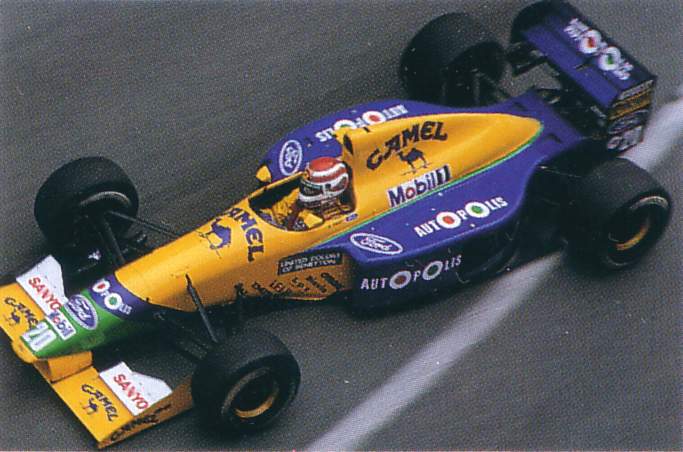
Benetton B191 Ford driven by Nelson Piquet at Monaco (1991)
In 1991, the Brazilian scored a podium in the first race but had a difficult season overall. Still, he won the 1991 Canadian Grand Prix, which was his third win for Benetton and the last of his career. It was an iconic win, as his rival Mansell caused the gearbox in his Williams to get stuck in the last lap while waving to the crowd as a celebration to his almost certain win.
Piquet shared team with rookie Michael Schumacher in the last five races of 1991, which were the last five races of his own career too. At the age of 39, Piquet retired from Formula 1 with 204 starts, three World Championships, 23 wins and 60 podiums.
After leaving F1, Piquet entered the 1992 and 1993 Indy 500 but ended up crashing during practice for the 1992 race and finishing 32nd in 1993. Then, the 24 Hours of Le Mans became a new challenge for him in 1996 and 1997, but he could only finish sixth in his class in the 1996 edition.
A businessman, Piquet was able to help his son Nelson’s motorsport career. “Nelsinho” competed in Formula 1 until the Crashgate scandal, in which he was ordered by Renault Team Boss Flavio Briatore to crash to make Fernando Alonso’s strategy work. Alonso eventually won the race, but Piquet revealed details a year after and the scandal exploded.
Nelsinho also became the first Formula E champion in history.
Piquet also helps the racing career of Pedro, one of the children of his current marriage with Viviane de Souza. He has seven children: Geraldo, Nelson, Laszlo, Kelly, Julia, Pedro, and Marco.
“Once you’re in the car, it doesn’t matter what happens, you go to the end… To drive a Formula 1 car I think is the maximum you can get... And also the competition with another driver is the good feeling”.
Seasons
Nelson Piquet F1 Seasons Results
3× World Championships1981–1987 · Brabham, Williams
Three titles in seven seasons, two of them with Brabham, and six years between the first and the last.
- 1981Brabham50 pts1 clear of Carlos Reutemannsealed at 1981 Caesars Palace F1 GP
- 1983Brabham59 pts2 clear of Alain Prostsealed at 1983 South African F1 GP
- 1987Williams73 pts12 clear of Nigel Mansellsealed at 1987 Japanese F1 GP
6th
1991
3rd
1990
8th
1989
6th
1988
1st
1987
3rd
1986
8th
1985
5th
1984
1st
1983
11th
1982
1st
1981
2nd
1980
15th
1979
28th
1978
Nelson Piquet F1 Seasons Summary
| Year | Team | Engine | GP | 1st | 2nd | 3rd | Pod | Pole | Laps | FL | Avg Pts | Points |
|---|---|---|---|---|---|---|---|---|---|---|---|---|
| 1991 |
Benetton |
Ford | 16 | 1 | 0 | 2 | 3 | 0 | 756 | 0 | 1.66 | 26.5 |
| 1990 |
Benetton |
Ford | 16 | 2 | 1 | 1 | 4 | 0 | 958 | 0 | 2.75 | 44 |
| 1989 |
 Team Lotus Team Lotus |
Judd | 15 | 0 | 0 | 0 | 0 | 0 | 722 | 0 | 0.80 | 12 |
| 1988 |
Team Lotus |
Honda | 16 | 0 | 0 | 3 | 3 | 0 | 766 | 0 | 1.38 | 22 |
| 1987 🏆 |
Williams |
Honda | 15 | 3 | 7 | 1 | 11 | 4 | 889 | 4 | 5.07 | 76 |
| 1986 |
Williams |
Honda | 16 | 4 | 3 | 3 | 10 | 2 | 937 | 7 | 4.31 | 69 |
| 1985 |
Brabham |
BMW | 16 | 1 | 1 | 0 | 2 | 1 | 519 | 0 | 1.31 | 21 |
| 1984 |
Brabham |
BMW | 16 | 2 | 1 | 1 | 4 | 9 | 683 | 3 | 1.81 | 29 |
| 1983 🏆 |
Brabham |
BMW | 15 | 3 | 3 | 2 | 8 | 1 | 808 | 4 | 3.93 | 59 |
| 1982 |
Brabham Brabham |
Ford BMW | 14 | 1 | 1 | 0 | 2 | 1 | 542 | 2 | 1.43 | 20 |
| 1981 🏆 |
Brabham |
Ford | 15 | 3 | 1 | 3 | 7 | 4 | 808 | 1 | 3.33 | 50 |
| 1980 |
Brabham |
Ford | 14 | 3 | 2 | 1 | 6 | 2 | 742 | 1 | 3.86 | 54 |
| 1979 |
Brabham Brabham |
Ford Alfa Romeo | 15 | 0 | 0 | 0 | 0 | 0 | 582 | 1 | 0.20 | 3 |
| 1978 |
Brabham Ensign McLaren |
Alfa Romeo Ford Ford | 5 | 0 | 0 | 0 | 0 | 0 | 160 | 0 | 0.00 | 0 |
Cars
Nelson Piquet Formula 1 Cars
-
- Benetton B191 Ford driven by Nelson Piquet at Monaco (1991)
-

- Nelson Piquet, Benneton B190 Ford, Monaco (1990)
-

- Lotus 101 driven by Nelson Piquet at Monaco (1989)
-

- Lotus 100T driven by Nelson Piquet at Monaco (1988)
-

- Nelson Piquet, Williams Honda FW12, Monaco GP (1987)
-

- Nelson Piquet, Williams Honda FW11, Monaco GP (1986)
-

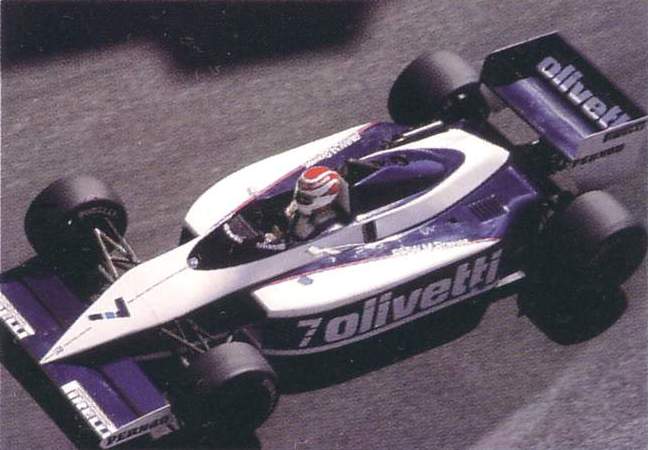
- Brabham BT54 driven by Nelson Piquet at Monaco (1985)
-
- Brabham BT53 BMW driven by Nelson Piquet at Monaco (1984)
-

- Nelson Piquet driving Brabhem BT52 BMW at Zandvoort (1983)
-

- Brabham BT49D driven by Nelson Piquet at Monaco (1982)
-

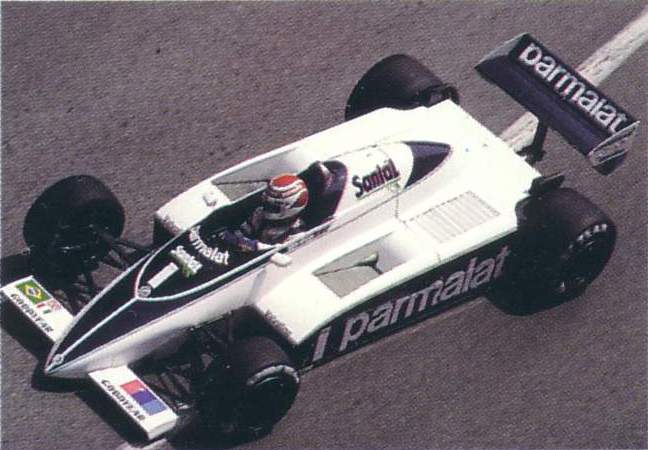
- Nelson Piquet, Brabham BT49C, USA-West GP (1981)
-

- Brabham BT49 driven by Nelson Piquet at Monaco (1980)
-

- Nelson Piquet driving the Brabham-Alfa Romeo at Monaco (1979).
Races
Wins
Podiums
Poles
Teammates
News
Latest Nelson Piquet News

Court Rules Piquet-Hamilton Comments Not Racist or Homophobic
3
Marko questions the 'timing' of recent Piquet scandal
1
Former F1 team owner now sentenced to jail
7
Piquet could be prosecuted for his racial and homophobic comments
5Nelson Piquet clarifies his used term after 'N-word' storm
14
New tension in F1 after half-year-old comment by Piquet gets
15
Verstappen urges Red Bull to keep focus on title of
1
Kvyat hoping fatherhood can wait until after race

Piquet VS Salazar backmarker incident 1982
Read more Nelson Piquet News »
Nelson Piquet — Frequently Asked Questions
When did Nelson Piquet start racing in Formula 1?
Nelson Piquet started racing in Formula 1 in 1978.
Is Nelson Piquet still racing in Formula 1?
No, Nelson Piquet last competed in Formula 1 in 1991.
How many Formula 1 races has Nelson Piquet won?
Nelson Piquet has won 23 Formula 1 races.
How many F1 World Championships has Nelson Piquet won?
Nelson Piquet has won 3 Formula 1 World Drivers' Championships (1981, 1983, 1987).
How many F1 podiums does Nelson Piquet have?
Nelson Piquet has finished on the podium 60 times in Formula 1.
When did Nelson Piquet win their first F1 race?
Nelson Piquet won their first Formula 1 race at the 1980 USA West F1 GP.
What nationality is Nelson Piquet?
Nelson Piquet is Brazilian.
Which teams has Nelson Piquet driven for in Formula 1?
Nelson Piquet has driven for Ensign, McLaren, Brabham, Williams, Team Lotus and Benetton in Formula 1.
How many F1 races has Nelson Piquet entered?
Nelson Piquet has competed in 207 Formula 1 Grands Prix.