





Ferrari F1-75: 2022 F1 Car Specs & Stats

Car Profile
 Ferrari
Season
2022
Constructors'
P2 519 pts
Races
22 (44 starts)
Designers
David Sanchez Chief designerEnrico Cardile Technical directorFabio Montecchi Designer
Power Unit & Tyres
Drivers of the Ferrari F1-75


Full Car Statistics
Key Car Landmarks
 2022 Bahrain F1 Grand Prix2022 BHR F1 GP Leclerc
 2022 Austrian F1 Grand Prix2022 AUT F1 GP Leclerc2022 Bahrain F1 Grand Prix2022 BHR F1 GP Leclerc
 2022 Abu Dhabi F1 Grand Prix2022 UAE F1 GP Leclerc2022 Bahrain F1 Grand Prix2022 BHR F1 GP Leclerc2022 Abu Dhabi F1 Grand Prix2022 UAE F1 GP Sainz2022 Bahrain F1 Grand Prix2022 BHR F1 GP Leclerc
 2022 French F1 Grand Prix2022 FRA F1 GP Sainz
2022 Finishing Positions
Performance Breakdown
2022 Race by Race


1Podium 7Points 14Outside the points DNFNot classified
Ferrari model cars
All 6 Ferrari items Save 30%
Scuderia Ferrari Iveco S-Way 570 Racing Transporter With One Car 1:43 Model
Scuderia Ferrari HP F1 Charles Leclerc Lego Helmet
Ferrari SF-24 F1® LEGO® Race Car
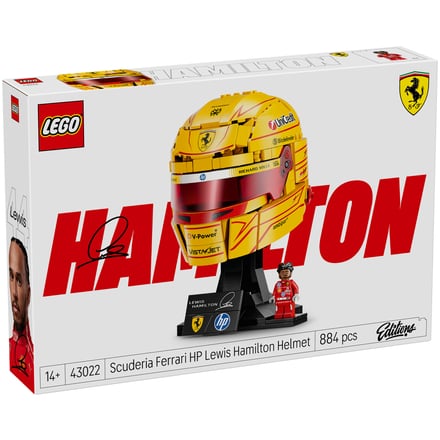
Scuderia Ferrari HP F1 Lewis Hamilton Lego Helmet


Ferrari's F1 car for 2022
The Ferrari F1-75 arrived as one of the most anticipated new cars in the history of modern Formula 1. Built to entirely new technical regulations that introduced ground effect aerodynamics to the sport for the first time in four decades, the F1-75 was not merely an update of its predecessor but a clean-sheet design from the ground up. The name paid tribute to Ferrari's 75th anniversary as a constructor, and the car lived up to the occasion, reigniting the Scuderia's title ambitions after years of struggle.
From the very first test laps at the Circuit de Catalunya, it was clear the F1-75 was something special. The car's distinctive high-sidepod design, carefully sculpted underbody, and aggressive aerodynamic philosophy generated extraordinary mechanical and aerodynamic grip. Charles Leclerc drove the F1-75 to pole position and victory on the very first race of the season in Bahrain, signalling to the world that Ferrari had returned as a genuine title contender.
The 2022 season marked the debut of 18-inch Pirelli tyres, replacing the 13-inch wheels used throughout the hybrid era. The F1-75 was designed from scratch around this fundamental change, with Ferrari's suspension and aerodynamic teams working in close collaboration to maximise the handling characteristics of the larger rubber. The result was a car that felt planted and responsive, with exceptional traction out of slow corners and strong high-speed stability.
Charles Leclerc won three Grands Prix, Bahrain, Australia, and Austria, and led the Drivers' Championship convincingly in the early stages of the season. Carlos Sainz claimed his maiden Formula 1 victory at the British grand prix at Silverstone, a landmark result that underscored the quality of Ferrari's complete driver lineup. The F1-75 demonstrated genuine pace advantage over the field on multiple occasions throughout the year.
The Ferrari 066/7 power unit represented a major step forward in terms of raw performance, placing Ferrari firmly among the leaders in the power rankings. However, reliability failures, most notably engine-related retirements for Leclerc in Spain and Azerbaijan at critical championship moments, combined with strategic decisions that did not always yield the expected results, allowed Red Bull to build an insurmountable points lead. Ferrari ultimately finished second in the Constructors' Championship with 554 points.
Despite falling short of the ultimate prize, the F1-75 stands as a landmark Ferrari Formula 1 car. It demonstrated that the Scuderia possessed the engineering talent and ambition to build a world championship-winning machine, setting the stage for the intense battles of the seasons that followed. For the tifosi, after years of disappointment, the F1-75 was the car that made them dare to dream again.
F1-75 Technical Specifications
- chassis made from carbon fibre composite honeycomb, with halo protection for the cockpit.
- Longitudinal Ferrari gearbox with 8 forward gears and reverse
- Hydraulically controlled rear differential
- Brembo ventilated carbon discs (front and rear) with electronically controlled rear brakes
- Push-rod front suspension, pull-rod rear suspension
- Weight including coolant, oil and driver: 798 kg
- 18" front and rear wheels
- Bodywork and seat in carbon fibre
Power unit
Name: Ferrari 066/7
Cubic capacity: 1600 cc
Maximum rpm: 15,000
Supercharging: single turbocharger
Maximum fuel flow rate: 100 kg/hr
Configuration: 90° V6
Bore: 80 mm
Stroke: 53 mm
4 valves per cylinder
Direct injection, max 500 bar
ERS System
Configuration: hybrid energy recovery system with electric motor generators
Battery pack: Lithium-ion batteries with a minimum weight of 20 kg
Maximum battery pack capacity: 4 MJ
MGU-K maximum power: 120 kW (163cv)
MGU-K maximum rpm: 50,000
MGU-H maximum rpm: 125,000
✅ Check the Ferrari F1-75 launch photos




Recent F1 Comments

Jere Jyrälä on Komatsu: Camara got Haas seat on speed, not Ferrari ties12 hours ago 
Jere Jyrälä on Malaysia weighs rotating F1 return instead of annual race12 hours ago 
Shroppyfly on Court order pulls Mercedes into Antonelli's contract fight1 day ago
All F1 Fan Comments