








McLaren MCL32: 2017 F1 Car Specs & Stats

6th
Best Finish
6th
Best Quali
30
Points
1
Fastest Lap
Car Profile
| Team |  McLaren |
| Season | 2017 |
| Constructors' | P9 30 pts |
| Races | 20 (38 starts) |
| Designers | Peter Prodromou Head of aerodynamicsTim Goss Technical director |
Drivers of the McLaren MCL32
Full Car Statistics
| Grands Prix | 20 |
| Race Starts | 38 |
| Wins | 0 (0.0%) |
| Best Grid | 6th |
| Podiums | 0 (0.0%) |
| Best Finish | 6th |
| Fastest Laps | 1 |
| Points Finishes | 8 |
| Points | 30 |
| Retirements | 13 (34.2%) |
| Drivers | 3 |
Power Unit & Tyres
| Power unit | Honda RA617H 1.6 V6 turbo hybrid |
| Tyres | Pirelli |
Key Car Landmarks
2017 Finishing Positions
6th
1
7th
2
8th
1
9th
2
10th
2
11th
3
12th
6
13th
1
14th
5
16th
1
17th
1
DNF
13
DNS
2
DNF Did Not FinishDNS Did Not Start
Performance Breakdown
Fastest Lap Rate
Points Finish Rate
Finish Rate
2017 Race by Race
20 Grands Prix


DNFDNF14DNS12–169DNFDNF6DNF17DNF1111DNF1089
13DNFDNS14DNFDNF141212111014DNF77141212DNF12
–––––DNF––––––––––––––
1Podium 7Points 14Outside the points DNFNot classified
McLaren model cars
All 35 McLaren model cars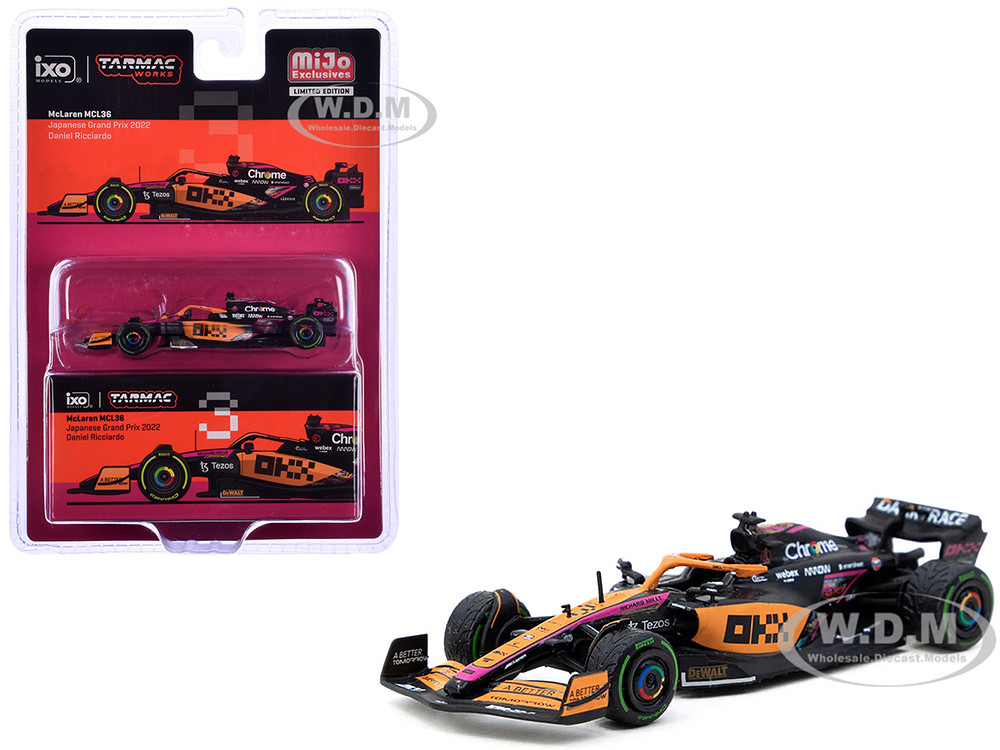 Save 10%
Tarmac Works 1:64 McLaren MCL36 #3 Daniel Ricciardo Japanese GP (2022)
 Save 30%
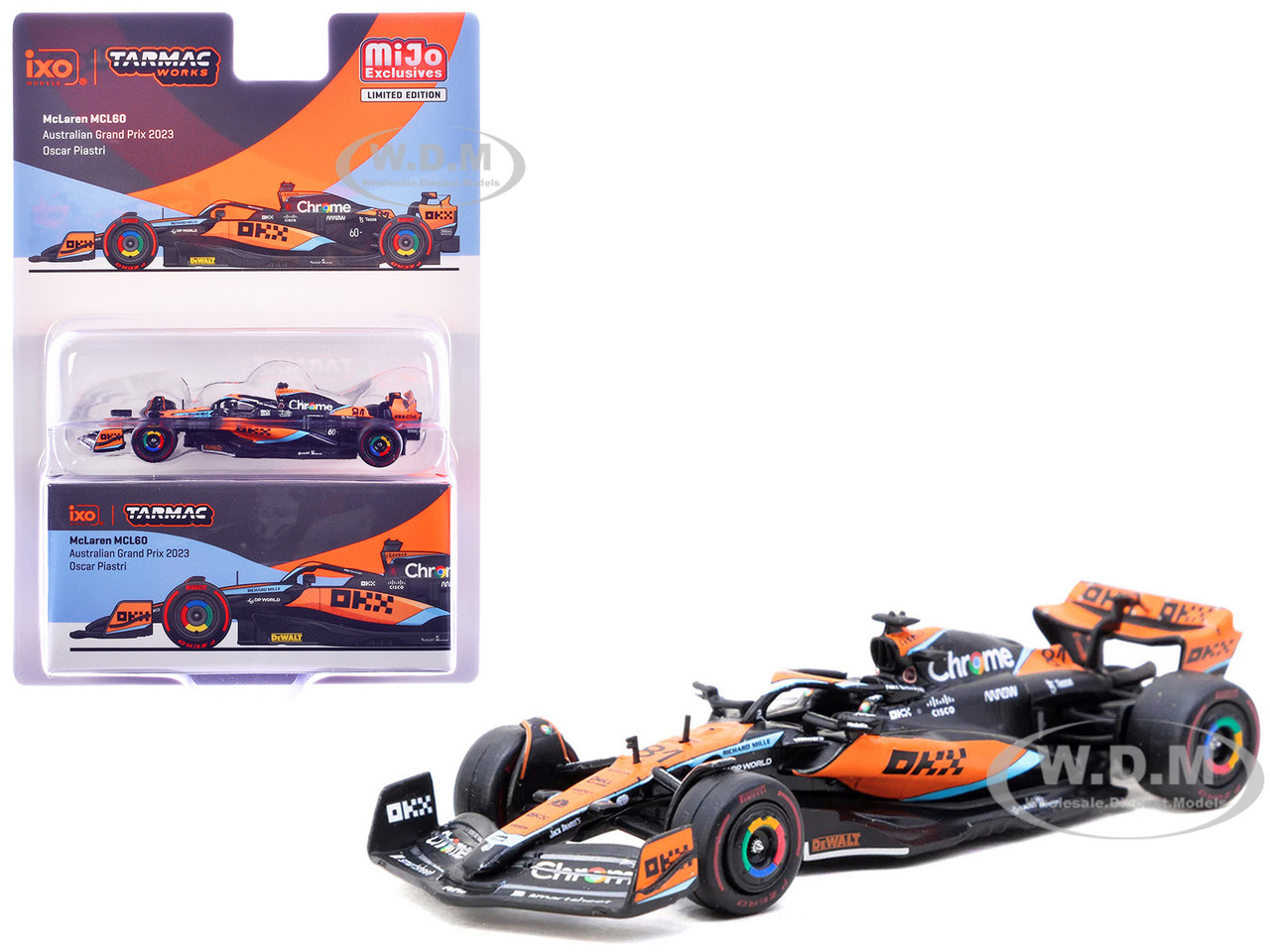
Tarmac Works 1:64 McLaren MCL60 #81 Oscar Piastri Australian GP (2023)
 Save 20%
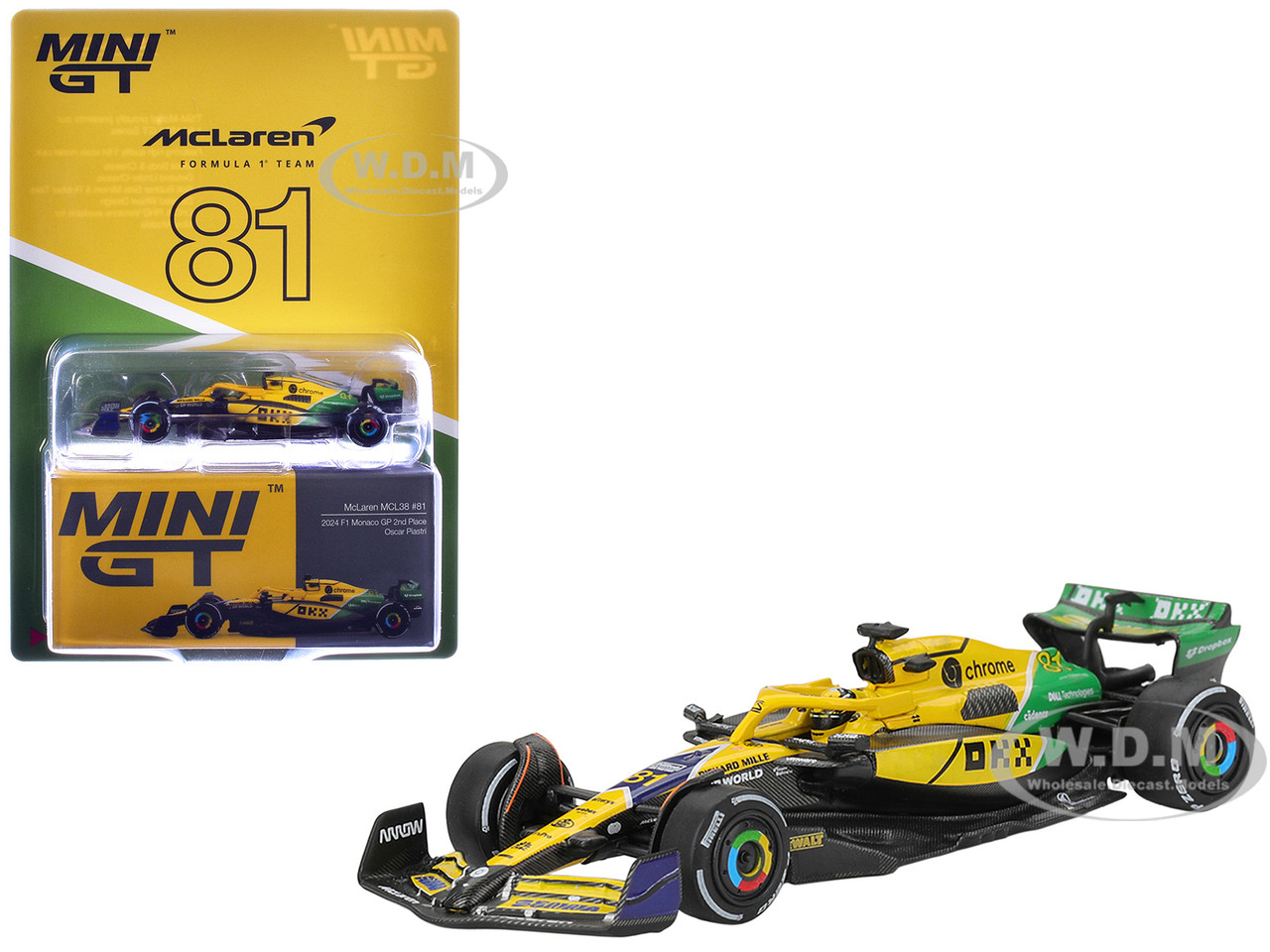
Mini GT TSM 1:64 McLaren MCL38 #81 Oscar Piastri 2nd Place Monaco GP (2024) Limited Edition
 Save 30%
Bburago 1:43 McLaren MCL39 #4 Lando Norris OKX Winner Australian GP (2025)
Fernando Alonso, McLaren MCL32 Honda.
McLaren's F1 car for 2017
Technical specifications McLaren MCL32 F1 car
Chassis: Carbon-fibre composite monocoque, incorporating driver controls and fuel cell
Front suspension: Carbon-fibre wishbone and pushrod suspension elements operating inboard torsion bar and damper system
Rear suspension: Carbon-fibre wishbone and pushrod suspension elements operating inboard torsion bar and damper system
Dampers: Sachs Race Engineering
Brakes: Carbon fibre pads and discs, Akebono brake calipers and master cylinders; Akebono 'brake by wire' rear brake control system
Transmission: McLaren 8-speed electro-hydraulically operated seamless shift sequential carbon-cased gearbox, longitudinally mounted
Clutch: Electro-hydraulically operated, carbon multi-plate
Differential: Epicyclic differential with multi-plate limited slip clutch
Electronics: McLaren Applied Technologies. Including chassis control, power unit control, data acquisition, alternator, sensors, data analysis and telemetry
Steering: Power-assisted rack and pinion
Steering wheel: McLaren Applied Technologies dashboard
Tyres: Pirelli
Wheels: Enkei, magnesium alloy
Paint: AkzoNobel Car Refinishes system using Sikkens products
Lubricants and fluids: BP Castrol
Fuel: BP Castrol
Dimensions
Height: 950 mm (minus T camera)
Weight: 728kg (FIA mininum; incl. driver and lubricants, tank empty)
Weight distribution: between 45.3% and 46.3% (as limited by the regulations)
Powertrain
Designation: Honda RA617H
Type: turbocharged, 90° 1.6l V6, assisted with kinetic and heat ERS
Valves: 24 (4 per cylinder)
Rev limit: 15,000rpm
Pressure charging: Single turbocharger, unlimited boost pressure (typical maximum 3.5 bar abs due to fuel flow limit)
Bore: 80mm
Stroke: 53mm
Crank height: 90mm
Exhaust: Single exhaust outlet, from turbine on car centre line
Injection: Direct fuel injection, limited to 500bar
Weight: Undisclosed (at least 145kg)
Energy recovery system: Integrated Hybrid energy recovery via electrical Motor Generator Units
Energy Store: Lithium-Ion battery solution (up to 4MJ per lap), between 20 and 25 kg.
✅ Check the McLaren MCL32 launch photos
Latest McLaren MCL32 F1 car News

De la Rosa: McLaren chassis 'restless' on track

Q&A Fernando Alonso | MCL32 Reveal

Q&A Stoffel Vandoorne | MCL32 Reveal

Q&A Eric Boullier | MCL32 Reveal

Q&A Zak Brown | MCL32 Reveal

Q&A Yusuke Hasegawa | MCL32 Reveal
McLaren MCL32 launch pictures

Introducing the McLaren-Honda MCL32
Last updated:
McLaren MCL32: Frequently Asked Questions
Which team raced the McLaren MCL32?
McLaren raced the McLaren MCL32 in the 2017 Formula 1 season, finishing 9th in the constructors' championship with 30 points.
Who drove the McLaren MCL32?
Fernando Alonso, Stoffel Vandoorne and Jenson Button drove the McLaren MCL32 in 2017.
How many races did the McLaren MCL32 win?
The McLaren MCL32 did not win a Grand Prix in 2017; its best result was 6th.
Which engine powered the McLaren MCL32?
The McLaren MCL32 used the Honda RA617H, a 1.6 V6 turbo hybrid power unit.


Recent F1 Comments

An Sionnach on Benoit warns F1 season could end in Vegas this weekend5 hours ago 
Shroppyfly on Camara returns for second Haas outing this weekend9 hours ago 
Jere Jyrälä on F1 makers back V8 return but 2030 start at risk10 hours ago
All F1 Fan Comments